


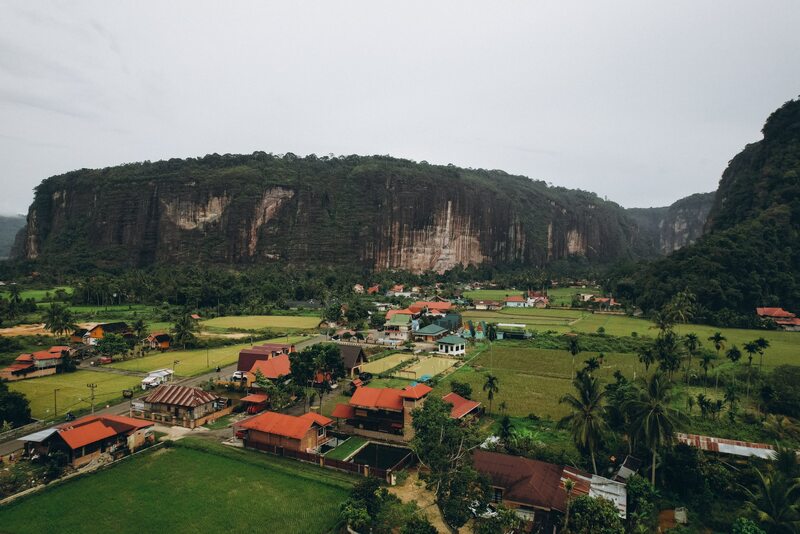
Located in the Harau District, Lima Puluh Kota Regency, West Sumatra, the Harau Valley has transformed into a world-class tourism magnet capable of rivalling global icons.
For world explorers who have traversed the grandeur of the Grand Canyon or hiked the rugged trails of Yosemite in California, it might seem as though the peak of geological beauty has already been witnessed. However, deep within the highlands of West Sumatra, Indonesia, lies a secret kept closely by the lush tropical rainforests: the Harau Valley.
Often dubbed the “Yosemite of Indonesia“, the Harau Valley is more than just a natural replica. It is a visual symphony that blends dramatic vertical cliffs, mesmerising waterfalls, and the authentic hospitality of the Minangkabau culture.
A Masterpiece of Natural Architecture
Imagine standing in the centre of a lush green valley while, to your left and right, giant granite walls soar perpendicularly to heights of 100 to 200 metres. These ancient rock formations do more than just provide a sense of majesty; they create a unique natural acoustic. The sounds of nature here are clearer and more resonant, as if these walls were the grand guardians of silence.
The Harau Valley is encircled by several unique hills, including Bukit Air Putih, known for its vibrant greenery, and the duo of Bukit Jambu and Bukit Singkarak, which offer stunning panoramic views. For those seeking a thrill, Bukit Tarantang serves as a premier destination for hiking and extreme sports.
Geologically, the rocks in the valley are estimated to be millions of years old, making it one of the most fascinating geological sites in Southeast Asia.
The Magic of Water: From Sarasah Bunta to the Doughnut Waterfall
One of the primary draws that sets the Harau Valley apart from its international counterparts is the accessibility of its abundant waterfalls. Here, waterfalls are not merely distant views; you can experience their freshness firsthand.
- Sarasah Bunta (Bunta Waterfall)
This is the crown jewel of the Harau Valley. The name “Bunta” originates from a stunning light phenomenon. When sunlight touches the falling water droplets, the water appears to shimmer like strands of glowing jewels. Locals describe it as “berunta-unta” (in strands), a mystical sight rarely found elsewhere.
- The Unique Doughnut Waterfall
For those who love exploration, the Doughnut Waterfall (Air Terjun Donat) offers a truly unique experience. The circular flow of the water creates a natural pool resembling a doughnut, providing the sensation of swimming in a private pool designed by nature itself.
Three Major Tourism Zones (Resorts)
The Harau Valley has been thoughtfully organised into three distinct regions to cater to a variety of travellers’ interests.
At the Aka Barayun Resort, visitors can find a mix of modern amenities and rugged nature, featuring swimming pools nestled against massive cliffs and accommodations ranging from local homestays to eco-resorts.
For those prioritising serenity and aesthetics, the Sarasah Bunta Resort serves as a peaceful hub famous for its photography-friendly gardens and waterfalls.
Finally, the Rimbo Piobang Resort caters to the more adventurous soul, offering demanding trekking routes that wind through untouched Sumatran tropical rainforests.
A Touch of Culture and Global Entertainment
To compete globally, the Harau Valley now incorporates thematic attractions designed to appeal to families and the Instagram generation.
At Kampung Sarosah, visitors can explore local architecture that offers a deep look into the Minangkabau way of life, highlighting how their culture exists in perfect harmony with the natural landscape. Additionally, the Korean and Japanese Village taps into global tourism trends by featuring replicas of East Asian traditional aesthetics. The striking contrast between these foreign architectural styles and the towering Sumatran granite cliffs creates exotic, highly shareable photo opportunities for modern travellers.
Why Choose Harau Valley?
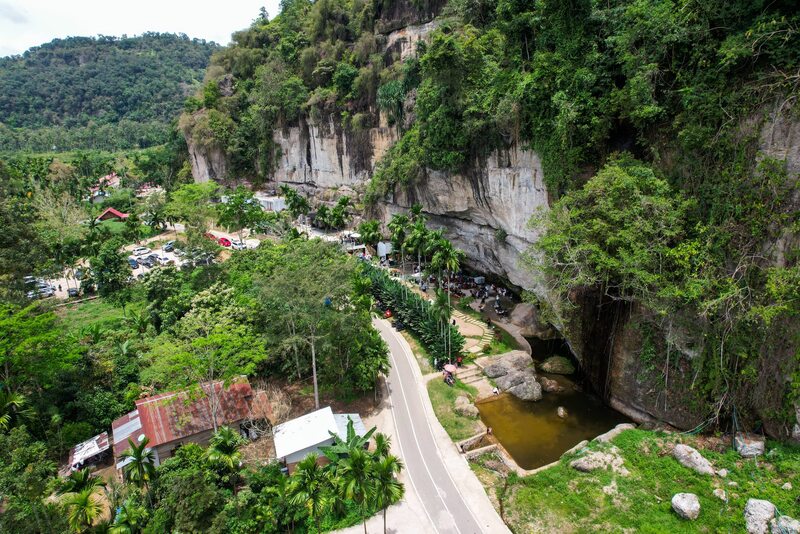
If you wonder why the Harau Valley is a compelling alternative to famous sites like Yosemite or Switzerland’s Lauterbrunnen, the answer is found in its unique tropical exoticism and accessibility.
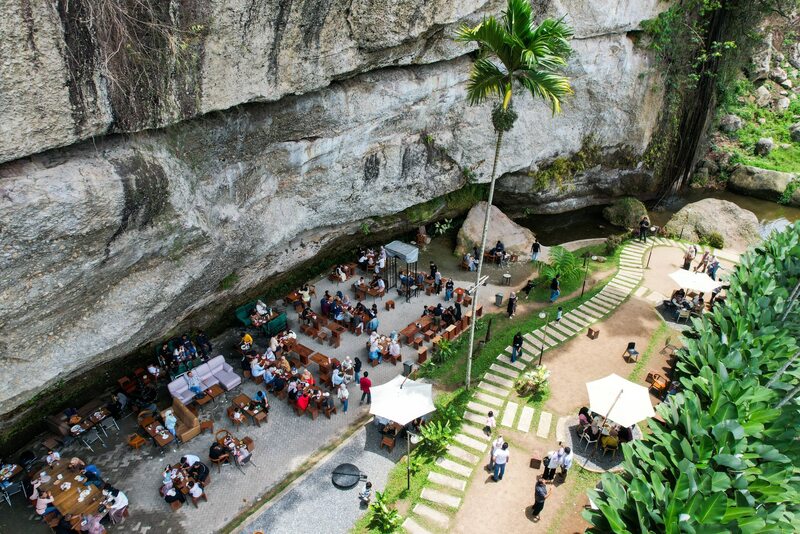
Unlike the freezing winters of Yosemite, Harau Valley’s friendly tropical climate allows for year-round exploration, where emerald forests stay vibrant and provide a constant supply of refreshing oxygen. The experience is further elevated by world-class gastronomy, as visitors can enjoy authentic rendang—frequently named the world’s most delicious food—while looking out over local rice fields and towering cliffs.
For those seeking adrenaline, the area’s solid granite serves as a paradise for rock climbers, offering thousands of challenging routes that have established it as one of Asia’s premier climbing destinations. This combination of natural beauty, culinary heritage, and extreme sports creates a sensory experience that is truly unmatched in Europe or North America.
Accessibility and Travel Tips
Reaching this hidden paradise is now easier than ever. It is located about 1.5 hours from the city of Bukittinggi, or approximately 3-4 hours from Minangkabau International Airport in Padang. Travellers can rent private cars or hire professional tour guides, many of whom are now fluent in English, French, and German.
Tips for International Travellers
For those planning a trip, the best time to visit the Harau Valley is during the rice planting seasons in January or July, when the valley floor is carpeted in a vibrant emerald green that creates a stunning visual contrast against the reddish-brown stone walls. To make the most of the scenery, exploring by bicycle is highly recommended, as riding through the villages at the base of the cliffs offers the most authentic way to interact with the incredibly friendly residents.
The Harau Valley is not just a tourist destination; it is a testament to geological majesty wrapped in a warm cultural embrace. For adventurers seeking something different—something that combines natural grandeur with spiritual and cultural depth—the Harau Valley is the answer. Don’t just look at the photos on a screen—come and let these giant granite walls tell you their story.
Welcome to the Harau Valley, the hidden gem of the Equator.
The writer, Donny Syofyan, is a lecturer at the Faculty of Humanities, Andalas University. All images are courtesy of Donny Syofyan.