



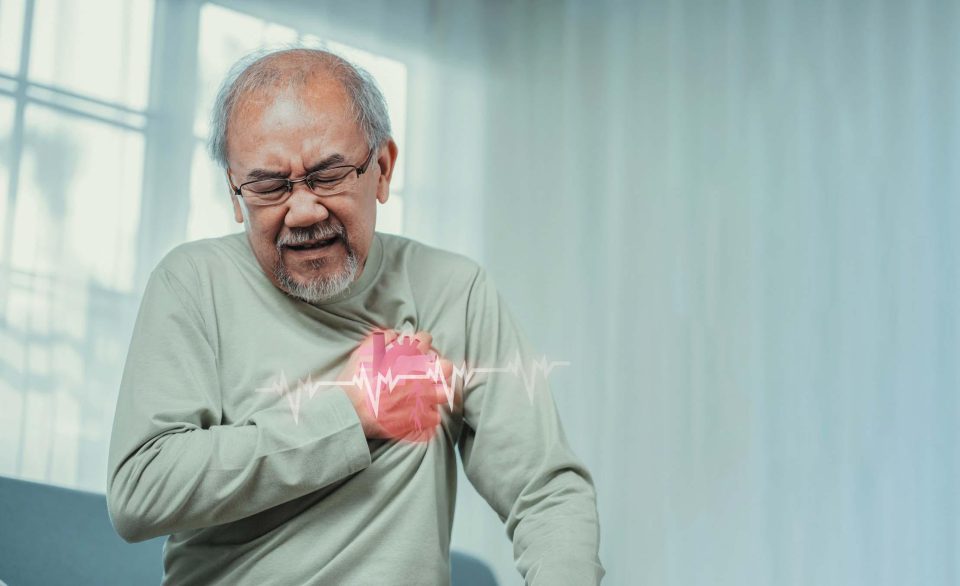
A cardiologist explains the early warning signs of a heart attack, the importance of the golden period, and how rapid emergency treatment can save heart tissue and lives.
Imagine a major motorway suddenly being blocked, bringing traffic to a complete standstill. A similar situation can occur in our bodies when the blood vessels supplying the heart become obstructed. As a result, the flow of blood and oxygen stops, causing heart tissue to become compromised. This condition is known as a heart attack — a medical emergency that requires immediate treatment.
According to dr Jeffrey D. Adipranoto, Sp.JP (K), FIHA, FESC, FSCAI of Mayapada Hospital Surabaya, the symptoms of a heart attack vary widely and are often not recognised at an early stage. “Patients may feel heaviness or pressure in the chest, pain spreading to the left arm, jaw, or back, accompanied by shortness of breath, nausea, and cold sweats. Because the symptoms are not always typical, many patients arrive at hospital when their condition has already become more severe,” he explained.
In heart attack cases, time is a critical factor. The faster the blocked heart vessels are reopened, the greater the chance of saving heart tissue. This period is known as the golden period — a crucial phase during the first hours of a heart attack.
In response to this condition, dr Jeffrey stated that heart attack treatment is tailored to the patient’s condition and the severity of the vessel blockage. “Heart attack management generally begins with emergency medications to stabilise the patient’s condition. Doctors may then perform cardiac catheterisation to reopen blocked vessels. In some cases of severe blockage, heart bypass surgery or Coronary Artery Bypass Graft (CABG) may be required. All these procedures aim to restore blood flow to the heart muscle as quickly as possible, so that damage to heart tissue can be limited and the risk of complications minimised,” said dr Jeffrey.
From this explanation, it can be concluded that a heart attack is a serious condition that requires prompt and appropriate treatment. Responding to symptoms early is not only important to protect lives, but also to minimise damage to heart tissue and reduce the risk of long-term complications.
To support the management of cardiac emergencies, Mayapada Hospital, through its Cardiovascular Center, provides a 24/7 Cardiac Emergency service supported by on-site specialist and subspecialist doctors. Emergency treatment can be accessed by calling 150990 or by using the Emergency Call button on the MyCare application. In heart attack cases, emergency procedures are carried out according to international standards, including Primary PCI with a Door-to-Balloon target time of less than 90 minutes.
This service is integrated with the Chest Pain Unit — a preventive service that plays a role in the early detection of heart disorders quickly and accurately through multidisciplinary team collaboration. Patients experiencing chest pain can undergo initial screening free of charge if the results show no heart problems, while patients with indications of heart disease will be immediately referred for further treatment.
In line with this, Mayapada Hospital Surabaya (MHSB) presents the Heart & Vascular Center Surabaya — an integrated cardiac service centre that covers prevention and screening, comprehensive diagnosis, and advanced therapies for various heart conditions, including complex cases. The service is built upon three main pillars: Comprehensive Care, Advanced Treatment, and Team-Based Management, providing holistic, coordinated, and high-quality cardiac care for patients.
Throughout the treatment process, patients are assisted by a Cardiac Advisor to help them understand each stage of the service, receive guidance towards the appropriate subspecialist, and ensure optimal coordination with the medical team. The service is equipped with the latest technology, ranging from Coronary Angiography (CAG) and complex PCI procedures to Left Ventricular Assist Device (LVAD) support, and is scheduled to begin operations in February 2026 on the 8th Floor of MHSB.
Information about heart health from Mayapada Hospital doctors can be accessed via the MyCare application through the Health Articles & Tips feature. In addition, users can monitor their physical fitness through the Personal Health feature to track heart rate, step count, calories burned, and Body Mass Index (BMI).