


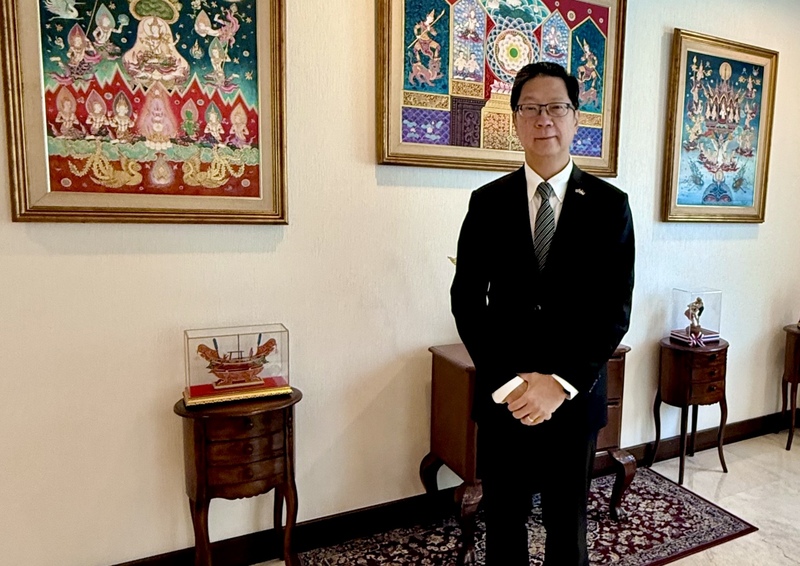
Indonesia Expat had a chance to get to know His Excellency Prapan Disyatat, who has been serving as the Ambassador of the Kingdom of Thailand to the Republic of Indonesia since 2022.
Thailand and Indonesia have been brothers—diplomatically and at times, quite literally—for more than two millennia now. It is a rare kind of bond that His Excellency Prapan Disyatat cherishes and continuously holds on to as he navigates his essential duty as the current Ambassador of the Kingdom of Thailand to the Republic of Indonesia. During a sit-down with the editor of Indonesia Expat, His Excellency shared, among many things, the recent historic official visit made by the Thai Prime Minister to Indonesia, how Thailand has blossomed into becoming the regional hub of education, the importance of human development in both countries, and why Thailand and Indonesia will always be brothers in arms for the next two millennia.
Hi, Your Excellency! Let’s start with your background a bit. What can you tell us about yourself?
My name is Prapan Disyatat, and I’m the current Ambassador of the Kingdom of Thailand to the Republic of Indonesia.
I joined the Ministry of Foreign Affairs of the Kingdom of Thailand in 1991. After joining the Ministry, I received a scholarship to pursue my Master’s and PhD degrees in the United States, where I studied economics. A few years after returning to work, I was posted to the Royal Thai Embassy in the Lao People’s Democratic Republic (Lao PDR), which was my first posting as a diplomatic officer. Very exciting times, as Lao PDR, back then, was a different country than it is today. My second posting was in Washington, D.C., in the US. It was a very interesting experience, as I mostly worked with the US Congress a lot and I had to champion Thai interests and make the US understand our position in all matters. My third posting was in Seoul, Republic of Korea, where I spent three years. It was also a very exciting experience, as South Korea was going through a very rapidly growing economy at the time and, as a result, we wanted to invite Korean investors to come to Thailand.
After three years in South Korea, I returned to Thailand and became the Director in charge of Japan and Korea. A year later, I was promoted to Deputy Director-General of the Department of East Asian Affairs, which also covered Indonesia. In 2021, I was appointed as the Ambassador Attached to the Ministry for one year before receiving the honour of being appointed as the Ambassador of the Kingdom of Thailand to the Republic of Indonesia in June 2022, which is my first posting as an Ambassador. This was right before Indonesia took up the ASEAN chairmanship. Around four years have passed since then, and I have enjoyed my stay in Indonesia very much.
During my free time, I like doing sports, particularly tennis and golf. My wife and I also enjoy participating in a car-free day during the weekends in Jakarta. Sometimes we go down to Sentul, Bogor Regency, West Java, to do some hiking as well.
How would you describe your diplomacy style as the current Ambassador of the Kingdom of Thailand to the Republic of Indonesia?
That’s a very good question. As a new Ambassador, I’ve had to learn the ropes quickly, especially for a posting in Jakarta where we have to deal with so many issues. These past four years have been a great learning experience for me, and I also had a chance to learn from the experiences of many fellow seasoned Ambassadors here.
As the Ambassador of the Kingdom of Thailand to the Republic of Indonesia, I see myself having three big roles. The first role is being the head of Team Thailand here in Indonesia. Apart from the Ministry of Foreign Affairs, we also have representatives from other Thai agencies here, such as the defence attachés from the Thai army, navy, and air force, representatives from the Thai Ministry of Agriculture, the Ministry of Commerce, the Board of Investment, and the Tourism Authority of Thailand. As a result, being the head of Team Thailand here, I have to make sure that everyone is represented, provide them with policy direction, and participate in their activities. The second role, of course, is to promote and represent Thailand, which we do a lot through our cultural activities, our promotion of Thai products, and networking with all the relevant Indonesian stakeholders—both in government and in business. The third role is protection, not only in terms of consular protection for Thai citizens when they get in trouble, but also in terms of protecting Thai business interests in Indonesia. Thai companies see Indonesia as a country with enormous economic potential, and they have large investments in Indonesia. But sometimes they run into problems, whether by their own doing or as a result of regulations of the government of Indonesia itself, so we do what we can to help them.
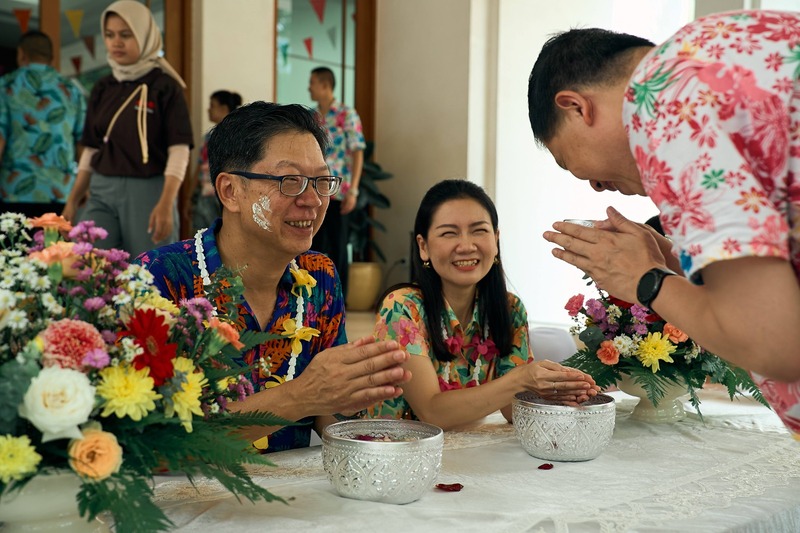
You could say Buddhism may have influenced my diplomacy style as well. In Buddhism, we follow what we call the ‘middle path’: not being too overbearing, not being too pushy, but at the same time, not being too relaxed either. It’s all about the right amount of pressure. I would also say I am lucky in doing my work here since Indonesians have a fondness for Thailand. The popularity of Thai food and Thai culture in Indonesia, for example, has helped my work as the Ambassador. They have become a great medium for me to get to know and engage with my Indonesian counterparts.
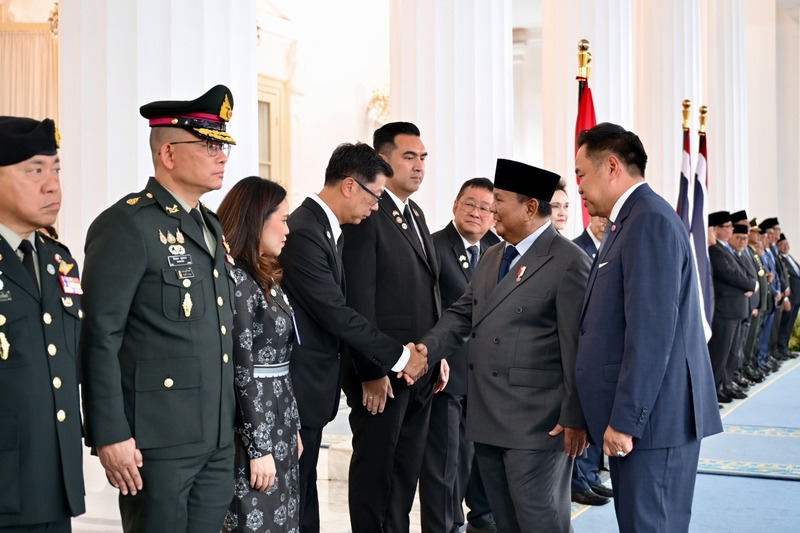
In early August, Thai Prime Minister Anutin Charnvirakul visited Indonesia and was received in person by Indonesian President Prabowo Subianto. It was quite a monumental visit, marking 15 years since the last time a Thai Prime Minister paid an official visit to Indonesia. What can you tell us about it? And what did this visit mean for the current and future bilateral relationship between Thailand and Indonesia?
It was a very successful visit, indeed, and a historical one, being the first official visit by a Thai Prime Minister in 15 years. I think it has cemented the strategic partnership between our two countries that we initiated in 2025, when the President of the Republic of Indonesia, Prabowo Subianto, visited Thailand. That visit marked the first time in 20 years since the last time an Indonesian President visited Thailand. One major outcome of the Prime Minister’s visit was the signing of the Roadmap for our Strategic Partnership, which lays out the areas and direction of our cooperation as we move forward as close partners.
Both our governments look forward to closer cooperation in many areas, such as security, economy, and tourism. In terms of security, our mutual concern at the moment is regarding transnational crimes, online gambling, and online scamming. On the economic side, we have talked about many opportunities, whether in the halal industry, in the digital economy sector, in the food and energy security sector, or in the e-commerce sector. When it comes to tourism, Indonesia is very interested in learning about Thailand’s experience in promoting our tourism industry. During the Thai Prime Minister’s visit, there was also a launch of the new flight route by TransNusa Airlines connecting Jakarta and Bangkok, which will be followed by the launch of the Bali-Phuket flight route next month. Those new flight route launches will do well for our tourism cooperation.
At the end of the day, I think it’s very important that Thailand and Indonesia, as the two largest economies in ASEAN, have a strong relationship, are closely engaged, and show that we have common positions on many issues. This will bode well, not just at the bilateral level but also benefit ASEAN as a whole.
The Business Delegation for Education Services in Indonesia 2026 was held in August, which was an initiative that represented Thailand’s commitment to expanding regional cooperation, especially in the field of education. What can you tell us about this initiative? And, going forward, how would you envision the education cooperation between Thailand and Indonesia?
This two-day event was initiated by the Thai Trade Office in Jakarta, in which we invited 15 universities from Thailand—both public and private universities—to meet with Indonesian education institutions to look for ways to establish closer collaboration, as well as showcase their available courses and programmes to Indonesian students. The first day of the Business Delegation for Education Services in Indonesia 2026 consisted of business-to-business (B2B) meetings with different Indonesian universities to see how they can cooperate in terms of academic exchange, faculty exchange, research collaboration, and combined degrees. The second day of the event was the Education Expo, during which we invited Indonesian students to learn about the courses offered by the participating universities, as well as the opportunities for studying in Thailand.
Nowadays, Thailand has become a regional hub for education, with many foreign students coming from—to name a few—China, Lao PDR, Myanmar, and Indonesia. I think there is genuine demand for closer institutional links. Moreover, there is considerable potential to expand cooperation in education between our two countries. A number of universities have approached my Embassy to look for cooperation with Thai institutions, and the number of students studying in each other’s countries is growing as well. There are currently more than 800 Thai students in Indonesia, ranging from junior secondary school to doctoral level, but the majority are at undergraduate level. Likewise, there are about 1,000 Indonesian students currently studying in Thailand. On top of that, Thailand is currently experiencing a declining population, resulting in Thai universities struggling to find new students as well. This, subsequently, has become an opportunity for students in the region to expand their horizons by reaching out to Thailand as their education destination—with Indonesia being a partner with very strong potential for that cause.
In your humble opinion, why do you believe that young Indonesians should consider pursuing their higher education in Thailand at the moment? Moreover, why do you believe that Indonesia could also be an interesting destination for higher education among young Thais?
In my humble opinion, Thailand offers a good place for Indonesians who would like to pursue affordable, high-quality education. We are a gateway to ASEAN and situated close to Indonesia, which is beneficial for Indonesians who don’t want to travel far from home. Thailand has many world-class educational institutions, offering internationally recognised programmes in various fields such as engineering, hospitality, education, business and management, health services, and medicine. Thai universities also have many partners in renowned institutions, especially in the hospitality industry. Many universities offer full or partial scholarships to Indonesian students as well. In addition, the Thai government offers scholarship opportunities for graduate studies, including short-term scholarships, but these are mainly for Indonesian civil servants. As of now, there are already about 1,000 Indonesian students studying in Thailand.
Similarly, we have many Thai students now studying in Indonesia, partly because of the proximity as well as the affordability. In fact, Indonesia has long been a destination for Thai students. Before the COVID-19 pandemic, there used to be around 2,000 to 3,000 Thai students studying here. The pandemic forced most of them to return to Thailand, but after the pandemic, Thai students were still interested in studying in Indonesia; their number here has risen back to around 800 to 900 since then. Many of the Thai students in Indonesia come from the southern part of Thailand, which has a predominantly Muslim population. Because of the similar culture and religion, coming to study in Indonesia does not require big adjustments for them. On top of that, Indonesian (Bahasa Indonesia) is not too difficult to learn and master.
Recently, the Indonesian Ministry of Primary and Secondary Education agreed to renew its educational cooperation with the Royal Government of Thailand, particularly in terms of education empowerment among local teachers. The signing of a Memorandum of Understanding (MoU) has taken place as well. What can you tell us about it? And why is this deal significant for both countries?
The Ministers of Education of Thailand and Indonesia signed the Memorandum of Understanding on Cooperation in the Field of Education during the Thai Prime Minister’s official visit to Indonesia on the 3rd and 4th of August. It is actually a new MoU, which provides a framework for cooperation, particularly in the exchange of educational personnel, scholarship opportunities, and cooperation at the international level. The focus of this MoU is on cooperation in primary and secondary education, including research collaboration, professional human resources development, and language teaching. Also, another MoU is currently in the works, which will focus on higher education between both countries. I think these agreements highlight Thailand’s and Indonesia’s vision that education is an important foundation to promote both human development and national development. I see education as the key to opening up so many opportunities in your lives, which is why we place so much emphasis on the importance of basic education.
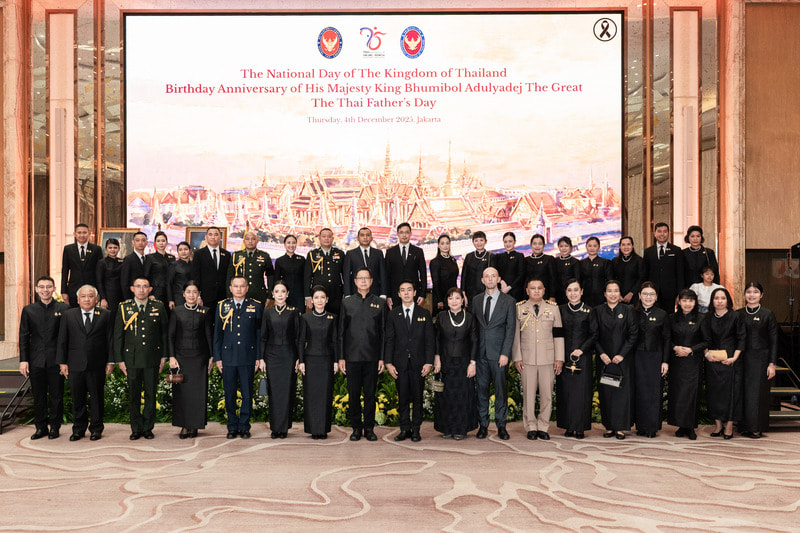
Looking back, Thailand and Indonesia have actually shared one of the longest bilateral relationships, dating back to the 8th century during the age of the Sriwijaya Empire. From your perspective, why do you think our two countries can maintain such an enduring bond? And what future do you see for both of our countries?
As you said, we have very strong historical ties, indeed. Since the age of the Sriwijaya Empire, we have had a lot of exchanges between us in terms of culture, tradition, and even religion, as Indonesia used to be a Buddhist country during the Sriwijaya period. Today, we still share many common and similar traditions and heritage that can be seen in everyday life. For example, batik—we also have batik in the southern part of Thailand. Some of our literature and folklore have their origins in Indonesia; we have Ramakien, which is a Thai version of Ramayana, whose story arrived in Indonesia—back then known as Nusantara—alongside the introduction and spread of Hinduism and Buddhism back in the day. Last year, we had a celebration of the 75th anniversary of Thailand-Indonesia diplomatic relations, during which we brought in a cultural troupe from Thailand to perform Ramayana together with Indonesian performers organised by both of our Ministries of Culture. It was extraordinary to watch dancers from our two countries performing the same epic, the same story.
Our historical ties extend to the monarchy as well. You may have already heard the story of King Chulalongkorn (Rama V) of Siam—the name of the Kingdom of Thailand back then—who visited Java back in 1871, then visited again two more times. Upon his return to Thailand, he sent a bronze elephant statue to Java, as a token of appreciation for the warm welcome that he received on his first visit. That elephant statue now adorns the courtyard of the National Museum of the Republic of Indonesia, which is why some Jakartans refer to the museum as the Elephant Museum (Museum Gajah).
One more thing I would like to mention is Indonesia’s principle of Pancasila, which stipulates openness to all religions. This subsequently allows Thai Buddhists to practice Buddhism openly here in Indonesia, which, I believe, contributes to the closeness and peace of mind for Thais living in Indonesia.
Our enduring bonds are the reason why, I also believe, Thailand and Indonesia have so much in common. Thailand and Indonesia have never had any historical conflicts between one another, no historical baggage, and that is why, I think, we can be fully open with each other and in a position to fully cooperate strategically with each other—especially as we face the challenges of today and the future. The links between our countries have been very close for over a thousand years, and I don’t see any reason why it would not continue to grow stronger for another thousand years more.
Last but not least, how can our readers get in touch with you and the Royal Thai Embassy in Jakarta?
You can find us on Instagram with the page name @thaiembassyjakarta and Facebook with the page name Royal Thai Embassy, Jakarta. You can also find out more about our activities by visiting our official website www.thaiembassyjakarta.com. If you, especially the Thai expatriates in Indonesia, have any enquiries or questions for us, please feel free to send us an email to thaijkt@thaiembassy.co.id.
Last but not least, we will host the Thai Film Festival 2026, which is set to take place from the 12th to the 13th of September, 2026, at Cinema XXI Senayan City, Jakarta. Please check out our social media for more details about this exciting film festival. We look forward to seeing you there!