



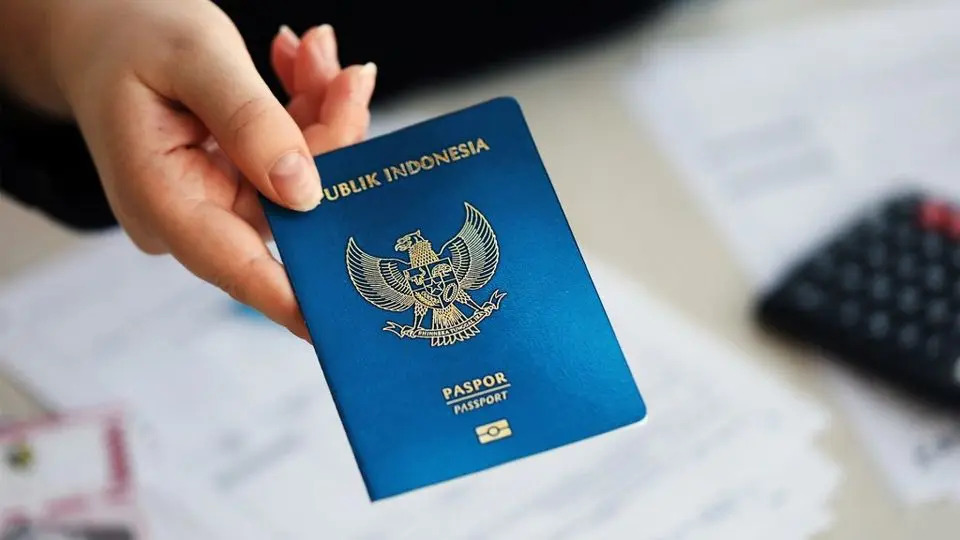
Minister of Law Regulation No. 15 of 2026 consolidates citizenship procedures, introduces new requirements for applicants, and sets deadlines for electronic and physical submissions.
On the 21st of December, 2026, Minister of Law Regulation No. 15 of 2026 will introduce a consolidated electronic framework covering Indonesian citizenship matters, including naturalisation, dual citizenship, loss and reacquisition of citizenship, and confirmation of citizenship status. The regulation also establishes deadlines for submitting physical documents, additional review procedures, and the reapplication of Non-Tax State Revenue (Penerimaan Negara Bukan Pajak or PNBP) fees following rejected applications.
The new regulation will apply to a broad range of applicants and parties involved in Indonesian citizenship matters. These include foreign nationals seeking Indonesian citizenship, foreign spouses of Indonesian citizens, children from mixed-nationality families and certain children holding limited dual citizenship, former Indonesian citizens, Indonesian citizens married to foreign nationals, Indonesian descendants without citizenship documentation, as well as expatriates, foreign directors, and shareholders whose status planning may involve citizenship issues. Families, employers, and advisers assisting with these applications are also covered.
Minister of Law Regulation No. 15 of 2026 will repeal and replace several previous regulations, namely:
- Minister of Law Regulation 35/2015, concerning confirmation of Indonesian citizenship for Indonesians of foreign descent who do not possess citizenship documents;
- Minister of Law Regulation 36/2016, concerning declarations to become Indonesian citizens, including through marriage;
- Minister of Law Regulation 47/2016, as amended by Minister of Law Regulation 3/2024, concerning electronic citizenship applications;
- Minister of Law Regulation 21/2020, as amended by Minister of Law Regulation 10/2024, concerning naturalisation applications and the citizenship oath; and
- Ministerial Regulation 6/2025, concerning confirmation of Indonesian citizenship for Indonesians residing overseas.
Key changes for foreign applicants
For foreign nationals, several requirements have been highlighted under the new framework. These include:
- An Indonesian language certificate with an “excellent” rating;
- A certificate confirming that the applicant is not listed in Interpol Notices;
- Biometric data collection, a written assessment, and an inter-agency examination; and
- For foreign spouses of Indonesian citizens, proof that the marriage has lasted for at least five years and remains intact.
Applications will generally begin through the Directorate General’s official electronic service. For many types of applications, applicants must subsequently submit specified copies and original documents within seven working days. Officials in Indonesia or overseas may conduct document checks, collect biometric data, conduct interviews, and verify relevant facts before the application proceeds to ministerial review.
If an application is rejected, the applicant may submit a new application. However, the applicable PNBP fee must be paid again for the new filing. Manual applications are permitted only if the Directorate General officially announces that its electronic system is experiencing a disruption or is inaccessible.
The new regulation will cover several citizenship routes and procedures. These include naturalisation at the applicant’s own request, naturalisation through marriage to an Indonesian citizen, adoption, exceptional service or national interest, registration and election procedures for children with limited dual citizenship, declarations by Indonesian citizens married to foreign nationals to retain Indonesian citizenship, loss and relinquishment of citizenship, reacquisition of citizenship, and confirmation of citizenship status for Indonesian descendants who do not possess citizenship documents.
Although the new framework places greater emphasis on electronic processing, it does not eliminate physical documentation. Applicants must complete the online application before proceeding with the required physical steps.
The general process includes:
- Completing the online application form;
- Delivering copies and original documents to the Citizenship Officer within seven working days;
- Providing biometric data;
- Completing a written assessment;
- Undergoing examination by an inter-agency team; and
- Completing the ministerial examination within 45 working days.
Depending on the type of application, the process may involve administrative checks, biometric collection, written assessments, interviews, inter-agency consultations, and factual verification. Moreover, for children eligible for limited dual citizenship, the required registration and election of Indonesian citizenship must be completed before the child turns 21 and before marriage.
Applications submitted before the 21st of September, 2026, will continue to be processed under the applicable previous regulations.