



The Indonesian government has proposed introducing limited dual citizenship for talented members of the Indonesian diaspora whose expertise is considered vital to the national interest.
The scheme is intended to retain the contributions of highly skilled diaspora members who are reluctant to renounce the citizenship of their host countries.
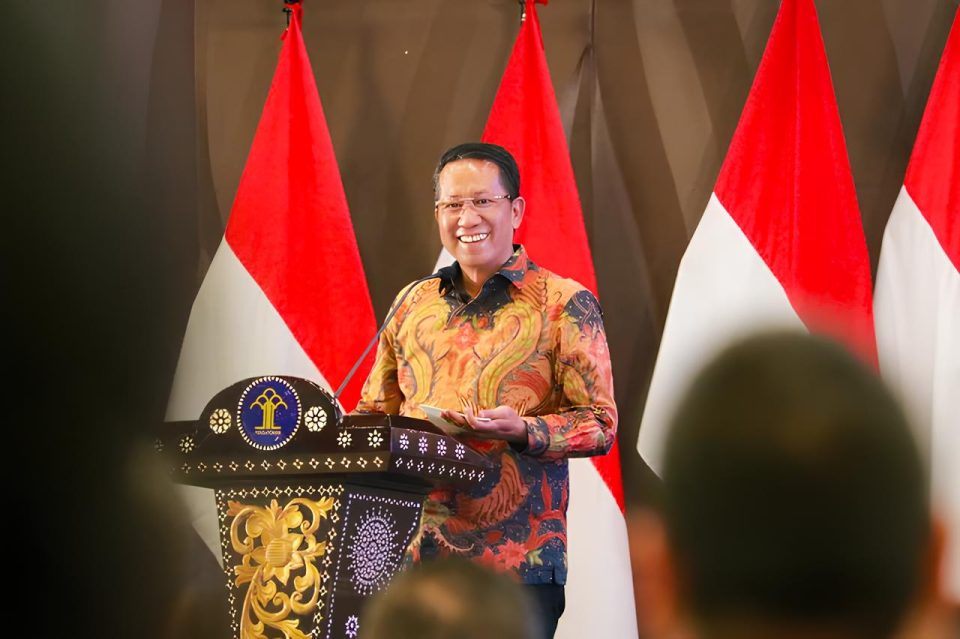
According to the Indonesian Minister of Law, Supratman Andi Agta, the proposal has been included in the revised Citizenship Law submitted to President Prabowo Subianto. However, the implementation of limited dual citizenship will still require deliberation and approval by the House of Representatives (Dewan Perwakilan Rakyat or DPR RI).
If the DPR approves the scheme, the dual citizenship provision will become a new element of Indonesia’s legal framework. The Minister expressed confidence that the proposal would not conflict with existing laws and regulations.
“We have sent the law to the President. The President will then issue a Presidential Letter [Surat Presiden or Surpres] and send it to the DPR,” Agtas said on Thursday, the 23rd of July.
However, Agtas also emphasised that the proposed dual citizenship would not apply to the entire Indonesian diaspora. The status would only be granted to individuals with specialised expertise that is required by the country. The scheme could be extended to diaspora experts in fields such as nuclear science, chemistry and medicine, as well as athletes needed to strengthen Indonesia’s national teams.
Furthermore, limited dual citizenship would not be granted on a private application basis. Nominations must be submitted by government ministries or institutions according to the country’s needs, and candidates would undergo a rigorous selection process.
“If the country needs them, perhaps they could be nuclear experts, or they could be on our national team in all sports, or they could be chemical experts who are urgently needed by this republic,” he added.
Dulyono, the Director of Constitutional Law at the Directorate General of Legal Administration within the Indonesian Ministry of Law, said that diaspora members or foreign experts seeking Indonesian citizenship as defined by the government’s proposal would be required to undergo an assessment of their expertise, as well as obtain recommendations from the relevant authorities. Such diasporas would also be required to undergo a background check by the National Intelligence Agency to ensure they pose no security risk and have no record of criminal involvement overseas.
“For example, [foreign] medical experts must obtain recommendations from the [Indonesian] Ministry of Health, and [foreign] athletes must obtain recommendations from the [Indonesian] Ministry of Youth and Sports,” he said.