



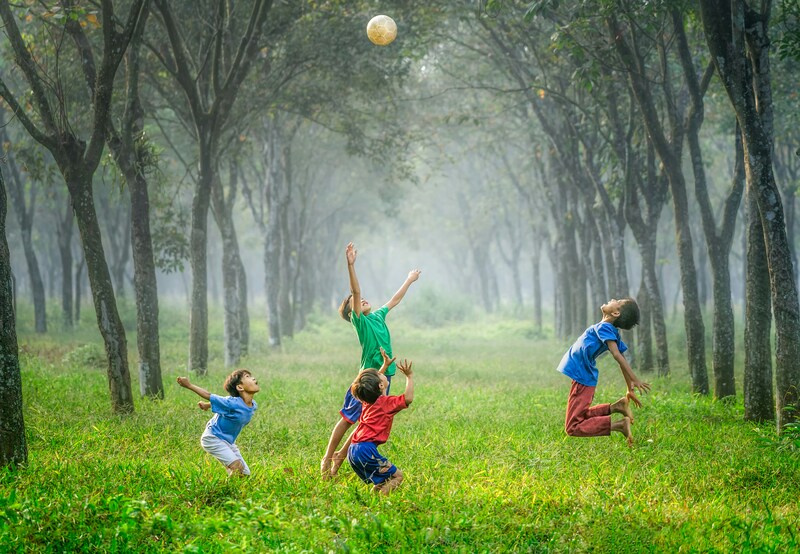
This year’s Universal Children’s Day is about inclusion. However, what should be the ultimate measure of true inclusion?
Universal Children’s Day, which annually falls on the 20th of November, anchors its global campaign on the powerful and non-negotiable principle: “Inclusion, for every child.” This declaration mandates a profound societal commitment that extends far beyond merely ensuring access to schools and clinics. True inclusion demands that every child possesses the fundamental right to an environment that actively nurtures their holistic development—physical, cognitive, and, critically, psychological.
In Indonesia, a nation characterised by rapid, often unplanned, urbanisation and deep socioeconomic disparities, addressing inclusion requires an integrated, evidence-based policy approach. While national efforts rightly focus on crucial physical health interventions, such as the fight against stunting and malnutrition, a growing body of international scientific evidence compels us to recognise that a child’s external environment—specifically, their exposure to nature—forms an indispensable, often overlooked, pillar of their mental well-being and, thus, their inclusion.
‘On a child’s developing brain’
To grasp the urgency of environmental policy, we must first recognise the deep, enduring influence of nature exposure on a child’s developing brain.
The ELFE cohort study, a large-scale, longitudinal investigation conducted in France, offers a critical academic lens. Researchers systematically tracked over 10,000 children from birth to age 5.5 years, utilising the Normalised Difference Vegetation Index (NDVI)—a robust, satellite-derived metric—to quantify the density of vegetation surrounding each child’s home. The quantitative findings conclusively established greenness as a significant protective factor for early child mental health, with effects proving most pronounced among children from low-income families—a finding of immense relevance to Indonesia.
The research, furthermore, confidently identified two key protective effects tied to sustained green exposure:
- Children who experienced Average and High Greenness trajectories consistently exhibited fewer internalising difficulties (e.g., anxiety, withdrawal, depressive symptoms). Green spaces, functioning as restorative environments, actively mitigate the neurobiological impact of urban stress by lowering cortisol levels and promoting cognitive quiet, which fosters emotional regulation.
- These same children also demonstrated fewer peer relationship problems. Natural settings encourage unstructured play, which serves as a powerful laboratory for developing crucial social skills such as negotiation, empathy, and conflict resolution.
The “inclusion, for every child” mandate demands we view the availability of nature not as an amenity, but as a fundamental human right tied directly to mental health. In the Indonesian context, this right is governed by the Regulation of the Minister of Agrarian Affairs and Spatial Planning/Head of the National Land Agency No. 14 of 2022 concerning the Provision and Utilisation of Green Open Spaces. This national legislation sets a crucial, legally mandated target: urban areas must dedicate a minimum of 30% of their space to RTH.
However, despite this robust legal framework, many of Indonesia’s rapidly growing cities consistently fail to meet the 30% Green Open Spaces threshold.
‘Environmental exclusion’
This unequal spatial distribution creates an invisible but profound form of environmental exclusion.
By systematically denying children in marginalised communities access to this vital mental health resource, the state inadvertently increases their vulnerability to anxiety, aggression, and peer relationship issues. Failing to enforce Green Open Spaces as a vehicle for spatial equity undermines the entire “inclusion, for every child” objective of Universal Children’s Day.
The Indonesian government has launched the Free Nutritious Meal programme as a flagship policy to combat chronic nutritional deficiencies (malnutrition and stunting) and bolster the physical health of its young population. This programme is a massive logistical and financial undertaking, aiming to provide a direct, tangible form of inclusion. However, the ELFE findings introduce a complex, yet critical, challenge to the Free Nutritious Meal programme’s effectiveness: the child’s mental state fundamentally influences the efficacy of physical nutrition.
Academic research into the brain-gut axis, meanwhile, has consistently demonstrated a profound link between chronic environmental stress and physiological functions. This chronic stress negatively affects the microbiome and can impair the efficiency of nutrient absorption and utilisation.
A child receiving a high-quality, nutritious meal but experiencing chronic stress may not absorb and utilise those nutrients as effectively as a child in a low-stress, green environment. The environmental stress, as a result, effectively dilutes the nutritional investment.
‘Beyond a purely logistical exercise’
For the Free Nutritious Meal programme to realise its full potential, it must evolve beyond a purely logistical exercise in food delivery to an integrated public health strategy that actively includes environmental psychological health.
On this Universal Children’s Day 2025, the theme “inclusion, for every child” should serve as an undeniable policy compass. The rigorous, longitudinal evidence from the ELFE cohort study confirms a scientific truth: Residential greenness is a non-negotiable determinant of child mental health, forming a foundational layer of inclusion. Policymakers must move urgently to enforce equitable Green Open Spaces provision, ensuring that urban environmental quality acts as an anti-exclusionary measure, particularly in socioeconomically vulnerable neighbourhoods. In addition, the enormous investment in physical nutrition must be protected and amplified by prioritising the psychological well-being of the recipients.
We possess the knowledge and the legal frameworks. Our collective challenge now is to translate these components into active, integrated action. Indonesia must confidently invest in the psychological resilience of its youngest citizens by painting its urban future green, ensuring that every child is not just fed, but is also provided the tranquil, nature-rich environment necessary to thrive—physically, emotionally, and socially. This is the ultimate measure of true inclusion.
This opinion piece was written by Taufiq Ihsan, an assistant professor at the Environmental Engineering Department of Universitas Andalas, Indonesia.