


Why Indonesia’s greatest culinary stories have always floated across the sea.
“Nenek moyangku seorang pelaut…”
Few Indonesians can hear those opening words without instinctively continuing the song. Children have sung them in classrooms for generations, often before they were old enough to understand their meaning. Yet behind its simple melody lies one of the greatest truths about Indonesia itself. This nation was never built around a single island. It was built by people who crossed the water.
Yet the sea tells only half the story.
Before great sailing ships reached the coast, countless journeys had already begun deep inland. Indonesia’s mighty rivers—the Musi, Kapuas, Mahakam, Barito and countless others—served as the lifeblood of kingdoms, settlements and plantations for centuries.
Long before modern maps charted the archipelago, these thousands of islands were connected by waterways that were almost constantly in motion. Fishermen set out before dawn. Bugis sailors read the direction of the wind all the way to the horizon. Spice traders followed the monsoon seasons. From one shore to another, families carried recipes, beliefs, traditions and stories passed down through the generations.
For the ancestors of the Indonesian archipelago, the sea was never a barrier. It was the first highway to unite these islands.
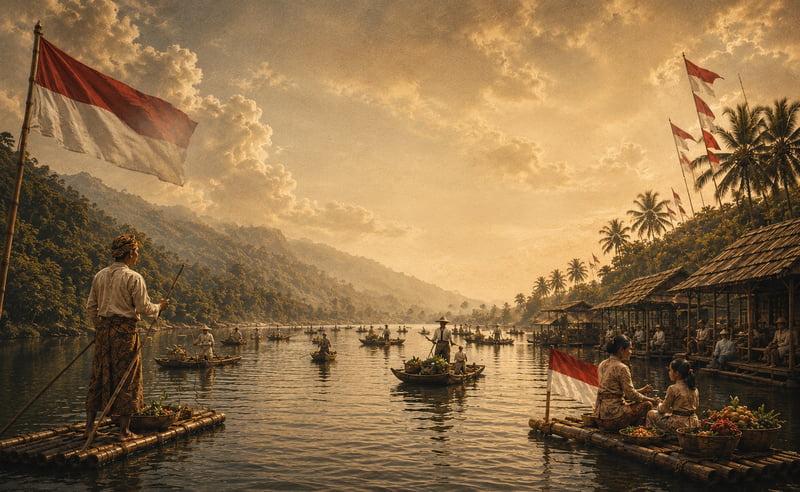
The rivers played an equally important role. Maritime kingdoms such as Sriwijaya in Sumatra and Kutai in East Kalimantan flourished because rivers linked the interior with coastal towns, enabling people, ideas, produce and trade to flow long before roads were built.
Along their banks stood villages, temples and bustling markets, while floating markets became vibrant centres of everyday life. Together, rivers and seas formed one continuous network that united the archipelago.
That journey shaped far more than trade. It shaped the way Indonesians eat.
Across the islands, countless dishes bear the fingerprints of those voyages. Coconut milk travelled. Pepper, cloves, nutmeg and cinnamon found new homes. Rice varieties spread from one region to another. Cooking techniques crossed islands. A fisherman from Flores, a farmer from Java and a family in Lombok might prepare entirely different meals, yet all are connected by centuries of exchange carried along rivers and across the sea.
Perhaps that is why Indonesian cuisine can never be understood through a single recipe. It is, in many ways, the story of a nation constantly in motion.
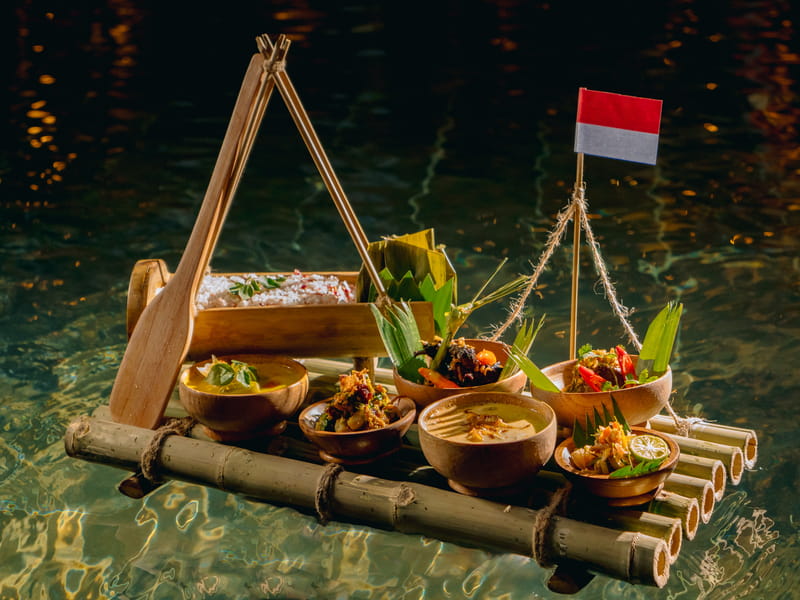
This August, that story finds an unexpected stage—not aboard a magnificent sailing ship, but upon one of Indonesia’s humblest vessels: the Rakit Bambu, or bamboo raft.
Built from one of nature’s simplest materials, the bamboo raft quietly became an indispensable part of everyday Indonesian life. It carried farmers transporting rice, vegetables and fruit to market. It ferried fishermen and their morning catch. It floated coffee, spices, coconuts and timber downstream from plantations and forests to trading centres. It connected villages separated by rivers and served the floating markets that remain enduring symbols of Indonesian culture today.
Many of these river journeys eventually reached the ports, where goods were loaded onto larger wooden vessels that sailed throughout the archipelago and beyond. Rivers and oceans were never separate worlds; together they formed the great water network through which Indonesia’s culture, commerce and cuisine evolved.
Inspired by this often-overlooked yet essential chapter of Indonesian history, Tugu Hotels & Restaurants presents My Forefather, the Great Seafarer—a dining experience that invites guests to journey through Indonesia’s waterways and maritime heritage, one course at a time.
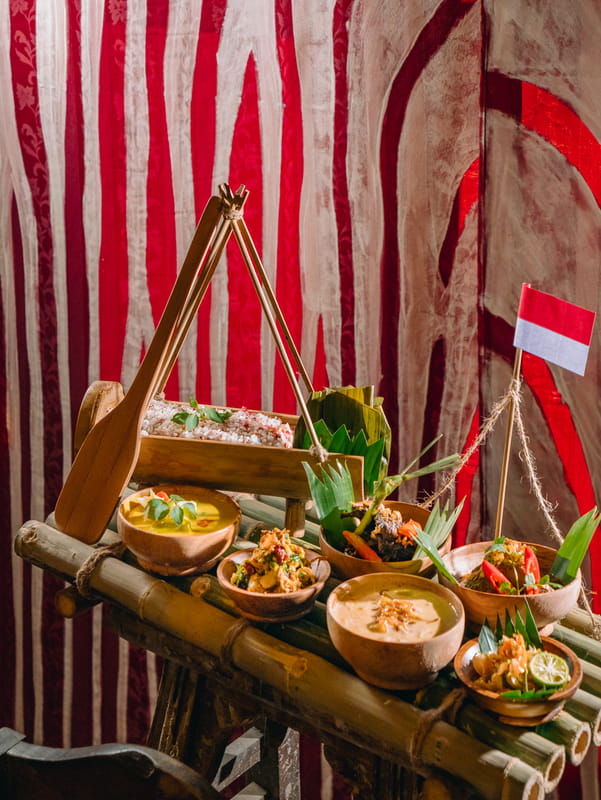
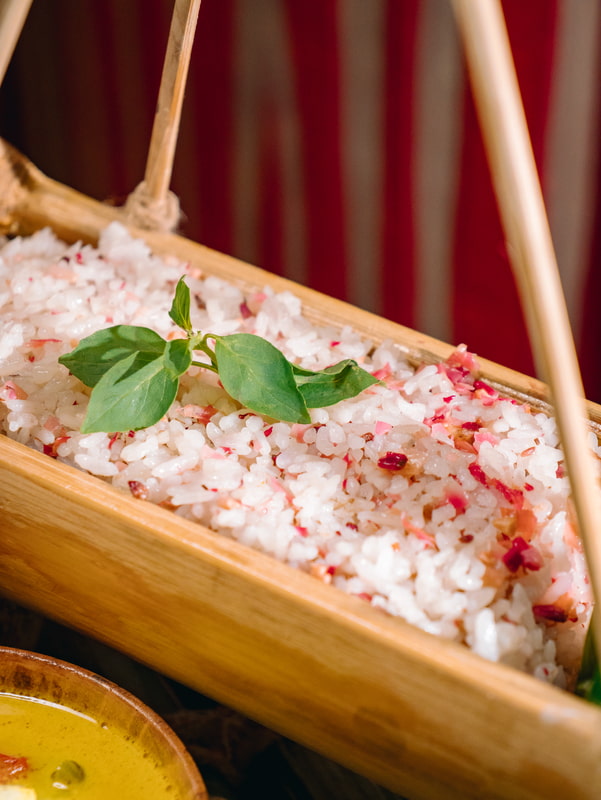
Rather than arriving on conventional plates alone, every dish is presented atop handcrafted bamboo rafts, transforming each table into a symbolic voyage. Every course honours the humble vessel upon which so many journeys began—celebrating the rivers that nourished the land, the seas that connected the islands, and the generations of Indonesians whose stories, ingredients and traditions travelled across the water to shape one of the world’s richest culinary cultures.
Yet the raft itself is only the beginning.
From the shores of Flores comes Molo Weti Nakeng, inspired by one of the island’s oldest fishing traditions, where fathers and sons dive beneath the sea before gathering in ceremonies honouring both their ancestors and the ocean that sustains them.
In East Java, Bebek Ireng Ungkep tells the story of recipes patiently perfected through generations, while nearby Kawisari Plantation continues another annual ritual as freshly harvested coffee begins its journey from the slopes of Mount Kelud to homes and tables across Indonesia.
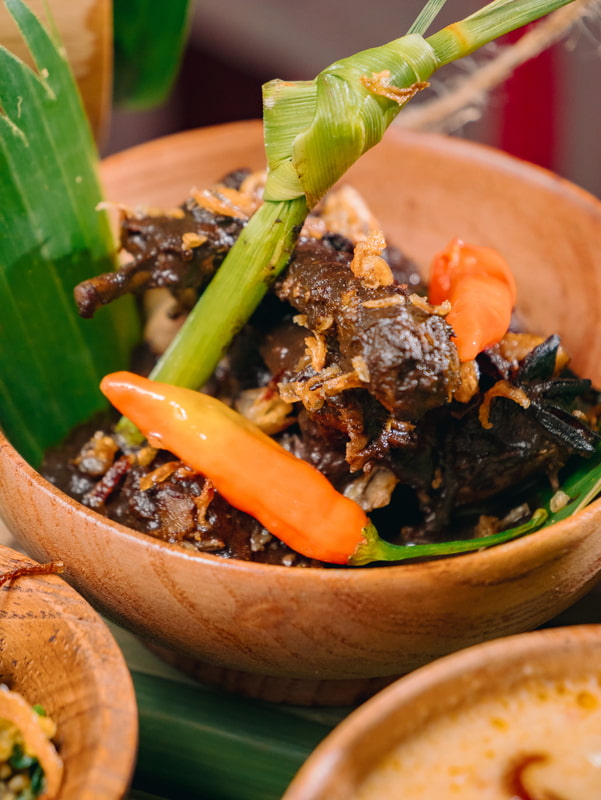
The people of Blitar remember Mangasati, a dish associated with Bung Karno’s visits to his beloved hometown, while Bali’s Lawar Embung reflects village recipes in which coconut, herbs and vegetables continue to be prepared much as they have been for centuries. From Lombok comes Berengkes Laut Pantai Sire, where the island’s enduring relationship with the sea lives on through fragrant seafood wrapped in banana leaves and gently cooked over time.
Jakarta, long Indonesia’s great port city, contributes Nasi Kecombrang, celebrating the diverse influences that have arrived on its shores over hundreds of years.
Viewed individually, these are regional dishes. Viewed together, they become something else entirely: a map of Indonesia told through food.
This has always been the philosophy behind Tugu. The antiques, temples, manuscripts, textiles and historic buildings preserved throughout its collection have never existed simply to be admired.
They exist because every object carries a story, and every story deserves to remain part of everyday life. Food is no different. Recipes survive only when they continue to be cooked, shared and passed from one generation to the next.
Perhaps that is why a bamboo raft feels like the perfect table. Simple in form, yet carrying centuries of memory.
Because in Indonesia, the sea and the rivers have never merely connected islands. They have carried a civilisation.