



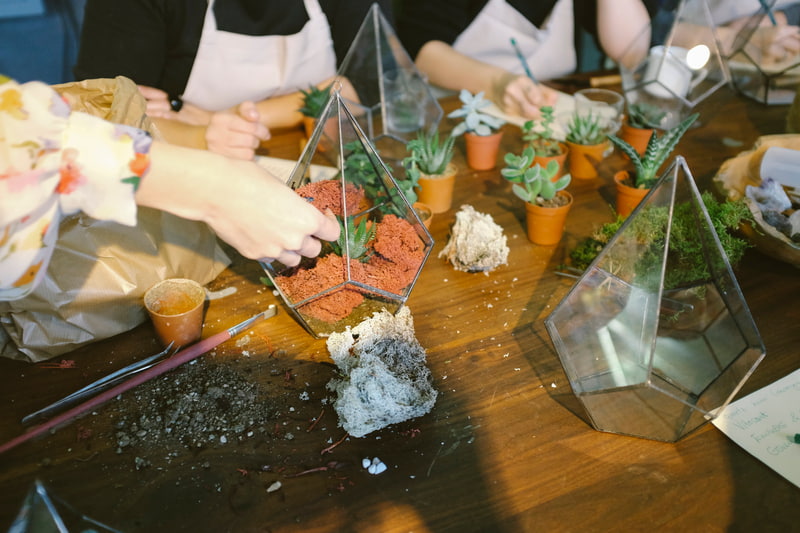
Living in a city does not mean giving up your connection with nature. Learn how terrariums can turn small spaces such as desks, bookshelves, and balconies into miniature green gardens.
In today’s world, as sustainability becomes a common consideration in daily decisions, even hobbies can serve as ways to reduce consumption and utilise existing resources more effectively. We now need more eco-friendly activities to help restore our planet and make it greener again. Many sustainable activities, such as composting, woodworking, upcycling, and gardening, can be enjoyable hobbies that can be practised at home. Among those activities, gardening is perhaps the most accessible way to connect ourselves to nature.
Unfortunately, not everyone, especially those who live in big cities, has a garden or even enough space for a collection of potted plants. Yet living in an apartment or an urban environment does not mean giving up the pleasure of growing something green. This, consequently, raises the question, “What if a garden could fit on a bookshelf or a desk instead?”
The answer is simple: it is possible—in the form of a terrarium.
What is a terrarium?
A terrarium is a miniature indoor garden grown inside a transparent glass or plastic container that mimics a natural ecosystem. It is basically similar to an aquarium, but the terrarium is designed not to be filled with water. Instead, it just has to be filled with dry soil and green plants (as its name “terra”, which means land). This miniature garden comes in various shapes and sizes, starting from a small glass and a medium-sized jar to a large glass box. It can be open or closed, depending on the plants and moisture requirements.
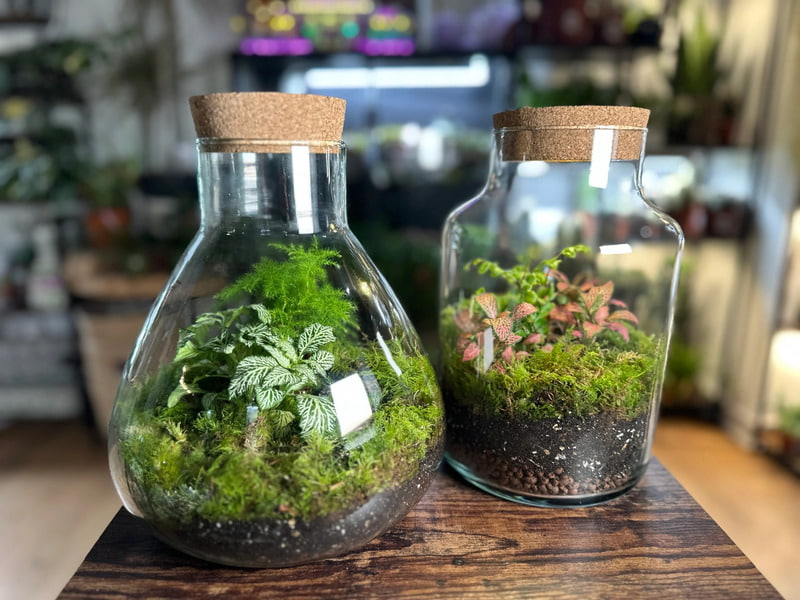
Open terrariums are suitable for plants that only need dry air, such as cacti and succulents. This is not fixed, though; you can also put other types of small plants in open terrariums. Meanwhile, closed terrariums are designed to fit in plants like ferns and green mosses. In these terrariums, the containers are sealed to form a water cycle inside them. The water evaporates from the soil and plants, condenses on the glass, then drips back down like a little rain.
Terrarium as a hobby
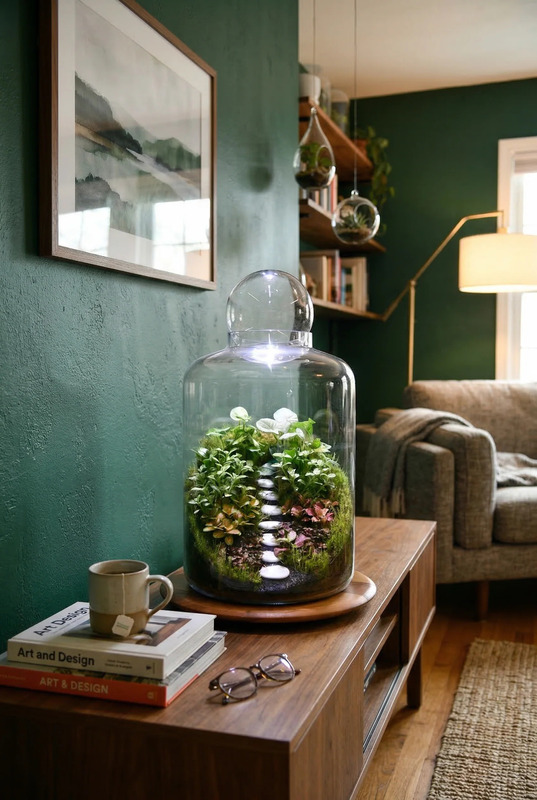
Terrariums are an alternative worth considering for those interested in creating their own small homemade gardens in a large city like Jakarta, where gardening space is quite scarce. Terrariums can be placed on a desk, bookshelf, display cabinet, or balcony; they don’t need a large area. As a result, it may fit within a home or flat without taking up too much space.
To make a terrarium, purchasing a new container is not necessarily needed. A terrarium can be made by using an unused food container, an old glass jar, a glass vase, or a repurposed bottle, resulting in an effective and productive means to reduce household waste. Once the container is ready, you may start adding suitable growing media—such as soil and, where appropriate, charcoal—followed by carefully selected small plants and mosses. Adding rocks, wood, small tree branches, and even miniature landscapes to decorate the terrarium is also a good idea.
Because there is no set schedule for water spraying, maintaining terrariums is also comparatively simple and low maintenance. The owner of a closed terrarium only needs to give the plants a quick water spritz. The time between waterings might vary from weeks to months, depending on the kind of plants and indoor conditions. In contrast, since an open terrarium loses moisture more readily, it should be watered more frequently—once or twice a week.
Once the owner successfully grows a plant in the terrarium, the plant may sometimes propagate to produce new ones. With that in mind, instead of continually purchasing new plants, the owner may try to maintain the existing plants in the terrarium and keep them from dying, thereby ensuring the plants’ life cycle inside the medium.
A terrarium can add a tiny bit of living foliage to an interior area in addition to serving as a miniature garden. The plants inside carry out photosynthesis, collecting carbon dioxide and releasing oxygen as they grow. A terrarium, thus, can be viewed as a tiny, living addition to your interior space.
Is every terrarium sustainable?
Sure, making a terrarium can be one of the enjoyable, sustainable hobbies to do at home. That being said, it also depends on how the owner maintains it. A terrarium can end up becoming less sustainable if the owner keeps buying new glass containers, purchasing a lot of plastic decorations, replacing dying plants constantly, and buying imported plants unnecessarily.
Buying new containers and plastic decorations is surely not encouraged since it would increase consumption. Additionally, energy and raw resources are needed to manufacture new containers. As was indicated in the preceding section of this article, terrarium owners can minimise needless waste by making use of the underused media in their home, such as jars, bottles, and vases. Furthermore, they can let the plants and natural materials offer the visual appeal, or they might preserve and repurpose decorations they already have. Because it takes less purchasing to make something lovely from what is already accessible, making a terrarium becomes a genuinely sustainable hobby as a result.
A sustainable terrarium, ultimately, is not about keeping every plant alive at all costs; instead, it is about making thoughtful choices from the beginning. The owner of a terrarium may consider whether the light, moisture, or temperature are appropriate before immediately replacing the decaying plants. Choosing plants that are well suited to the environment can reduce the need for frequent, costly replacements as well.
A terrarium is small, but it can encourage bigger habits: repurposing, conscious consumption, and care for living beings.