



There are a few places in the world where architecture is more than simply the design of buildings.
In Bali, architecture tells a story. It reflects centuries of philosophy, spirituality, craftsmanship, and an intimate relationship with nature.
Every temple courtyard, village compound, bamboo pavilion, and carved stone gateway speaks of an island whose identity has been shaped over generations rather than decades. That being said, as Bali experiences one of the fastest property booms in its history, an important question is beginning to emerge: What should Bali look like in the future?
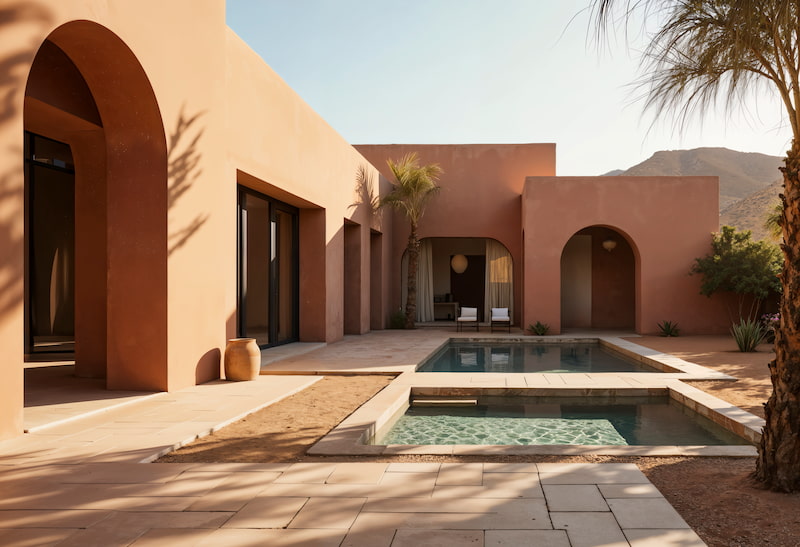
Around the island, elegant Mediterranean villas, Tropical Contemporary homes, Japandi interiors, Scandinavian minimalism, Moroccan influences, industrial lofts, bamboo architecture, and contemporary luxury estates are transforming the landscape. Many of these designs are beautiful, and they have undoubtedly helped position Bali as one of the world’s most attractive property markets. However, while architecture continues to evolve, one question deserves our attention:
How do we continue to build a modern Bali without slowly losing the very character that made people fall in love with the island in the first place?
Architecture is More Than Style
Walk through almost any developing area of Bali today, and one architectural style quickly stands out. White rendered walls. Elegant arches. Minimalist interiors. Soft earth tones. Large glass openings overlooking tropical pools. Simply put, the Mediterranean villa has become the defining image of Bali’s modern property boom.
There is a reason for that.
The Mediterranean villa is elegant, timeless, highly photogenic, and immediately familiar to international buyers. Developers understand why it works, and investors appreciate its global appeal. There is absolutely nothing wrong with Mediterranean architecture. Nor with Japandi, Scandinavian, Industrial, Moroccan, or any of the many international influences now shaping Bali’s property market. In fact, this diversity reflects Bali’s growing position as a truly international destination.
The challenge is not choosing one style over another; the challenge is ensuring that whatever we build continues to feel connected to Bali. Because architecture is never simply about buildings. Architecture shapes how a place feels. It tells visitors where they are.
Imagine travelling to Kyoto only to find rows of Miami Beach houses. Or visiting Santorini, filled with Scandinavian timber cabins. Beautiful buildings, perhaps. But disconnected from the story of the place.
Architecture becomes part of the cultural landscape. Every new development either strengthens or weakens that identity.
Bali Already Has Its Own Design Philosophy
Long before sustainability became fashionable, Bali had already developed a sophisticated philosophy for how people should live with nature. The concept of Tri Hita Karana teaches that true wellbeing comes from maintaining harmony between three relationships:
- Harmony with God (Parhyangan);
- Harmony among people (Pawongan);
- Harmony with nature (Palemahan).
It is remarkable how closely this centuries-old philosophy aligns with what modern planners now call sustainable development. Homes that respect the landscape. Communities that encourage social interaction. Buildings that exist in harmony with their environment rather than dominate it.
Perhaps sustainability was never something Bali needed to import. Perhaps it has always been here.
Asta Kosala Kosali: Timeless Principles for Modern Living
Complementing Tri Hita Karana is Asta Kosala Kosali, Bali’s traditional architectural philosophy. Often compared to Feng Shui, Asta Kosala Kosali goes much deeper. It considers orientation, proportion, climate, natural energy, family life, circulation, sunlight, wind patterns, and the relationship between buildings and the surrounding environment.
It is not about copying traditional compounds, stone for stone; it is about understanding the wisdom behind them. Modern architecture can absolutely embrace contemporary materials, smart technology, and innovative engineering while still respecting these principles. The result is architecture that feels modern, luxurious, and unmistakably Balinese.
The Rise of the Global Villa
Today’s property market is increasingly influenced by Instagram, Pinterest, and international lifestyle magazines. Developers naturally respond to what buyers appear to want. As a result, many villas being built across Canggu, Uluwatu, Tabanan, and other parts of the island could just as easily stand in southern Spain, Portugal, Mexico, or Dubai.
Global architecture has become highly transferable. Local identity, on the other hand, is not. Ironically, as the world becomes more connected, authenticity becomes more valuable.
Sustainability is More Than Solar Panels
Many projects proudly describe themselves as eco-friendly, and sometimes that simply means adding solar panels or recycled timber.
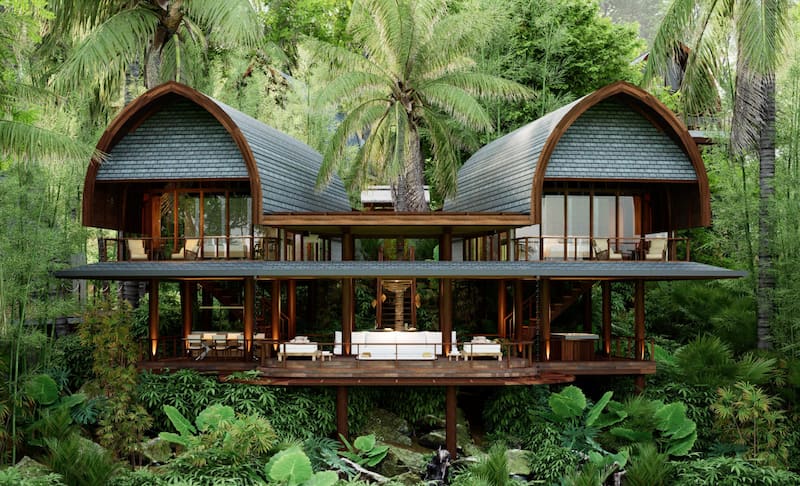
True sustainability, however, begins much earlier. Respecting mature trees. Working with the contours of the land instead of flattening them. Using locally sourced stone and timber wherever possible. Supporting Balinese craftsmen and artisans. Maximising natural airflow before relying on air conditioning. Creating tropical gardens using native species. Reducing unnecessary concrete. Building homes that age gracefully rather than simply photograph well.
Sustainability is not only about reducing carbon; it is about respecting the place.
A New Generation of Buyers
Interestingly, today’s buyers are changing too. Many no longer want a villa that could exist anywhere in the world. Instead, what they want is authenticity. Craftsmanship. A deeper connection with Bali.
Moreover, buyers increasingly appreciate natural stone, reclaimed timber, bamboo, local artistry, tropical landscaping, and architecture that responds to the island’s climate and culture. Authenticity itself, as a result, has become a luxury.
Good Design is Good Business
There is sometimes a misconception that preserving Balinese identity somehow limits development. In reality, the opposite is true.
The very reason Bali commands premium property values, attracts millions of visitors every year, and remains one of the world’s most desirable destinations is not because it has luxury villas. Many tropical destinations, after all, have luxury villas.
People choose Bali because the island offers something they cannot find elsewhere. Its living culture. Its ceremonies. Its villages. Its craftsmanship. Its spirituality. Its landscapes. Its people. These are not obstacles to investment; they are the very foundation of Bali’s economy.
Developments that embrace local materials, thoughtful tropical design, Tri Hita Karana, and the principles of Asta Kosala Kosali do more than preserve heritage. Such developments help preserve the long-term value of every investment made on the island. Culture is not the opposite of economic development; instead, culture is one of its greatest competitive advantages.
Building Bali, Not Just Building in Bali
Every villa, boutique hotel, restaurant, and neighbourhood contributes to the story Bali tells future generations. Property development, therefore, is not simply about investment returns; it is about shaping the island’s identity.
The most successful projects of the future may not be those that simply follow the latest international trend. They may be those that successfully combine modern engineering, environmental responsibility, and timeless Balinese wisdom. ‘Luxury‘ does not have to mean ‘imported’. ‘Modern’ does not have to mean ‘generic’. ‘Sustainable’ does not have to mean ‘complicated’.
Bali has already given us the blueprint. Our responsibility is simply to interpret it for the next generation. Because in the end, Bali’s greatest luxury has never been imported marble, fashionable design, or the latest social media aesthetic. Bali’s greatest luxury has always been Bali itself.
As architects, developers, investors, policymakers and homeowners, perhaps our greatest responsibility is not simply to build in Bali. Our greatest responsibility is to continue building Bali.
If you are planning to invest, relocate, or establish a residential or tourism-aligned business in Bali, we would be happy to help you plan the right steps. Contact Seven Stones Indonesia via email at hello@sevenstonesindonesia.com for insights tailored to your vision.