



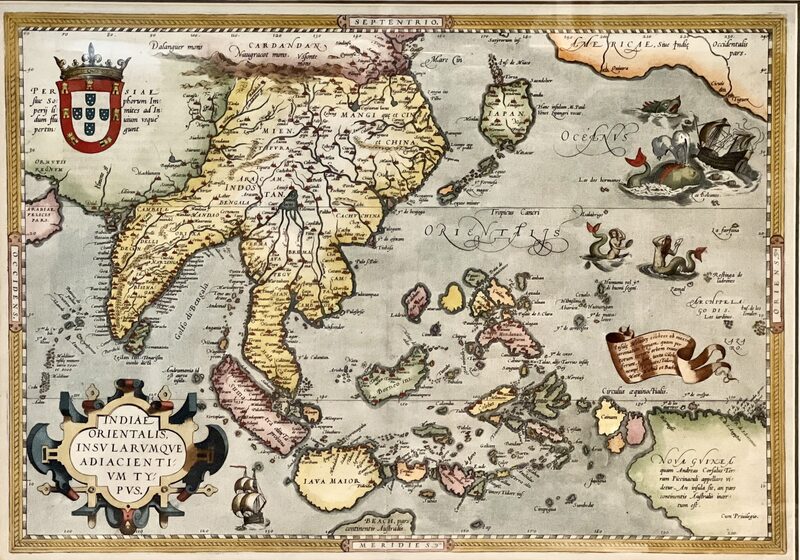
In June, Jakarta celebrated its 499th birthday under the theme “Moving Towards a New Era.” The birthday marks the 22nd of June, 1527, when Fatahillah defeated the Portuguese at Sunda Kelapa and renamed the settlement Jayakarta, meaning “complete victory” or “city of victory.”
Nearly five centuries later, beyond Jakarta’s modern skyline lies a city shaped by centuries of cultures, trade, and change. As Jakarta continues to evolve, it is easy to overlook the history beneath its surface. Some of Jakarta’s greatest stories are preserved not in its buildings, but in the maps that reveal how a small trading port grew into one of Asia’s largest cities.
Maps are more than tools for navigation. They simplify the world and help us understand it, explore, build, and connect. They are not just records of the past, but a bridge between past and present, telling stories as vividly as any museum.
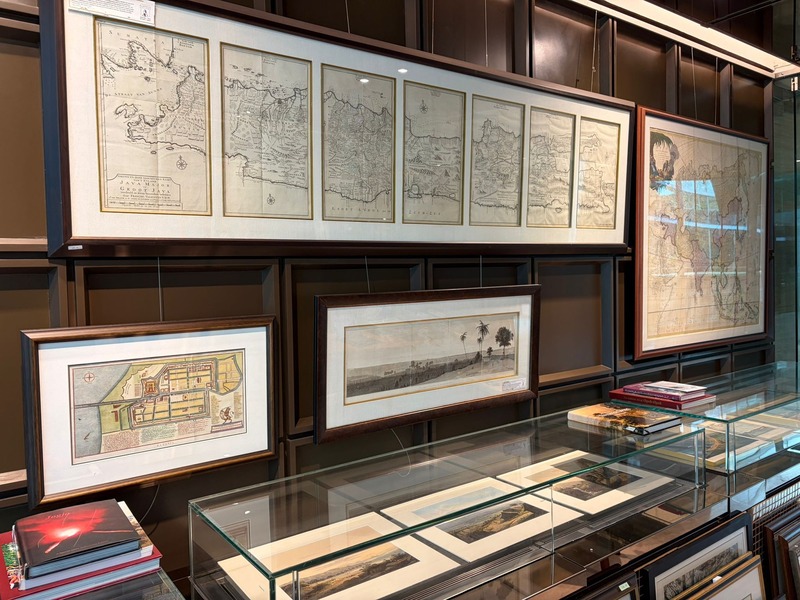
One place to discover that story is Bartele Gallery at Hotel Indonesia Kempinski Jakarta. Home to a collection of antique maps, rare books, lithographs, and historical works on paper, the gallery traces Jakarta’s transformation over five centuries through the maps that recorded it, offering a rare perspective on the city’s evolution.
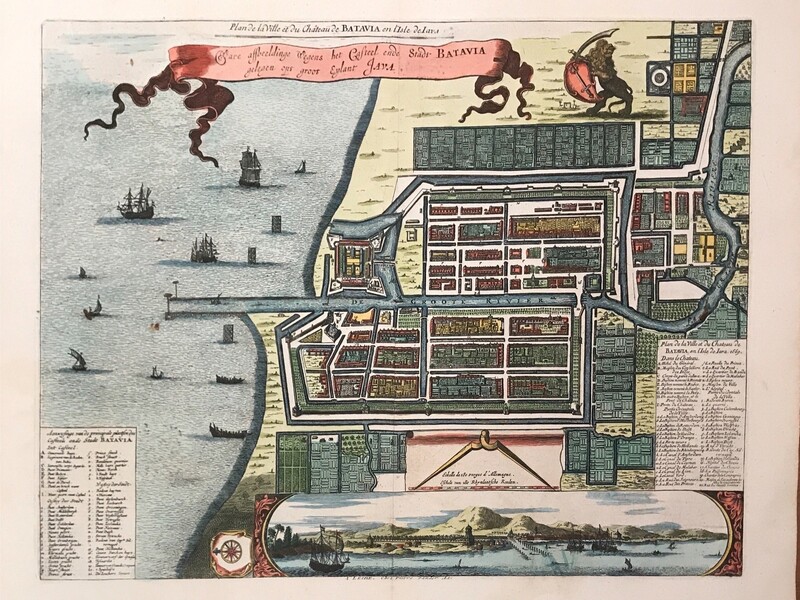
From Jayakarta to Batavia
The newly named Jayakarta was situated along Java’s northern coast and quickly became an important trading port. Merchants from across Asia came to exchange goods, bringing new ideas and influences that shaped the settlement.
Its growing importance soon caught the attention of the Dutch East India Company (Vereenigde Oostindische Compagnie or VOC). When the Dutch established Batavia in 1619, they built more than a trading post. Inspired by Amsterdam, the colonial settlement was planned with canals, fortified walls, and orderly streets to support both trade and defence. Warehouses, markets, and government buildings were arranged along the city’s waterways, allowing goods from across the Indonesian archipelago to move efficiently through one of Asia’s busiest trading ports. Batavia soon became the administrative and commercial centre of the Dutch East Indies, drawing merchants and communities from across Asia, Europe, and the Middle East, and helping shape the diverse Jakarta we know today.
Much of Batavia has since disappeared beneath the modern city, but traces of its past remain.
Reading History Through Cartography
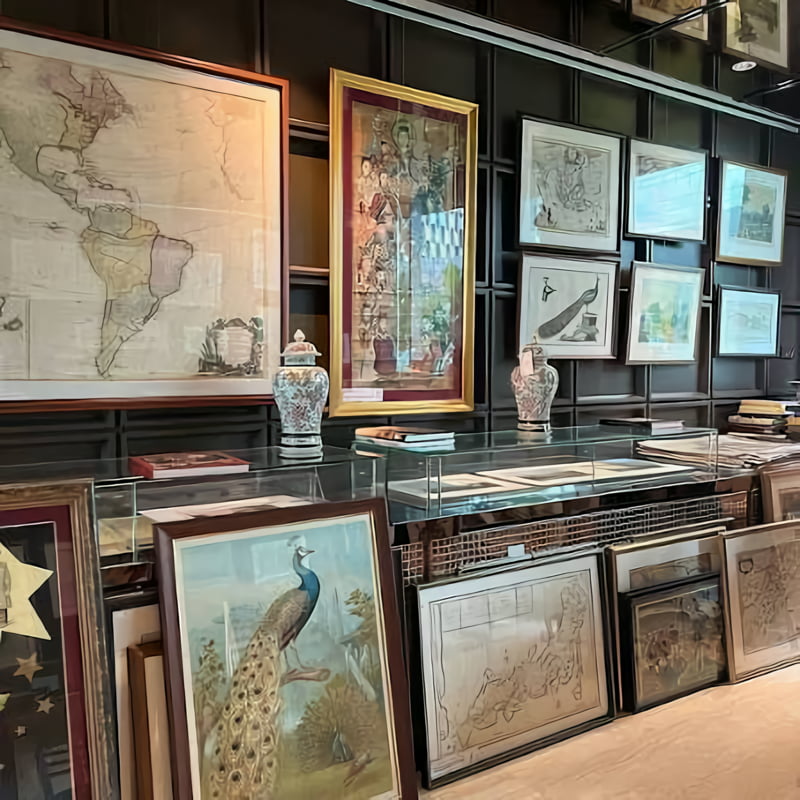
Jakarta’s history survives not only in archives and museums, but also in the maps that recorded the city as it changed over time. From early depictions of Batavia to detailed charts of the Indonesian archipelago, these works reveal how explorers, merchants, and cartographers understood a world that looked very different from the one we know today.
Founded in 2009 by Dutch-Indonesian collector and antiquarian Bartele Santema, Bartele Gallery has been in Jakarta since 2011, beginning in Kemang, to Mandarin Oriental Jakarta, and now, Hotel Indonesia Kempinski Jakarta. The gallery introduces visitors to antique maps, rare books, lithographs, engravings, and historical works relating to Asia and the former Dutch East Indies.
Bartele Gallery displays a carefully curated collection spanning more than five centuries. Across its locations in Jakarta and the Netherlands, it cares for over 20,000 historical objects, with many works also available through the international fine art marketplace 1stDibs, making the collection accessible to museums, universities, libraries, and collectors around the world.
Walking through Bartele Gallery is like travelling through Jakarta’s history. Rather than reading about the city’s past, visitors can follow its transformation through centuries-old maps, books, and illustrations, watching the capital take shape gradually over time.
For those familiar with Jakarta, the contrast is especially striking. Looking at these maps, it is hard to imagine that the canal city they depict would one day become Jakarta today.
The collection at Bartele Gallery also includes works by some of history’s best-known cartographers, including Gerardus Mercator, Abraham Ortelius, Willem Blaeu, and Petrus Plancius. Their maps not only chart the Indonesian archipelago but also reflect Europe’s growing understanding of Asia during the Age of Exploration. Beyond cartography, rare books, engravings, lithographs, manuscripts, sea charts, and historical prints offer another window into Indonesia’s past, providing a natural bridge to the city’s next chapter.
A New Chapter for Jakarta
Jakarta’s story did not end with Batavia. Following Indonesia’s independence in 1945, the city entered a new chapter as it grew into the modern capital we know today.
One of the defining moments came with the 1962 Asian Games. As Indonesia prepared to welcome athletes and visitors from across Asia, President Soekarno launched a series of ambitious projects to reshape Jakarta as a young, independent nation to the world. At the heart of that vision was Hotel Indonesia, designed by American architect Abel Sorensen with Indonesian architect Soejoedi Wirjoatmodjo overseeing its construction. The hotel opened on the 5th of August, 1962, as Indonesia’s first international-standard luxury hotel.
Named after the hotel, Bundaran HI (Hotel Indonesia Roundabout) became the centre of Soekarno’s modern Jakarta, complete with the Selamat Datang Monument (“selamat datang”, in English, means “welcome”). Designed by Henk Ngantung and sculpted by Edhi Sunarso, the monument depicts a man and a woman welcoming visitors to the capital, and remains one of Jakarta’s most recognisable landmarks—a symbol of Indonesia opening itself to the world.
Following an extensive restoration, Hotel Indonesia reopened in 2009 as Hotel Indonesia Kempinski Jakarta, preserving the character of the original building for a new generation.
Today, the hotel brings together two important chapters of Jakarta’s story. Its architecture reflects Indonesia’s post-independence vision, whereas the Bartele Gallery within its walls preserves the city’s much earlier history through centuries-old maps and historical works on paper.
Looking Beyond the Skyline
To understand a city, we need to look beyond its skyline to the stories that shaped it. From centuries-old maps and the streets of Kota Tua to the landmarks of modern Jakarta, each reveals another chapter of the city’s journey.
A city has a soul because its past continues to shape its present. In Jakarta, that story lives on through its people, cultures, neighbourhoods, and the maps that have preserved its history for centuries.
Jakarta’s story is still being written. Yet some of its most revealing chapters were drawn centuries ago—one map at a time.

Bartele Gallery Jakarta
- Location: Hotel Kempinski Jakarta (ground floor)
- Instagram: @bartele.gallery.jakarta
- Website: bartelegallery.com
- Email: info@bartelegallery.com
- Online Shop: 1stdibs.com/dealers/bartele-gallery