



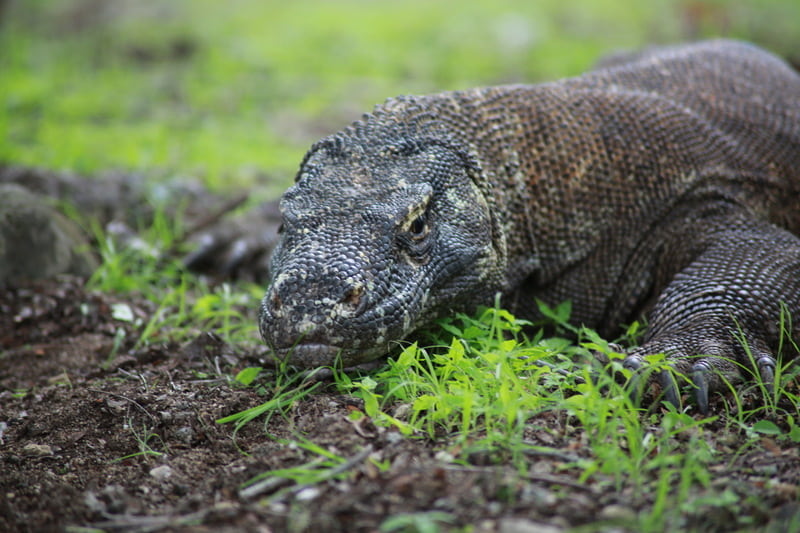
Inside Komodo Village, humans and dragons continue an uneasy coexistence shaped by myth and survival.
On a cruise trip around the Komodo National Park aboard a live-in boat, tourists would usually experience a glimpse of the Komodo Dragon, enjoy an early morning hike on the beautiful hill on Padar Island, and sunbathe on the pink sand beach nearby. Very few, however, venture to pay a visit to the Komodo Village on Komodo Island.
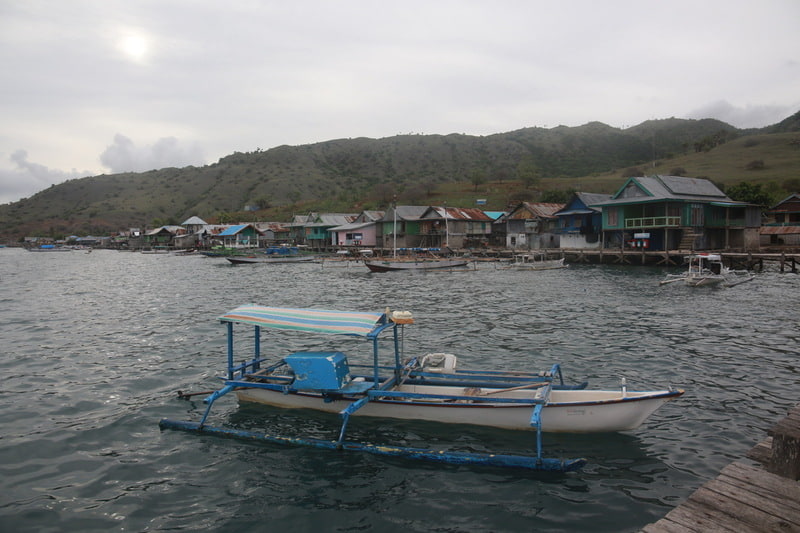
When my boat is anchored a few metres away from the island, I take a long pause to look at what appears to be a shantytown punctuated by the sea and the hills. The tops of the stilted houses and the dome of a lone mosque, with the backdrop of dark, barren hills, is a picture of isolation. It is also a picture of some of the most dangerous and uncomfortable ways of living.
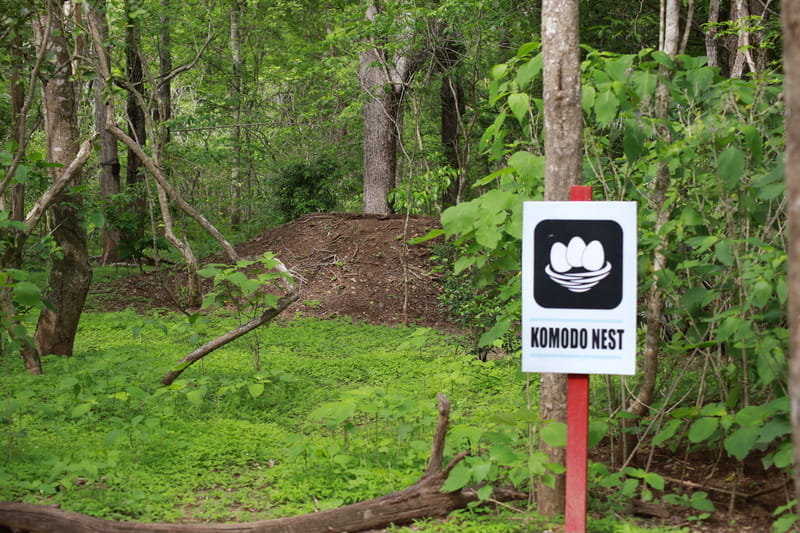
Lawrence Blair, in his 1988 documentary film series Ring of Fire: an Indonesian Odyssey, pitied such a village: “a sorry-looking clutch of lean-tos on stilts with a population of some 400 impoverished souls clinging to life at the edge of the sea.“ Half a century after Blair’s visit, I still see the stilts and life balancing between land and water.
I get on to the pier along with my guide towards the gateway to the humble village that is currently home to more than 500 locals, though they are not the original Komodo natives that used to live there more than 100 years ago. The Ata Modo people, as the Komodo’s original inhabitants were known, have mostly disappeared. The few that still live in the village are children from mixed marriages and integrated with the later settlers from Bima and southern Sulawesi. Today, we know very little about the Ata Modo people apart from the fact that historically, they used to live in harmony with the Komodo dragons, believing the creatures were their twin siblings—one human, one dragon—born from the mythical Dragon Princess named Ora.
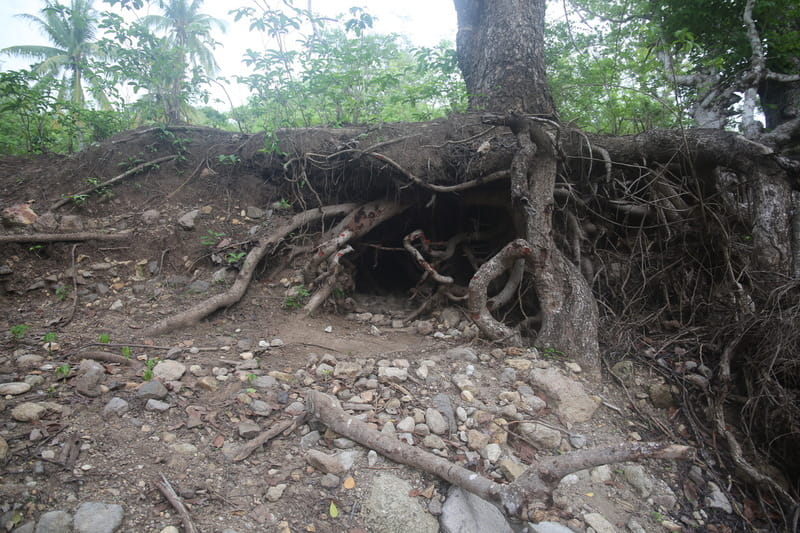
Phion, my guide, walks before me, as I follow him along houses built of wood of different shapes and sizes. Their bottom parts are as important as the inner ones, as that is where the goats, the chickens, the cats, and other domesticated animals are kept during the day. At night, if a house doesn’t have a protective cage or coop, the animals would find a place alongside the humans.
The stilts serve a dual purpose, acting as both a defence against the rising tide and a primitive (but necessary) barrier against the Komodo dragons that roam the island. As we walk deeper into the village, Phion points towards the darkly shaded areas beneath the dwellings. Here, the boundary between the domestic and the wild is paper-thin. A goat bleats as it is tethered to a post, its eyes fixed on the scrubland just beyond the village perimeter. It is a reminder that, in this environment, life is always being watched by something older and more patient than man.
To an outsider, the presence of an apex predator that can reach three metres in length and bring down a water buffalo is a source of terror. To the villagers, however, the Ora—as they call the Komodo dragons—are familiar, albeit dangerous, neighbours. The relationship is governed by a set of unwritten rules honed over centuries. You do not run, you do not bleed in the open, and you never treat the Ora with disrespect.
The villagers recount stories of the Komodo dragons wandering into the village square as if they were village elders returning from a long walk. There is no panic; instead, there is a quiet, rhythmic repositioning. Children are gathered onto porches, and the men use long, forked sticks—not to harm, but to gently guide the dragons back into the jungle. It is not just a struggle for survival but also a sophisticated, ancient coexistence, which requires a temperament few modern humans possess.
Despite the influx of Bima and Bugis (from Sulawesi) settlers, the spiritual ghost of the Ata Modo people still haunts the village’s customs. The legend of the Dragon Princess is not just a story for tourists; it is a moral compass. Because the Komodo dragons are seen as their siblings, the villagers traditionally forbid the killing of the creatures, even when livestock is lost.
“If you kill a [Komodo] dragon,” Phion whispers, “you are killing a piece of your own history.”
This tradition now faces the complex pressures of the 21st century. The village is slowly rising from the so-called “sorry-looking clutch of lean-tos”. Solar panels now glint from several roofs, and the blue glow of mobile phones can be seen through open doorways in the evening. The establishment of the Komodo National Park has brought a paradoxical shift as well: the people are now ‘protected’ by the same regulations that restrict their traditional fishing and hunting grounds. They have transitioned from being the masters of the island to being its exhibits, navigating the thin line between being a living museum and a modern community.
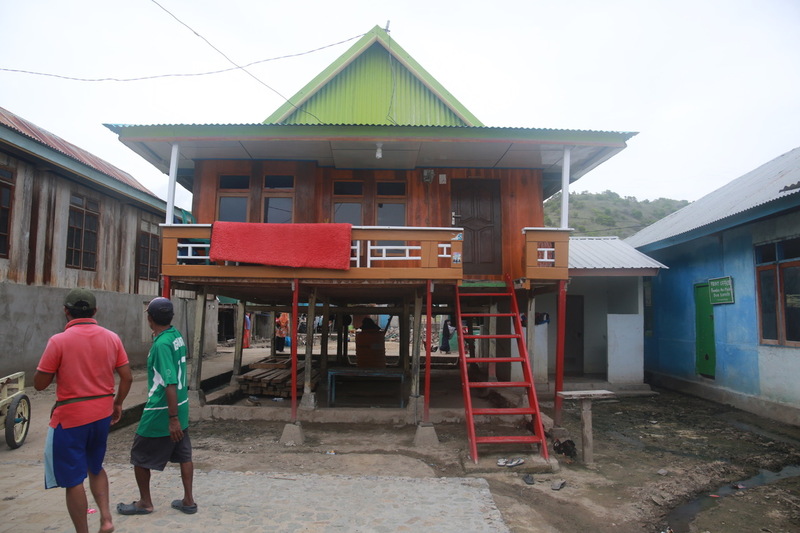
Moreover, despite the spiritual kinship, the ‘sibling’ bond between the Komodo dragons and the villagers is frequently tested by the dragons’ cold, predatory instinct. This coexistence carries a heavy toll; over the decades, both villagers and unwary tourists have fallen victim to the Ora’s lightning-fast ambushes.
“The dragons do not always remember we are brothers,” Pak Amin, a village elder, tells me while gesturing toward the scrubland. “Outside visitors see [in the Komodo dragons] a statue for their cameras, but we see a hunger that has lived here since the beginning of time.”
For the inhabitants, living with dragons is a daily exercise in hyper-vigilance. They have learned that respect and survival are two sides of the same coin: you can refer to the dragons as brothers, but you must never turn your back on them.
As I prepare to leave the pier and return to the comfort of my live-aboard boat, I look back at the dome of the mosque and the clusters of wood and thatch. What I used to perceive as an uncomfortable way of living now feels more like a profound resilience. The isolation is not just geographical; it is psychological.
All images are courtesy of Pramod Kanakath.