



A North Sumatra farmer caught a magic fish that turned into a woman.
They married on condition that he wouldn’t reveal her past. Being a blabbermouth, he broke the promise; she returned to her former wet ways and settled in Lake Toba.
That’s how fish got into the world’s largest freshwater volcanic lake, 100 kilometres long and 30 kilometres wide, bigger than Singapore.
The more plausible explanation is that settlers introduced fish, just as their namesakes did with rabbits in Australia’s deserts.
Fortunately, the mujair/tilapia did the right thing by their liberators. They didn’t dig burrows or nibble young wheat, but brought protein and great taste to the plates of locals and tourists.
Dining is basic and cheap. As this is a Christian area. Dogs roam, pork is on most menus, and the cafes sell cold beer.
Lake Toba was formed 74,000 years ago from a globe-shaking mega volcano, the fourth over the millennia. The surface is 900 metres above sea level. Humans were abroad at the time, so some might have been victims. It covers more than 1,145 square kilometres and is 450 metres deep. Samosir Island, at its centre, offers a cool, scenic escape enhanced by smooth surface swimming and motorised fun, such as skiing, kayaking, boating, and ballooning.
The latest official figures claim more than six million Indonesians visited Lake Toba in 2024. Groups drive four hours from Medan, the nation’s fourth largest city on the northeast coast of Sumatra, to get here. There’s plenty for the kids while the oldies suck in the mountain air and wash their eyes with rare sights. The water looks clean, and there’s no salt taste. Some residents pound clothes on the stony beaches, though detergents don’t wash with marine life. Only 250,000 foreigners made the long, pretty but serpentine journey to Lake Toba. The attractions aren’t like Java’s artificial theme parks built around franchised cartoon characters from overseas film studios with no recognition of the wayang characters and tales.
For the sort of macho blokes seen in Java smoke ads (banned here), there are loud jet skis, big balloons, and hiking, though these are not hazard-free. At the lake, Australians who are used to the Nanny State, where every danger is foreseen and quarantined by law, would need a return to the good old days of taking personal responsibility.
Stairs to the guest houses are almost vertical. If you’re not fit, you won’t fit. Bring nothing bigger than a backpack or a helper unafraid of vertigo.
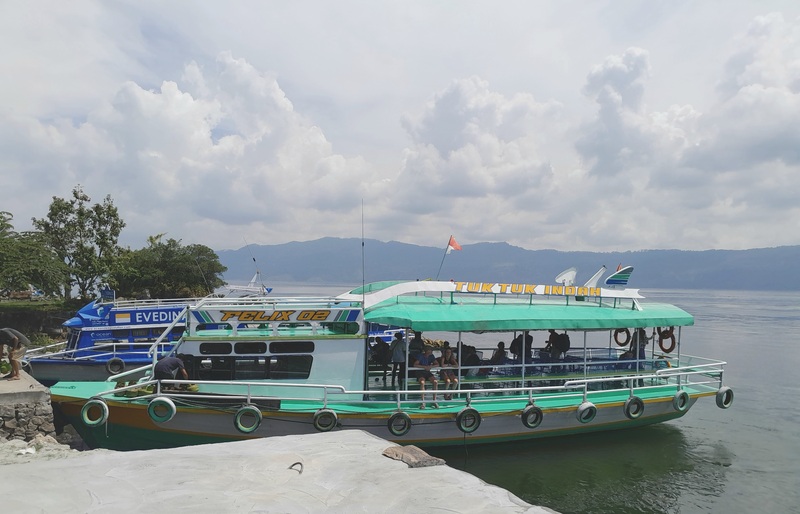
Count the life belts on the ferry before you make the trip to Samosir Island; its villages, like TukTuk, are where you stay, wander, and shop.
For Bali-bores who’ve exhausted their gushing cliché-swags of beauty, culture, and wonder—or get fed up being addressed as ‘Mister‘ when they’re clearly not—here’s a world-class wonder that has yet to be smothered by crowds and commerce. They will come—so visit before the crass developers’ drones start mapping.
There are a few backscratchers and baseball caps among the ‘souvenirs’, but local handicrafts dominate. Toba has got its tourist facilities to an international level by preserving and enhancing its unique wonders rather than ripping off the naive. The Heritage Village cashier sells entry tickets for Rp10,000 (60 cents in US dollars), and you get far more than your money’s worth.
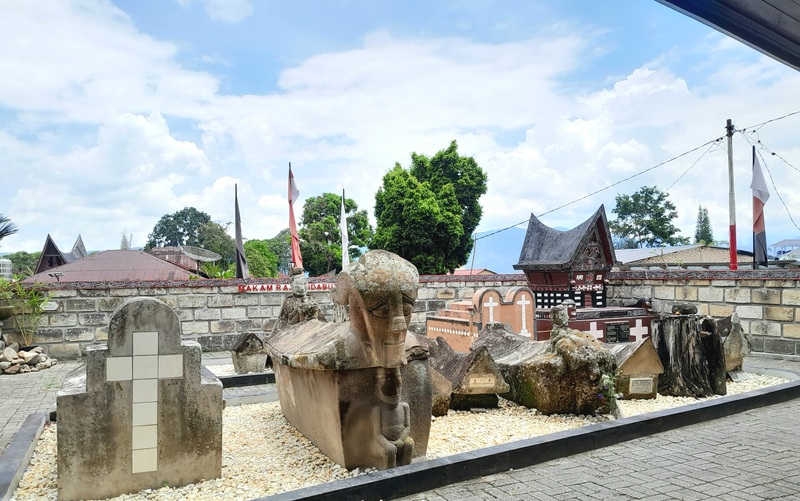
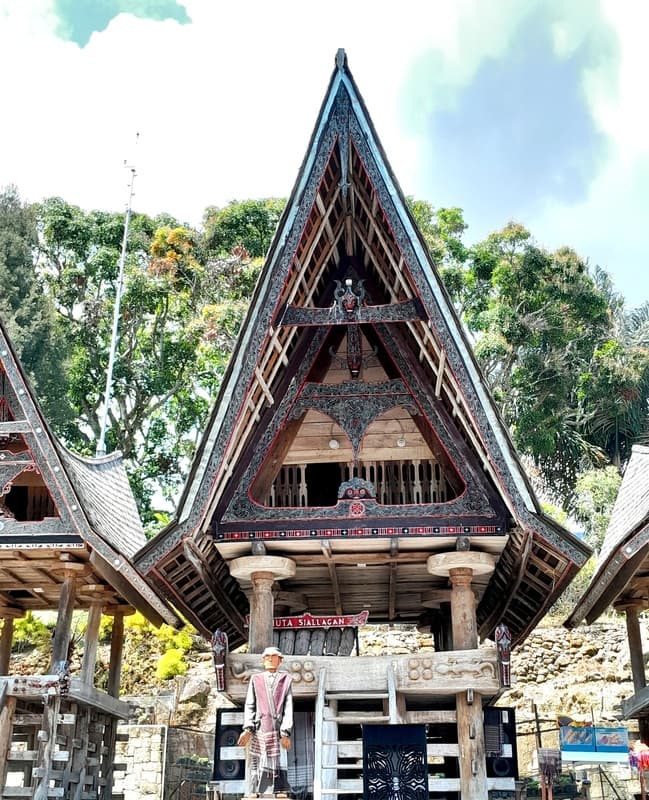
Elaborate graves are among the veggies in household gardens and street verges. Gorga—the black, red, and white motifs—and statues are arresting with their creativity. The three-dimensional reliefs of the friendly gecko god called Boraspati ni Tano, exploring four breasts, represent fertility. Moreover, the scooped house roofs represent buffalo horns with intricately carved and painted side timbers. They’re built on piles because the lake rises with good rainfall.
Look up and see mountain slopes so sheer that many are crevassed by landslips, visible only when the clouds lift and the shuttling storks descend to see what the crisscrossing boats have stirred.
There are about 8.5 million Batak people in Indonesia, determined to maintain, enlarge, explain, and promote their culture without aggravating other faiths. For their modernity, the Batak people are indebted to the flexibility of a 19th-century Danish Lutheran missionary, Ludwig Ingwer Nommensen. He arrived in what was then the Dutch East Indies back in 1862, learned the Hata Batak Toba language, and translated the Bible. Instead of banning ancestor worship—as favoured by rigid missionaries in those times of Western superiority—he blended the traditional beliefs of the locals with Christianity.
When Nommensen died in 1918, there were more than 500 indigenous congregations. The Batak Christian Protestant Church (Huria Kristen Batak Protestan or HKBP) is now Indonesia’s largest Protestant church.
Now they’ve got the United Nations Educational, Scientific and Cultural Organisation (UNESCO) to declare Lake Toba a Global Geopark, defined as “single, unified geographical areas where sites and landscapes of international geological significance are managed with a holistic concept of protection, education, and sustainable development.“
Don’t be repelled by the science-speak; Toba has some of the best whole-family attractions in the Republic of Indonesia—and a stand-alone indigenous culture worthy of wonder.