



The perennial blame game over Indonesia’s deadly forest fires in Kalimantan brings to mind Mary Shelley’s classic gothic horror novel, Frankenstein.
In the book, Dr Victor Frankenstein creates a monster, then abandons it. After the creature starts killing people, Frankenstein spends much time ineffectually hunting it down, as if it were some external abomination, rather than his own creation.
Back in 2020, the Indonesian government launched an ill-conceived food estate programme, spearheaded by then-defence minister Prabowo Subianto. The main site was in Central Kalimantan province, where vast areas of peatlands were drained and rainforest was cleared. Scientific warnings of dire environmental consequences fell on deaf ears. Predictably, the projects were generally expensive ecological failures.
After Prabowo Subianto became president in 2024, the national food estate programme was aggressively pursued in Merauke, South Papua province, where massive land-clearing is still taking place for corporate and state-led agricultural and plantation development. The project targets over two million hectares, has displaced thousands of locals, and involved the Ministry of Forestry conveniently reclassifying over 480,000 hectares of forest as “non-forest land”.
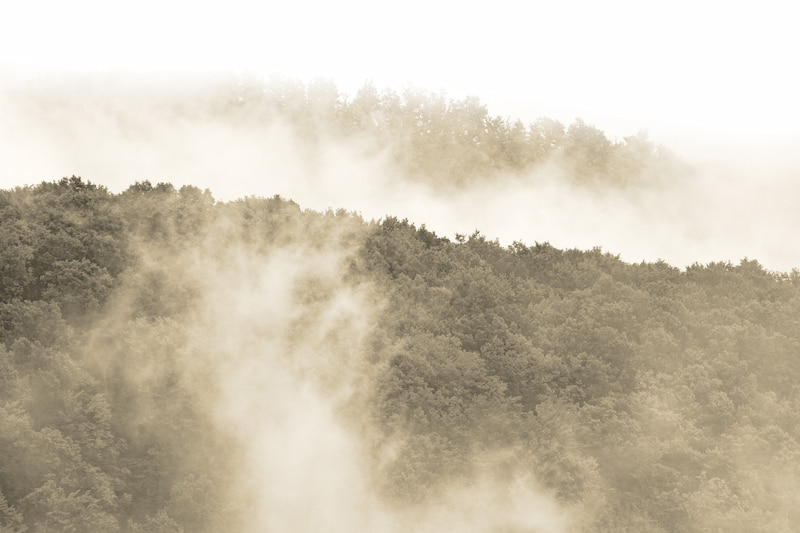
Draining peatlands and clearing rainforests makes soil dry, transforming fire-resistant areas into tinderboxes. When this year’s “super El Niño” phenomenon exacerbated Indonesia’s dry season, fires deliberately lit to clear land swept through swathes of flammable land—and they’re still burning. Central Kalimantan is now one of the epicentres of the resulting toxic smoke haze, while fires are also burning inside the Papua food estate zone and in parts of Sumatra.
The Helsinki-based Centre for Research on Energy and Clean Air attributed an estimated 1,700 deaths in August alone directly to the pollution caused by the fires. Indonesia’s Health Ministry has reported over 170,000 cases of acute respiratory infections, including 40,000 involving children under five. Neighbouring countries have also been affected, with flights cancelled and schools closed. Endangered orangutans are dying.
So, who’s to blame? Obviously, the entities behind the deliberate fires and those whose policies worsened conditions. Plantation companies tend to pin the blame on small-scale traditional slash-and-burn farmers, but there is evidence that companies have paid local people to start fires.
Some critics pointed the finger at the government’s severe budget cuts to disaster agencies and its abolition of the Peatland Restoration Agency. When experts criticised the enormous diversion of funds to Prabowo Subianto’s free meals programme, he responded in early September by calling them “idiots”.
The adoption of Donald Trump’s childish insults went down like a lead balloon. Faced with mounting criticism and a worsening regional haze crisis, Prabowo Subianto went into damage control mode. On the 24th of September, he summoned 22 leading environmental academics and researchers to the State Palace in Jakarta. He claimed his earlier words were “twisted” and insisted he deeply respects experts. He then sought advice on the best steps to prevent forest fires
You don’t have to be a genius to see that land cleared for purported food security is instead burning up, choking parts of Southeast Asia in a toxic haze, and adding to global carbon emissions. Greenpeace Indonesia has called out the government for failing to grasp the root cause of “predictable and preventable” peatland fires, as well as failing to protect public health and prosecute corporate entities.
An environmental and social justice watchdog in Kalimantan, Tim Advokasi untuk Keselamatan Rakyat (TAKAR), says the fires are a consequence of industrial activity, government policy, and weak law enforcement, as most of the blazes are within corporate concession areas. The group also alleges selective law enforcement, noting that although the Forestry Ministry has revoked the licenses of some errant firms, a prominent company with a much larger burned area has not been penalised because it is linked to one of the country’s most powerful individuals.
If companies with powerful political connections escape prosecution while smaller players are punished, others may believe that “donations” will also give them impunity, even if some managers have to be sacrificed in court.
Any efforts to blame nature seek to shield the real culprits. Like Frankenstein’s monster, these fires are man-made, the result of human hubris and incompetence, not simply a product of nature.
When the fires are eventually extinguished by the arrival of the wet season, perhaps by late October, Indonesians will continue to breathe deadly toxic fumes, largely due to the predominance of coal-fired power plants and vehicle and industrial emissions. More Indonesians are killed each month by “regular” air pollution than by the current fires.
Until the government cleans up its power generation, improves rainforest protection, and tackles the conflicts of interest between politicians and oligarchs, there will be no clear skies ahead for Indonesia. Instead, the nation can expect more choking haze and other man-made monsters created by short-term thinking and a refusal to see the obvious consequences.
DISCLAIMER: Any opinions expressed in this article are those of the author and do not necessarily reflect the views of Indonesia Expat.