



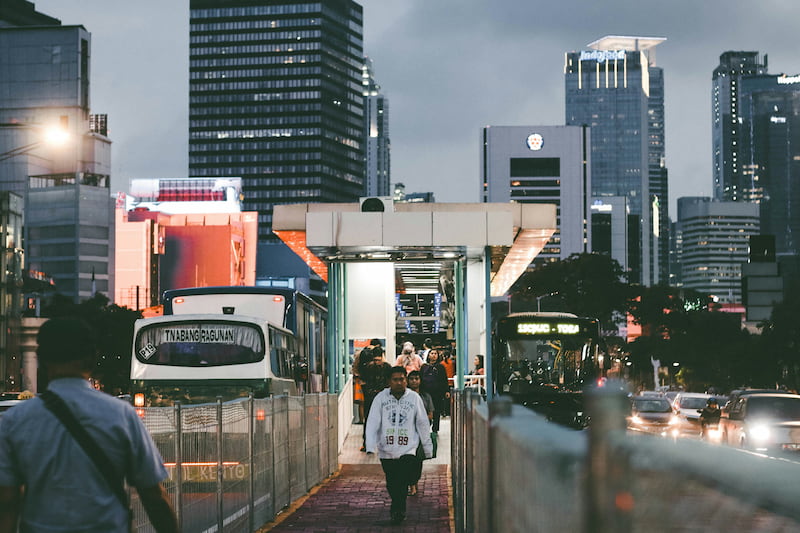
By rejecting the relentless grind of vehicular isolation and rediscovering the dignity of the sidewalk, Indonesia’s urban generation is rewriting the definition of a life well-lived in the modern metropolis.
Jakarta and other major Indonesian metropolitan hubs have long been defined in the global imagination by relentless gridlock, exhaust fumes, and an unforgiving 24/7 hustle culture. For decades, navigating these concrete expanses was treated strictly as an endurance sport, where success was measured by private vehicle ownership and survival meant escaping the street as quickly as possible. The narrative was simple and suffocating: endure hours sealed within air-conditioned cars or weaving precariously through snarled avenues on motorbikes, with the hermetically sealed, multi-story shopping mall serving as the only viable sanctuary from the elements and the chaos.
Over the past two years, however, a noticeable cultural shift has taken hold among young urbanites across Java and beyond: the rise of intentional pedestrian culture, transit-oriented leisure, and the ‘slow commute.’
Rather than viewing public transit and pedestrian routes solely as utilitarian conduits between desk and bedroom, Indonesia’s urban Gen Z and millennials are reclaiming transit nodes, sidewalks, and heritage corridors as vital third spaces. What began as an incremental adaptation to modern infrastructure projects—such as the expansion of the Jakarta MRT, LRT, and KRL Commuter lines—has blossomed into a full-scale sociological reorientation. This movement reflects a deeper psychological rebellion against chronic burnout, while fundamentally reshaping local commerce, urban geography, and community dynamics.
The renaissance of transport interchanges
The traditional weekend ritual of navigating labyrinthine underground parking structures to spend hours inside upscale, climate-controlled megamalls is no longer the undisputed default. Transport interchanges and revitalised historic hubs have increasingly supplanted private, gated malls as the premier social destination for a new generation.
Nowhere is this transformation more vivid than in South Jakarta’s Blok M. Once a utilitarian transport terminal past its 1980s heyday, the neighbourhood has experienced an electrifying renaissance directly linked to the MRT station anchored at its centre. On any given late afternoon, steps leading up to the platforms and the surrounding public plazas swell with students, creative freelancers, and office workers unwinding. People linger on open concrete benches, chat over takeaway iced coffee, and share communal space without the tacit requirement of spending exorbitant sums just to justify their presence.
This dynamic is not an isolated Jakarta phenomenon, as similar transit-adjacent revivals are flourishing across Java’s urban network. In Bandung, the corridors surrounding the central railway station and Jalan Braga have evolved from neglected vehicular arteries into walkable cultural boardwalks where weekend visitors prioritise train arrivals over the legendary traffic jams of the Pasteur toll gate.
In Yogyakarta, the pedestrianisation of Jalan Malioboro and the integration of commuter rail connecting to Solo have created contiguous stretches of public promenade, turning train stations into communal gathering grounds.
Meanwhile, in Surakarta, the reactivation of heritage corridors linked by clean, punctual electric rail services has offered residents accessible public squares where daily life decelerates. These hubs function as dynamic living rooms for cities that historically suffered from a severe deficit of public open space, providing unpretentious, democratic forums where diverse cross-sections of society coexist.
Shattering socio-economic stigma
For decades, walking in Indonesian cities carried an unfair socio-economic stigma. To be on foot was often viewed as a consequence of hardship—an uncomfortable, sweat-drenched ordeal reserved only for those who could not afford a motor vehicle.
Today, that stigma has been decisively shattered. Grassroots walking collectives, architectural heritage walks, and morning commuter strolls have transformed walking from an endurance trial into a conscious aesthetic statement and an essential tool for mental decompression. Initiatives like Jakarta Good Guide, Ngopi Pagi Berjalan, and local urban exploration clubs across provincial capitals regularly draw hundreds of participants each weekend. Equipped with comfortable sneakers, reusable water bottles, and analogue cameras, participants meander through tree-lined residential pockets, historic Dutch colonial corridors, and hidden urban alleyways.
This renaissance is profoundly therapeutic. In cities characterised by information overload, high ambient noise, and occupational hyper-connectivity, a deliberate stroll provides an unmediated sensory experience. Foot-level pacing forces urbanites to observe architectural nuances, converse with neighbourhood street vendors, and register the micro-rhythms of their environment.
By deliberately slowing down their physical speed to four kilometres per hour, urbanites carve out an intentional boundary between professional obligations and personal well-being.
This pedestrian consciousness has sparked an economic realignment across Indonesian cities. Moving away from car parks and valet access, independent cafes, bookshops, and boutiques now thrive on foot traffic. Featuring open-air storefronts near transit nodes, these walkable micro-retail hubs encourage patrons to linger longer, spend thoughtfully, and build deeper connections with neighbourhood commercial districts than drive-in consumers ever did.
Shifting cultural foundation
The philosophy underpinning this lifestyle is best articulated by the people who live it every day.
Farhan, a 27-year-old digital strategist who sold his car after moving along the MRT line in Fatmawati, notes that while the previous generation measured success by sitting motionless in private sedans on congested toll roads, true modern luxury lies in schedule sovereignty. Walking eight minutes under shaded trees, reading on the train, and arriving clear-headed allows young professionals to trade traditional status symbols for sustained sanity.
Community organisers echo this sentiment, emphasising that the shift represents democratic urban stewardship. Rara, a heritage walking tour coordinator based in Central Java, observes that viewing a city exclusively through tinted windshields detaches residents from urban realities. Pacing the pavement reveals who the city truly works for, proving that a great metropolis is not one where everyone drives, but one where even the wealthy choose to walk and ride public transit together, cultivating profound civic empathy along the way.
The growing embrace of intentional, pedestrian-centred living is not an absolute cure-all for the structural challenges facing Indonesian metropolises. Issues of pedestrian safety, shading from the tropical sun, accessibility for persons with disabilities, and air quality remain persistent hurdles requiring aggressive urban planning and sustained municipal investment.
Yet the cultural foundation has irrevocably shifted. By rejecting the relentless grind of vehicular isolation and rediscovering the dignity of the sidewalk, Indonesia’s urban generation is doing far more than commuting. They are pacing their cities with intention, asserting their right to public space, and rewriting the definition of a life well-lived in the modern metropolis.
The writer of this article, Donny Syofyan, is a lecturer at the Faculty of Humanities, Andalas University.