



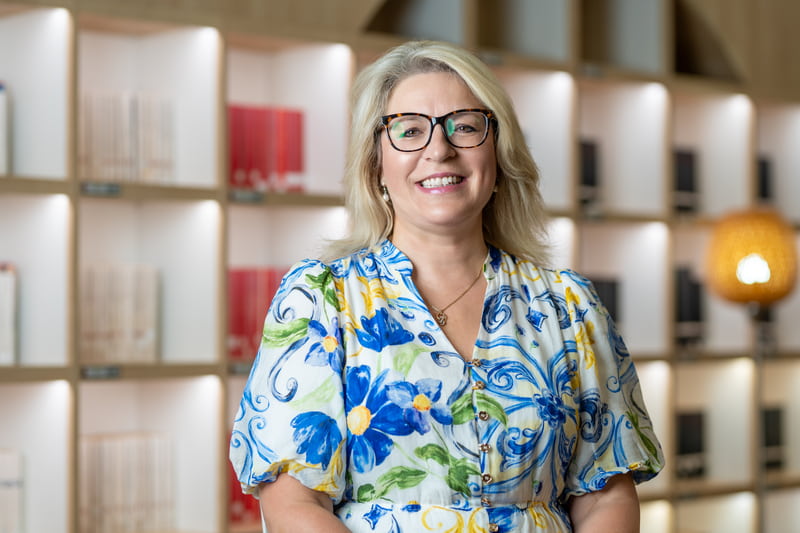
Melissa Meyers, the Founding Head of School at Wellington College Independent School Jakarta (WCIJ), shared what the prospective pupils, as well as their parents, can expect from the first British-heritage school in Indonesia.
The globally acclaimed Wellington College has finally arrived in the Emerald of the Equator! Since its official announcement, Wellington College Independent School Jakarta (WCIJ) has made waves in the Jabodetabek education ecosystem, being not only the first Wellington College in Indonesia but also the first British-heritage school. With an extraordinary history behind its namesake alone, WCIJ is poised to become an extraordinary educational presence as well. Indonesia Expat had the chance to chat with the Founding Head of School, Melissa Meyers, who shared what to expect from WCIJ—including how a blend of unfailing tradition and open-eyed innovation is the key to future readiness.
Hi, Melissa! Let’s start with your background a bit. What can you tell us about yourself?
Well, I have been in education for over 30 years now. I was born and brought up in the Middle East, the Caribbean, and the UK. As a result, that love of different cultures, that love of learning about different people in different places, has taken me through my whole life. Indonesia will be the 10th country that I’ve lived in. I love to explore and hike. Previously, I really loved triathlons and long-distance adventure races. And I love to paint, more of an abstract kind of art; in the past, I was quite interested in sculpture, and I’ve previously had my own exhibitions. And I love cooking, tasting, and trialling different recipes. I love Indonesian cuisine as well.
Can you briefly tell us the journey and the motivation leading up to you and your team eventually establishing WCIJ?
Wellington College UK was founded by Queen Victoria and Prince Albert back in the 19th century. Today, this incredible organisation has become global. As the schools grow and develop globally, Wellington College had thoughtfully considered suitable places for the brand, and felt that with Indonesia’s growing demand for world education, as well as the government’s commitment to education, it’s such an exciting time to be part of that conversation and part of that journey in this country. On top of that, with the trade agreement that’s just been made between Indonesia and the UK, it just seemed like this is a really good time for us to learn with and from each other.
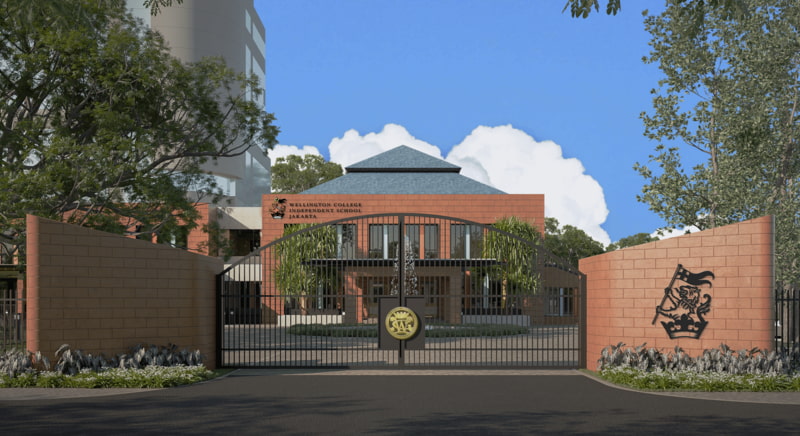
We then chose BSD City as the location for WCIJ. The city, with its thriving international community and premium infrastructure, really matches that innovation that we feel also embodies the Wellington curriculum. And then, the values. The Indonesian values really match well with the Wellington values of kindness, respect, integrity, responsibility, and courage. Hence, we feel this partnership is one that we’re just really inspired by.
WCIJ is the first British-heritage school in Indonesia. For those who are not necessarily familiar with British-heritage schools, what does this status and recognition mean, exactly?
When we talk about that British heritage school and our network school from Wellington College UK, we really want to take that very special golden thread. We benchmark against both the UK standards and the international standards, while simultaneously taking forward what Wellington College holds very dear: the legacy of traditions, values, and that holistic approach to education. Some of those traditions that a British-heritage school like ours carries are, for instance, the house system, in which the older pupils are able to support the younger pupils. We see that as a means for strong family bonding, a belonging system that we know has worked really well and has always been a part of that British tradition.
Besides the centuries-long tradition, what makes a British-heritage school like WCIJ stand apart from other international schools in Indonesia?
We have a rich heritage as our foundation, as well as the drive for a global collaboration timely for the modern world. For instance, we recently had our network meeting, the Wellington College Education Forum. In this forum, our founders, partners, school masters, and principals from all over the globe assembled and engaged in various conversations for the sake of establishing a deeper connection among each other. We discussed a lot about, to name a few, human flourishing in the age of AI and how we keep the wellbeing balance for our pupils. Another example is when we had an event called the Festival of Education, in which educators within the Wellington College community, including academics and researchers from global universities like Cambridge and Oxford, shared their latest research that was relevant to today’s education landscape. As part of that incredible network, we at WCIJ have the most phenomenal support.

That makes a perfect transition to my next question: considering WCIJ is a part of the international Wellington College network, how does this shape and influence how WCIJ educates and empowers its pupils?
In setting up WCIJ, we’ve been able to draw on expertise within our international Wellington College network: design teams, marketing teams, admissions teams, curriculum teams, you name it. We’re able to draw on all of that support from different Wellington schools across the world, as well as the Wellington College in the UK. Their team, Wellington College International, would send out experts to work with us. Case in point, if we want to look at examples of a specific policy, then Wellington College International will put us in touch with the right people. As a result, we have such a high level of thinking, learning, and research-based curriculum coming through. Additionally, the British Embassy in Jakarta has helped and supported us a lot.
We also encourage our parents to join in, as they have different skill sets, talents and connections. Recently, in Shanghai, we had our global parent conference for the first time, during which parents were able to give their voice to the education that they felt very strongly about for their children. And then, we have the incredible alumni of Wellington schools from all over the world. They are former pupils who have been with us through that Wellington journey. These alumni would meet up in the UK once a year, going back and supporting the learning activities in their respective alma mater. There is such a special connection between our pupils and our alumni.
Early this year, WCIJ made headlines after officially appointing Suryopratomo, a notable Indonesian journalist and former diplomat, as the Trustee of Wellington College Independent School Jakarta Foundation. What can you tell us about it?
Whenever a Wellington school sets up in a new country, we are very keen on being guided by local knowledge. For me, personally speaking, Suryopratomo is someone who can guide WCIJ. As we set WCIJ within the context of Indonesia, which is really important, we want to be able to adhere to all of the rules and regulations. Hence, we believe Suryopratomo is able to support us through our journey. He’s someone whom we can turn to for advice as well. It’s reassuring that we have Suryopratomo to guide us so that we’re always doing the right thing in the right way.
Going back to when you mentioned the house system, it is very interesting how WCIJ adopts this system, in which pupils from Year 2 onwards are formally placed into one of the school’s four houses: Benson, Beresford, Hardinge or Talbot. Can you elaborate more on this system?
The names of the houses are all directly linked to real houses as part of the Wellington estate in the UK. As Wellington continued to expand internationally, pupils are now able to connect with the houses from other Wellington schools as well.
In each house, there is the house master, a house captain and a vice house captain, who are pupils that the pupils vote for. Being in those positions provides ample opportunity for leadership. And we really want that pupil voice. Within each house, the house captains and the vice house captains will also ask the pupils of the house their opinion on different things, such as house activities, sustainable development goals, and charitable causes. As a result, each house has its very own character based on its residents. This house system, ultimately, creates a sense of belonging, as well as a sense of pride, among the pupils. And sometimes the pupils from different houses will compete against each other.
At the end of the day, why do you believe that parents should nevertheless consider enrolling their children at WCIJ?
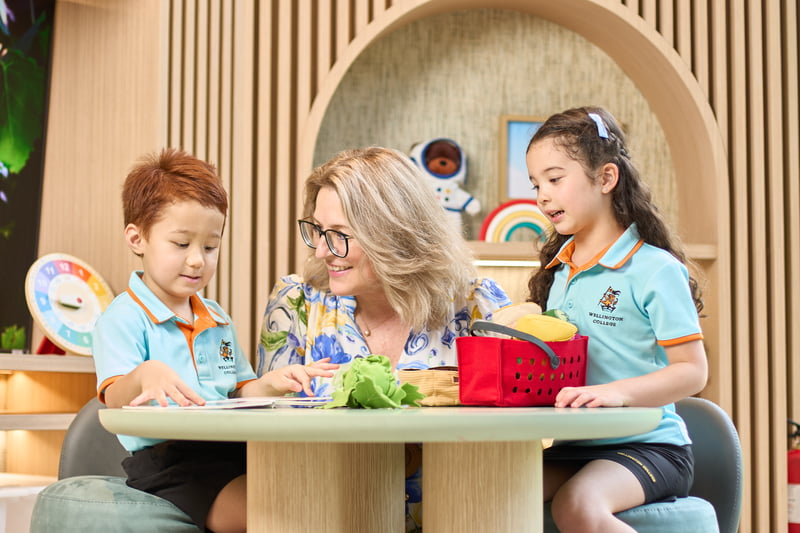
One of the really exciting reasons to consider WCIJ is the parent partnership, as we deeply value parents as partners. The pupils’ parents are given an opportunity for their voice to be heard, including with regard to our curriculum, how we run our school, what charities we should get involved in, and our focus. We always have lots of parent workshops and briefings as well. For example, I’ve already met with many parents thus far, and it’s through listening to them that we decided to modify the curriculum by adding more Chinese lessons—because that’s what the parents wanted for their children: more access and exposure to the Chinese language and culture.
As part of the international Wellington College network, we have this incredible legacy and network to support us, though we never stand still. We’re always looking and innovating. The world is changing rapidly, and we want to be part of that conversation so that we can set up our pupils for success. We strive to adapt and change, all based on the latest educational research, and set our sights on that future readiness. Being adaptive and responsive is also the cultural pride that we want to instil in our pupils. It’s the invaluable sense of belonging and pride of being from Indonesia, whether Indonesia is their home country or their host country. They can also experience the joy of sharing that cultural pride. Wherever our pupils come from, within our international network, they shall share and celebrate their culture and identity together—as one big, tight-knit, worldwide family.
