



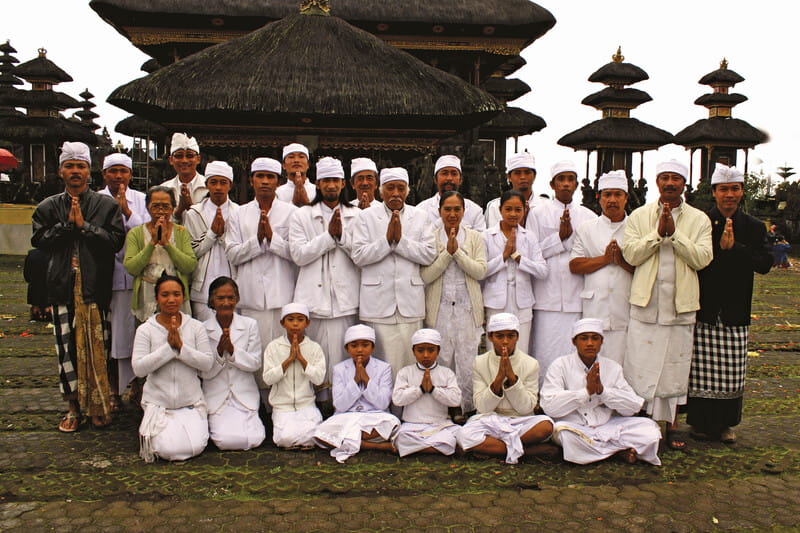
Before dawn, the roads leading towards Pura Tuluk Biyu begin to fill.
Men in white udeng carry ceremonial keris and banners. Women balance towering offerings on their heads. Somewhere in the darkness, a bell rings, followed by the low murmur of prayers drifting through incense smoke and the early morning mists of Lake Batur. By sunrise, tens of thousands of people will gather for a ceremony that most Balinese alive today have never witnessed.
This ceremony is known as Madewasraya.
As the sun rises above Mount Abang, the sound of bells, mantras, and gamelan slowly replaces the silence of dawn, and the mountain becomes the stage for one of Bali’s most extraordinary acts of collective devotion.
There are ceremonies in Bali that visitors can see almost any week of the year. Temple anniversaries, colourful processions weaving through streets, and the rhythms of Balinese Hindu Dharma continue almost uninterrupted from one season to the next. For those who have lived on this island for years, as well as the island’s regular visitors, these rituals become part of the landscape; a reminder that Bali’s spiritual life continues no matter what happens elsewhere.
Then, there are ceremonies that almost no one gets to witness—not because they are hidden away or kept secret but because they occur so rarely that an entire generation may pass before they return.
Madewasraya is one of those ceremonies.
For more than a thousand years, Madewasraya has been a communal prayer for God’s protection, peace, and prosperity—not only for Bali but also for the wider world. The last time it was held on a truly grand scale was 20 years ago, back in 2006.
Terje H. Nilsen, the Co-Founder of Seven Stones Indonesia, remembers it well.
“It was unlike anything seen in modern Bali. Priests, traditional leaders, and tens of thousands of devotees gathered at Pura Tuluk Biyu to perform a ceremony whose origins go back to the time of the Warmadewa kings, bringing communities together in a collective prayer for harmony between humanity, nature, and the Divine,” he says.
The timing, at the time, was significant as only a few years had passed since the Bali bombings of 2002 and 2005, and the island was rebuilding not only its tourism industry but also its confidence, its spirit, and its sense of security.
Madewasraya reflects the Balinese Hindu philosophy of Tri Hita Karana. The harmony between God, humanity, and nature. The belief that water is sacred, that maintaining harmony with the environment is essential for society’s wellbeing, and that Divine guidance should be sought before relying solely on human effort.
Every five years since 2006, devotees have observed more simple rituals to keep the light burning, so to speak. Unsurprisingly, COVID-19 triggered a more elaborate event in 2020.
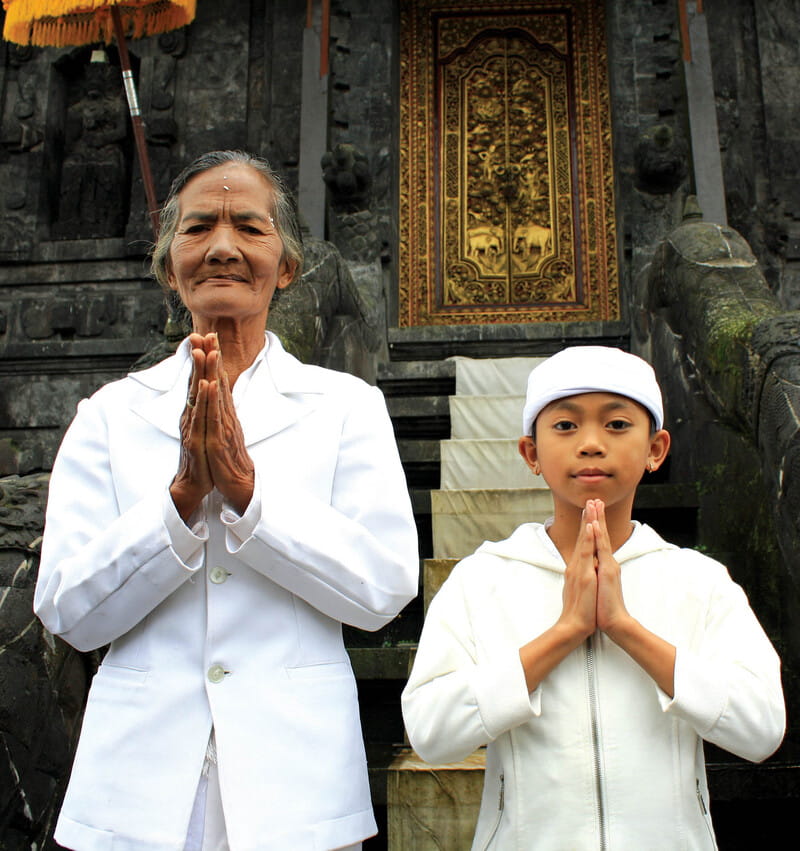
And now, in 2026, plans are in motion to stage another spectacular event centred in Kintamani around the temple of Tuluk Biyu, the village of Abang on the shores of Lake Batur, and on Mount Abang itself.
Nilsen argues that “the timing is an important consideration as Bali searches for balance. Balance between development and preservation; between economic growth and environmental sustainability; between welcoming the world and protecting its own unique identity; between progress and tradition.”
Madewasraya doesn’t claim to provide technical solutions to waste management, infrastructure, tourism, or social challenges. However, the ceremony reminds everyone of the spirit in which those solutions should be pursued. And that spirit, says Nilsen, should be with “wisdom, humility, and respect.”
Children who were part of Madewasraya back in 2006 are now adults with families of their own. Many younger Balinese have only heard stories about it from their parents and grandparents. And for long-term expatriates who arrived in Bali during the past two decades, this year’s Madewasraya will be the first—and perhaps the only—opportunity to witness an event of such extraordinary cultural and spiritual importance.
In September and October this year, Madewasraya will once again unfold, bringing together months of preparation, ancient ritual knowledge, community cooperation, and a worldview that has shaped Balinese life for centuries.
For those involved, it is the renewal of an ancient covenant.
More Than Tradition
One of the greatest misconceptions outsiders have about Balinese ceremonies is that they are simply performances of tradition—beautiful customs preserved because they are old. The reality, however, is something quite different.
For Balinese Hindus, ceremonies are living acts that maintain harmony between humanity, nature, and the Divine. They are reminders of not only the past but also essential responsibilities in the present. Through ritual, prayers, and offerings, people seek to restore balance within the universe, recognising that physical and spiritual worlds exist not as separate realms but as parts of a single, interconnected reality.
Madewasraya represents this philosophy on an exceptional scale.
It is not a celebration organised for spectators, though. Madewasraya is a sacred undertaking involving priests, community leaders, families, and countless volunteers, each carrying responsibilities that have been handed down through generations. Everything, furthermore, has meaning. Every offering, every procession, every prayer, and every ceremonial object exists within a carefully constructed spiritual framework whose origins stretch back a millennium.
Why So Rare?
Ask almost anyone why Madewasraya is held so infrequently and the answer is likely to begin with the same phrase: “Because the time has come.”
That response may sound mysterious, but it reflects one of the most fascinating aspects of Balinese spirituality. Unlike annual temple festivals or regular religious observances, Madewasraya is not governed by a simple calendar date.
Nilsen says that “the timing is determined through an intricate understanding of Balinese cosmology, sacred calendars, and astrological calculations that identify moments when cosmic conditions are considered favourable for restoring harmony on a grand scale.”
This makes sense when you stop to consider that in Balinese thought, time is not merely something measured by clocks or calendars. Time is qualitative, with some moments possessing particular spiritual qualities. Certain alignments create opportunities for renewal that simply don’t exist at other times. Rather than asking when a ceremony should occur, the more appropriate question would be to ask when the universe itself is ready.
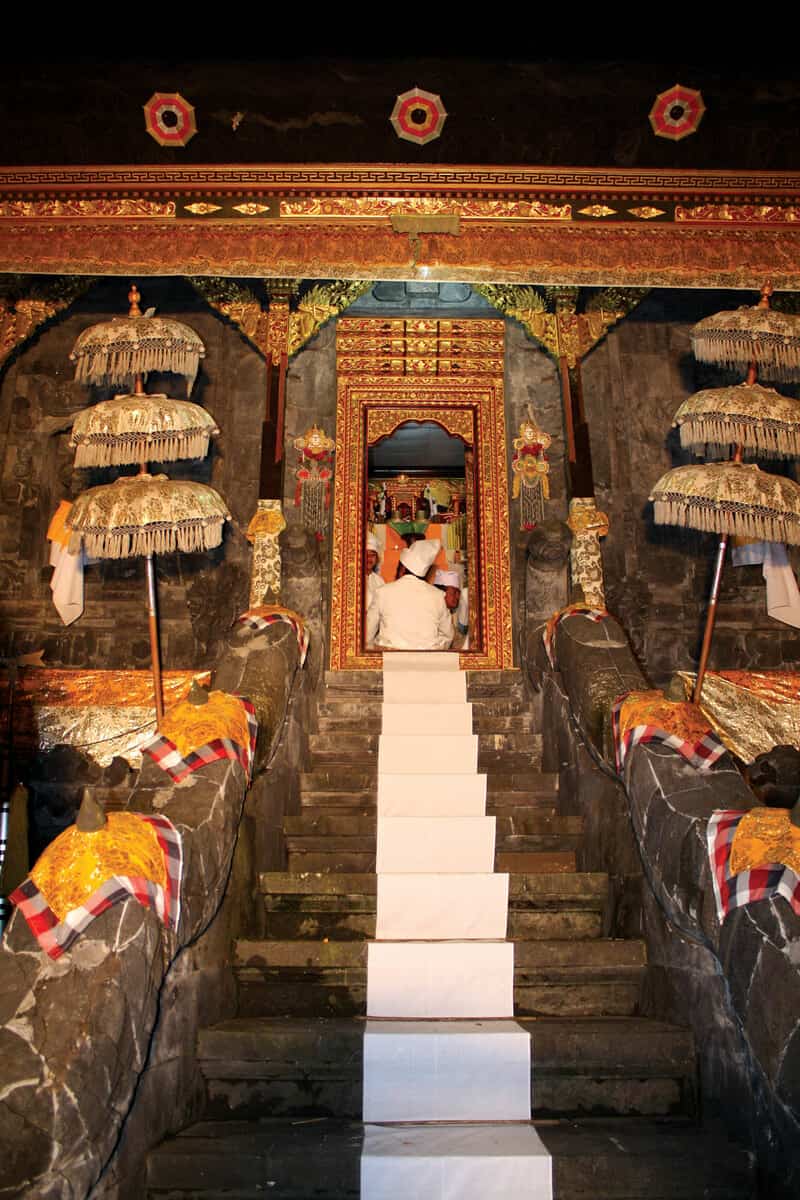
When a Village Becomes a Sacred Space
Months of preparation leading up to Madewasraya unfold quietly behind the scenes.
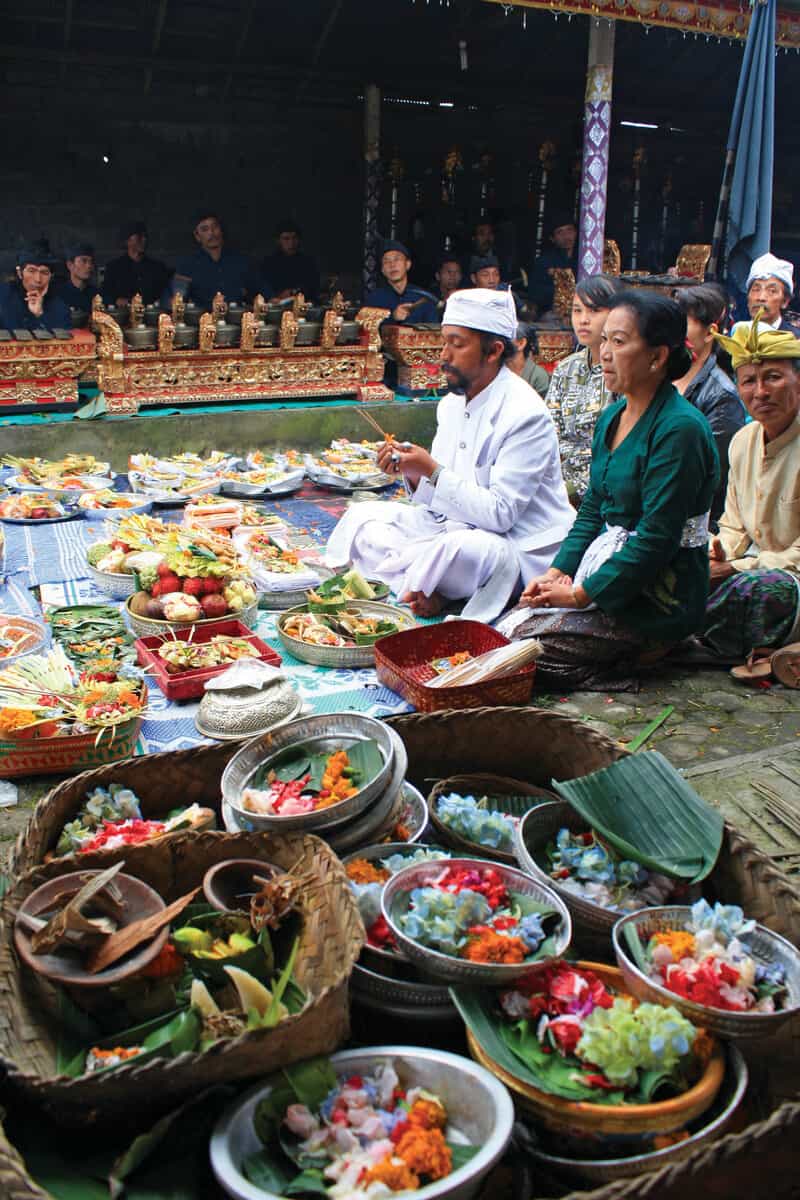
Families work together to create offerings requiring extraordinary skill and patience. Traditional craftsmen prepare ceremonial objects using techniques learned over lifetimes. Elders consult with priests, while younger generations learn through participation rather than instruction.
Entire neighbourhoods, hence, become workshops. And what appears effortless on the day itself is, in reality, the culmination of thousands of hours of collective labour and organisation.
One of the remarkable aspects of Balinese culture is that such work is undertaken voluntarily as an expression of devotion and communal responsibility. There are no ticketed entrances. No backstage crews. No commercial production teams.
And watching this transformation offers one of the clearest insights into what gotong royong—the concept of mutual cooperation—really means in Bali.
Carrying Ancient Knowledge Forward
Modern Bali is often portrayed through its beach scenes and clubs, trendy cafés, luxurious villas, and, most recently, the influx of digital nomads looking for their own slice of paradise. Those are undoubtedly part of today’s island.
Yet beneath that contemporary image is another Bali that continues to follow the rhythms established long before tourism arrived and will continue long after the tourist and development bubble bursts.
Ceremonies such as Madewasraya remind us that Balinese culture has never been static. Its strength lies not in resisting change but in preserving continuity and finding balance.
Young Balinese study overseas, build businesses, and embrace new technologies. That being said, they also return home to help build ceremonial structures, prepare offerings, and fulfil obligations inherited from previous generations.
For them, knowledge is not confined to books. It is transmitted through doing; children watch their parents, grandparents explain the significance of symbols, and priests preserve liturgical traditions that have survived countless political and social transformations.
Every ceremony then becomes both an act of worship and an act of education.
‘Witnessing’ Rather Than ‘Watching’
Visitors are welcome at many Balinese ceremonies, but there is an important distinction between ‘witnessing’ and ‘watching.’
Madewasraya is not entertainment; it asks nothing from spectators except respect. That means dressing appropriately, recognising that photography is not always suitable, understanding that ceremonies unfold according to ritual requirements rather than published schedules, and accepting that some moments are intended primarily for the community itself.
For those prepared to approach the event with patience and humility, the rewards are immeasurable.
There is something profoundly moving about standing quietly on the edge of a ceremony whose origins disappear into history, listening to prayers that have echoed across these mountains and valleys for generations, and realising that what is actually unfolding is not a reconstruction of tradition but the tradition itself.
A Rare Moment in Bali’s Story
When Madewasraya was last celebrated in 2006, Bali looked very different. Social media was in its infancy, many of today’s luxury resorts had yet to be built, and the island welcomed fewer visitors and moved at a much gentler pace.
Almost 20 years later, Bali has become one of the world’s most recognisable destinations, attracting millions of visitors each year. Yet ceremonies like Madewasraya help us see that beneath these rapid changes lies a spiritual foundation that continues to shape daily life.
It’s easy to think of culture as something preserved in museums or performed for special occasions, but Madewasraya offers another perspective. Here in Bali, culture is alive. It is renewed through participation, strengthened through memory, and sustained through shared responsibility.
Nilsen says that this “is perhaps why the ceremony resonates so deeply with those fortunate enough to witness it. It speaks not only about faith but also about continuity, about communities and traditions that endure—because people continue to believe they matter.”
Looking Ahead
As preparations gather momentum for this year’s Madewasraya, anticipation is building across the community.
For elders, it is the fulfilment of responsibilities carried for many years. For younger Balinese, it is an opportunity to experience a ceremony they have previously only heard through stories.
For those of us who witnessed the last Madewasraya back in 2006, returning almost 20 years later offers a rare sense of history coming full circle. Few ceremonies allow for such a perspective, and fewer still remind us so powerfully that Bali’s greatest treasures are not only its landscapes or temples but also its living traditions.
When the first prayers are offered this September, they will not merely mark the beginning of another ceremony; they will reconnect the present with a cycle that stretches far beyond any single lifetime. It will be a reminder that in Bali, some of the most important moments arrive not every year, but only when the time is truly right.
If you’d like more information or if you’re interested in witnessing Madewasraya, let us know at Seven Stones Indonesia via hello@sevenstonesindonesia.com. We’d love to see you there and be part of this spectacular, once-in-a-generation event.
All images are courtesy of Mark Ulyseas.