


There is a health concern that many people are reluctant to discuss, even with a doctor. Feelings of embarrassment, social stigma, and the belief that the condition is something to be ashamed of often lead sufferers to remain silent, enduring pain, discomfort, and worry alone for years.
Haemorrhoids are one of the most common medical conditions, yet they remain among the least openly discussed. In fact, treatment options today are often simpler, more comfortable, and quicker than many people imagine. Understanding this condition correctly is the first step towards recovery.
What Are Haemorrhoids?
Haemorrhoids are swollen and inflamed blood vessels in the lower rectum and around the anus. Anatomically, haemorrhoidal cushions are normal structures that everyone has, helping to control the passage of stool. Problems arise when these structures become enlarged and cause troublesome symptoms.
There are two main types, classified according to their location: internal haemorrhoids, which are located inside the rectum and cannot be seen externally, and external haemorrhoids, which develop beneath the skin around the anus and can be felt or seen. In some cases, both types can occur at the same time.
General surgeon at Bethsaida Hospital Serang, dr Leo Fajar, Sp.B, explains: “I want people to understand one thing: haemorrhoids are not a shameful disease. This is a very common medical condition and it can be treated. What is actually dangerous is when embarrassment causes someone to delay seeing a doctor until the condition becomes more severe and requires more complex treatment.”
Severity Levels of Haemorrhoids
Internal haemorrhoids are classified into four grades according to their severity. Understanding these grades is important because they help determine the most appropriate treatment approach.
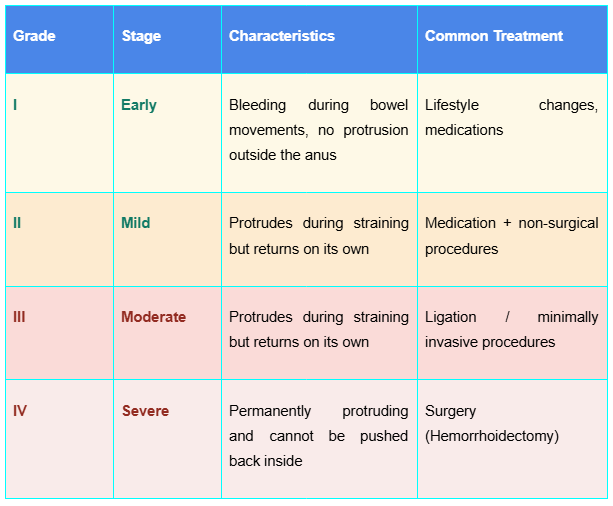
The earlier this condition is assessed and treated, the greater the likelihood that it can be managed with simpler procedures without the need for major surgery.
Causes and Risk Factors
Haemorrhoids can develop due to repeated or prolonged increases in pressure on the blood vessels in the rectal and anal areas. Several factors that may contribute to this condition include:
- Constipation or chronic diarrhoea: Excessive straining during bowel movements is a common contributing factor.
- A low-fibre diet: This can lead to hard stools that are difficult to pass without straining.
- Insufficient water intake: Dehydration can contribute to hard stools and make them more difficult to pass.
- Obesity: Excess body weight may increase pressure on blood vessels in the lower abdomen and pelvic area.
- Age: The supporting tissues of the rectum and anus can weaken naturally over time.
- Genetic factors: A predisposition to developing haemorrhoids may run in families.
- Spending too much time on the toilet: Reading or using a mobile phone while sitting on the toilet for extended periods may increase pressure on the anal area.
When Should You See a Doctor?
Seek medical attention promptly if you experience any of the following:
- Heavy or persistent rectal bleeding.
- Dark blood or blood mixed with stool, which may indicate another, potentially more serious condition.
- Sudden, severe pain in the anal area.
- A prolapsed lump that cannot be pushed back inside and is very painful.
- Symptoms accompanied by significant weight loss or major changes in bowel habits.
Rectal bleeding is not always caused by haemorrhoids. Colorectal cancer can also present with similar symptoms. A medical evaluation is essential to establish an accurate diagnosis.
Preventing Haemorrhoids and Recurrence
Consistent lifestyle changes are key to reducing the risk of developing haemorrhoids and preventing recurrence after treatment:
- Increase your intake of high-fibre foods, such as vegetables, fruit, nuts, and wholegrains, to help keep stools soft and easier to pass.
- Drink sufficient water throughout the day to maintain healthy bowel function and help prevent hard stools.
- Do not delay bowel movements when you feel the urge to defecate.
- Avoid excessive straining and spending too much time on the toilet.
- Exercise regularly to help support healthy bowel function.
- Maintain a healthy body weight to reduce excess pressure on the blood vessels in the pelvic area.
- Avoid sitting or standing in the same position for too long without taking breaks to move around.
“Many patients who come to me think they need to undergo a major and painful surgery. In reality, most haemorrhoid cases can be treated with much simpler procedures — and patients can even go home on the same day. The key is to come earlier, before the condition becomes more severe.” explained dr Leo Fajar, Sp.B.
Bethsaida Hospital Serang provides comprehensive haemorrhoid treatment services, ranging from consultations and evaluations to non-surgical procedures such as ligation and sclerotherapy, as well as modern surgical options using laser treatment tailored to each patient’s clinical condition. All treatments are provided in a safe, modern, and compassionate medical environment.
Director of Bethsaida Hospital Serang, dr Tirta Mulya, stated: “At Bethsaida Hospital Serang, no complaint is too small or too embarrassing to discuss. We create a safe, empathetic, and stigma-free environment so that every patient feels comfortable opening up and receiving the treatment they truly need. Your health is our priority without exception.”