



From Roti Kompyang to Nasi Bakar Bambu, such culinary delights prove that there is more to the City of a Thousand Sunsets than trekking panoramas and Komodo dragons.
A trip to Labuan Bajo is more than simply taking in the stunning sunsets and tropical islands; it is also about indulging in the delectable cuisine that reflects Flores Island’s strong sense of cultural identity. The local cuisine, which ranges from fresh seafood to traditional maize and coconut snacks, has an enticing flavour that is sure to charm and captivate the palate.
It is also interesting to note that several of Labuan Bajo’s characteristic dishes, such as those wrapped in banana leaves, grilled in bamboo, or served with natural fermentation, are not only distinctive in flavour but also in their very traditional presentation. This enhances the eating experience in the City of a Thousand Sunsets and produces memories that will entice people to return in the future.
Sunset Aroma on a Plate
Perhaps one of the better-known Labuan Bajo dishes is Ikan Kuah Asam. This meal blends a sour sauce with traditional Flores spices with the freshness of fresh fish, such as tuna or snapper. Tamarind and tomatoes, along with spring onions and regional spices, provide the sour taste. Served warm with white rice, Ikan Kuah Asam is light yet full of flavour, making it a perfect starter to your culinary experience in Labuan Bajo.
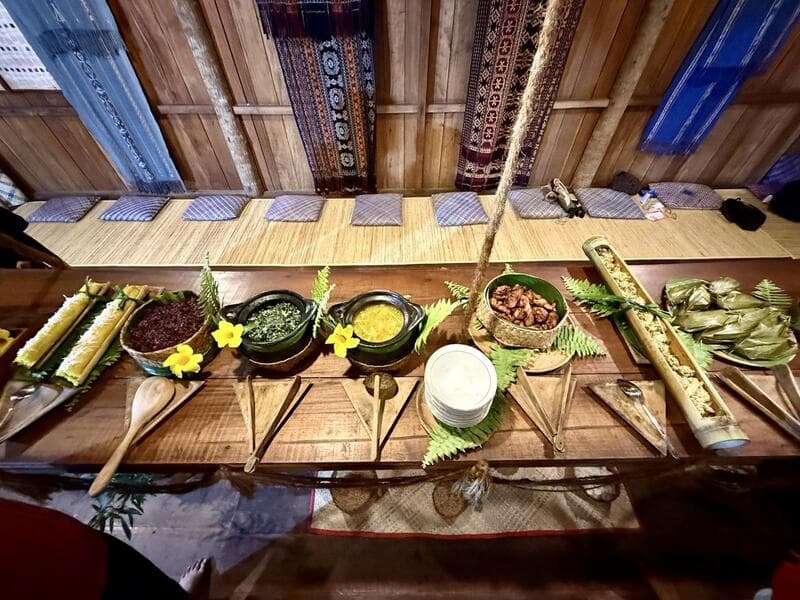
Grilled rice packed into bamboo segments and cooked over hot coals, also known as Kolo or Nasi Bakar Bambu, is another popular dish associated with Labuan Bajo. To ensure that the spices are fully absorbed, rice is combined with fish or pork chunks and spices. Aroma is just as much a part of the Kolo dining experience as taste. Bear in mind, as well, that modern pans and ovens cannot replicate the unique scent of bamboo. Kolo is typically consumed on customary occasions; however, it is now frequently served to tourists in local eateries.
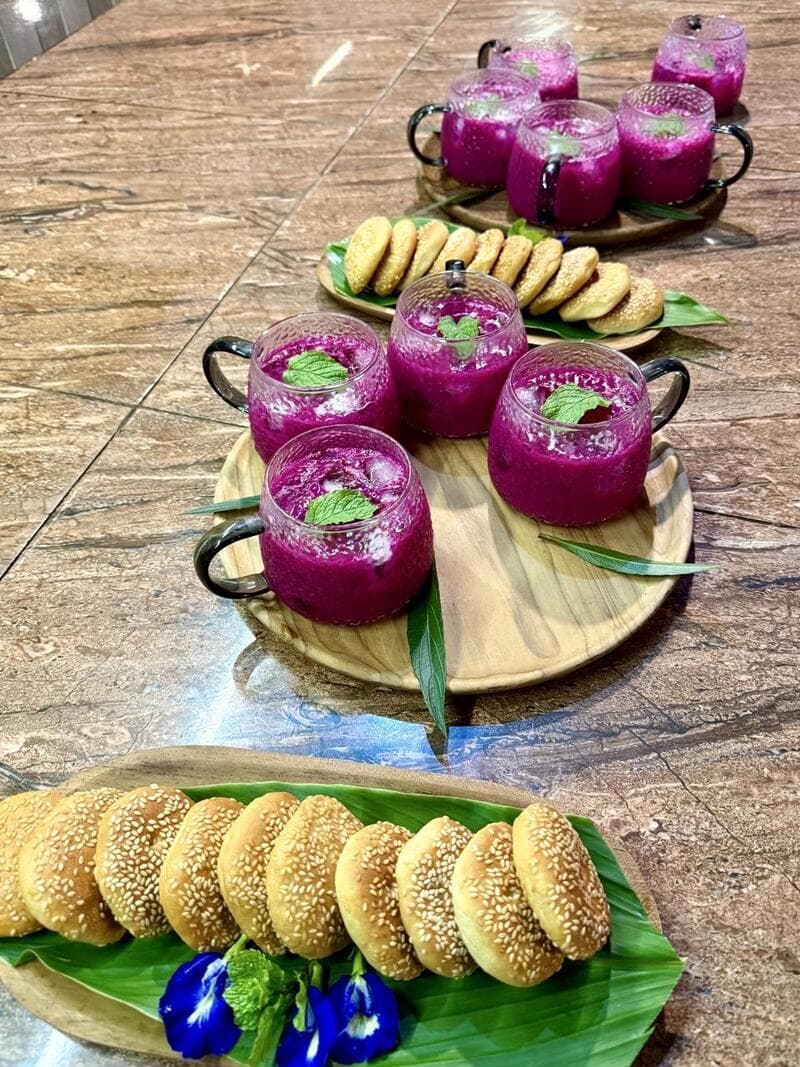
If anyone is in the mood for lighter bites, a must-try option is Roti Kompyang. The residents of Labuan Bajo have added a local touch to this bread, which is a part of their Chinese cultural background. Like a bagel, Roti Kompyang has a dense, slightly chewy texture, but the sesame sprinkles on top give it a unique scent. Roti Kompyang is typically served empty, although it can be consumed with hot sweet tea or Flores coffee.
Residents and visitors who like to spend the entire day exploring Flores Island frequently choose Roti Kompyang as a provision because it is flat and portable. Roti Kompyang can be eaten for breakfast, an afternoon snack, or as a memento.
Straight From the Kitchen
In my experience travelling to Labuan Bajo a few months ago, one of the finest venues to get acquainted with the local dishes is Dapur Tara Flores.
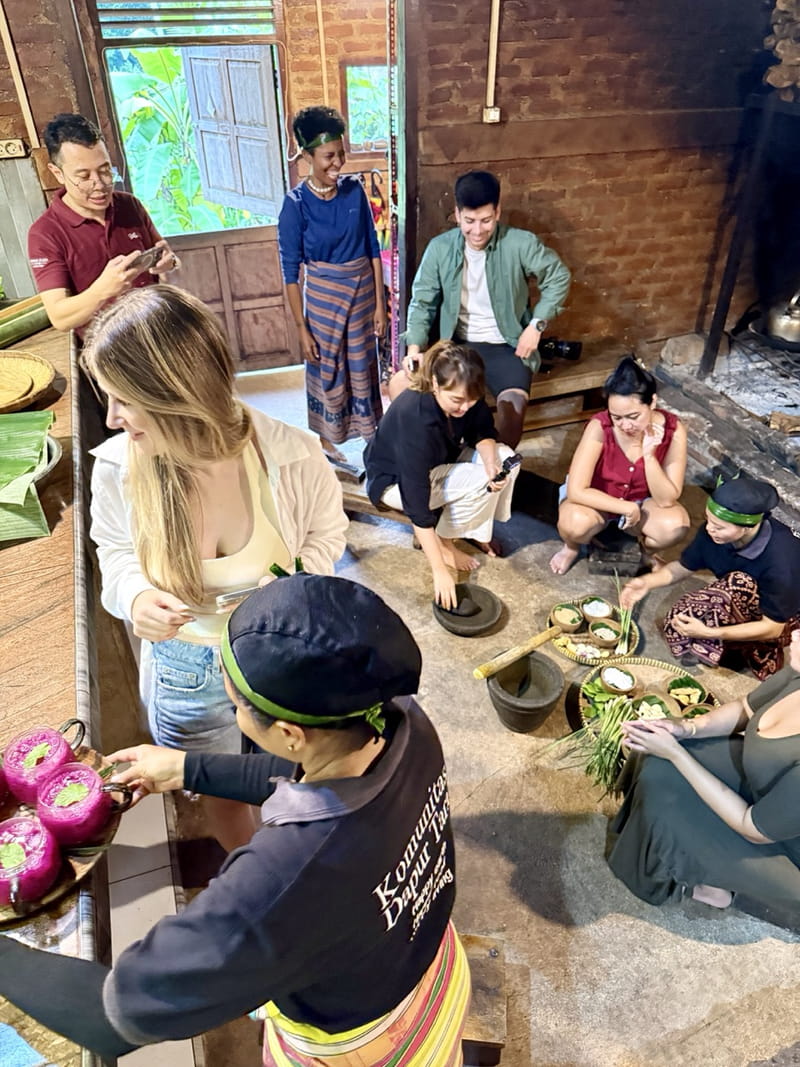
Dapur Tara Flores, located in Liangndara Village, Labuan Bajo, serves Flores cuisine made from organic ingredients from its own gardens or local farmers, while also serving as a learning space about Flores’ culture and philosophy. The restaurant, furthermore, implements a zero-waste concept, using bamboo, rattan, and coconut shell containers. It offers signature dishes like Nasi Bakar Bambu and Roti Kompyang, while also offering traditional cooking classes for tourists.

As of this writing, Dapur Tara Flores offers three experiences for diners and visitors:
- Lunch at the Table: In the open bamboo kitchen with the garden all around, the full Flores table is bright, convivial, and leisurely during the day. This lunch lasts for one to two hours;
- Dinner at the Table: As the hills darken, everyone is gathered around the fire at the same table, which is slower and quieter after dusk. Dinner lasts for one to two hours;
- Cooking lesson: During this lesson, guests can prepare meals over a fire with the Dapur Tara crew and then share them at the table. The duration of this class is three to four hours.
Meanwhile, some of the dishes served up by Dapur Tara Flores, besides Nasi Bakar Bambu and Roti Kompyang, include young green papaya fried crisp and golden, sambal with pineapple and smoked chilli, and transparent soup made from wild foraged greens. On request, there is a seafood menu, a vegetarian menu with tofu and tempe, and gluten-free selections as well.
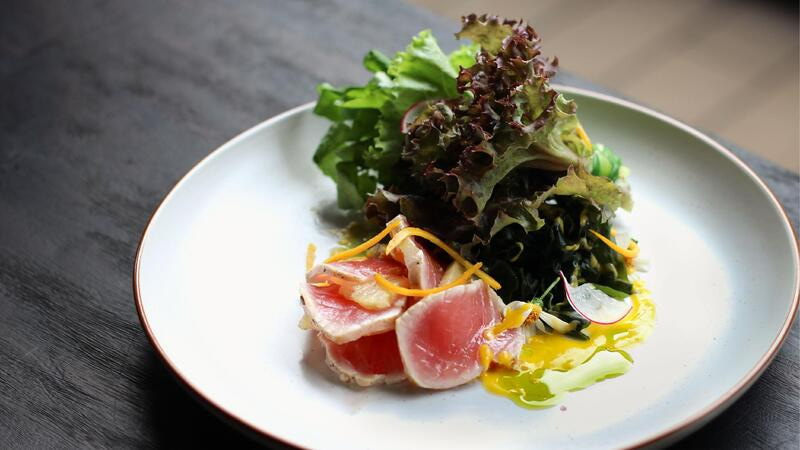
If you are looking for Labuan Bajo dishes with a more sophisticated twist, the Pamakka All Day Dining restaurant at Crowne Plaza Labuan Bajo is worthy of recommendation as well. One of the restaurant’s signature dishes is Arafuru Yellow Fin Tuna, consisting of Wakame, Bajawa Mesclun, candied orange peel, macadamia nuts, smoked yellow fin tuna, pickled wild carrot with honey, and homemade carrot dressing. Another fascinating dish is Local Market Fish, which is the pan-seared catch of the day complemented with starch of the day, Bajawa Mesclun, and Mango Beurre Blanc Sauce.
When it comes to dessert, Pamakka’s Chilli Chocolate Lava is not to be missed by adventurous epicureans such as myself. As the name suggests, this dish is a warm chocolate lava cake with a hint of Manggarai Chilli, served with an ice cream. Simpler, more traditional desserts, such as a mixed plate of Flores Island’s tropical sliced fruits, have their own magic as well.
City of a Thousand Sunsets (and Meals)
Labuan Bajo is indeed becoming world-famous for its tourist attractions. However, as it turns out, my recent experience travelling the City of a Thousand Sunsets taught me that it is not just its tourist attractions that are captivating; Labuan Bajo’s traditional cuisine is also one of a kind, with a truly remarkable flavour to match. If you’re currently in Labuan Bajo or planning a vacation there, you should definitely check out its local cuisine as well. There are many specialities in this city with exceptional flavours, not to mention the many snacks and souvenirs you can take home.
And, as I write this article, I suddenly have a craving for Roti Kompyang to pair with my morning coffee. I look forward to my next opportunity to visit Labuan Bajo again, for sure.