


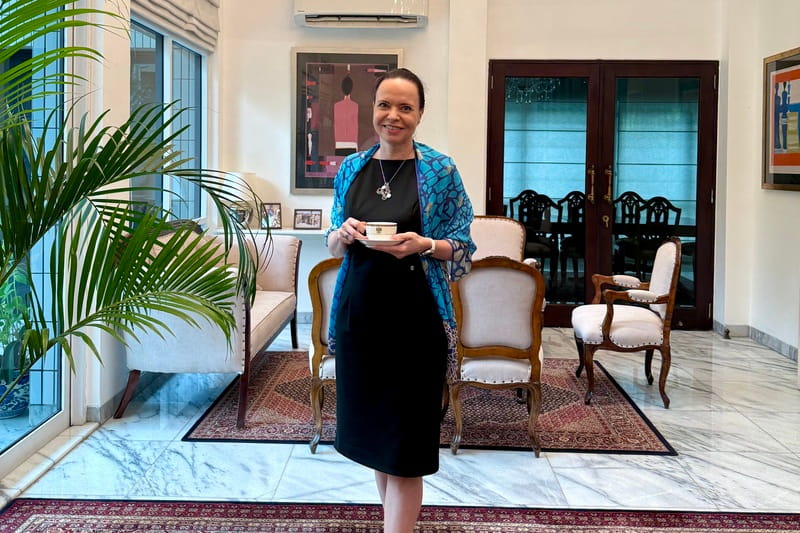
Indonesia Expat had a chance to get to know Barbara Szymanowska, who has been serving as the Ambassador of Poland to Indonesia and ASEAN since 2025.
In a very inspiring conversation, Barbara Szymanowska shared, among many things, her incredible work in international development cooperation before being posted in Indonesia, the historic bonds shared between Poland and Indonesia that continue to be strengthened by genuine cultural dialogue, the Embassy of Poland’s remarkable participation in the iconic “Trail of the Kings” competition in North Sumatra, and of course, her endearing passion for a good cup of coffee.
Hi, Barbara! Let’s start with your background a bit. What can you tell us about yourself?
Well, I come from Poland, and I am a career diplomat. I graduated from the University of Warsaw, majoring in Law, then completed postgraduate studies in Management at the same university, as well as European Studies at the University of Sussex in the United Kingdom. I joined the Ministry of Foreign Affairs of Poland in 2004, which was the year when Poland became a member of the European Union (EU). At the time, I was in charge of establishing the Polish development cooperation system. In addition, before joining the Ministry of Foreign Affairs, I was working for the Office for European Integration, during which I was dealing with the assistance which Poland received during the preparation process leading up to EU membership.
During my career as a diplomat, I have had the privilege of serving in various roles related to Asia and international development cooperation. From 2014 to 2018, I served as the Ambassador of the Republic of Poland to the Socialist Republic of Vietnam, and afterwards, I returned to Poland and worked also as the Director of the Asia Pacific Department at the Ministry of Foreign Affairs in Warsaw. Over the years, both professionally and personally, I have had the opportunity to visit most ASEAN countries, which has subsequently embedded in me a deep appreciation for Southeast Asia, especially its diversity, dynamism, rich cultures, and remarkable people.
Effectively since 2025, I have had the honour of serving as the Ambassador of Poland to Indonesia and ASEAN. I am also an ambassador-designate to Timor-Leste. It is a fascinating position because Indonesia is not only one of the world’s largest democracies and economies, but also an increasingly important global key player.
In addition to my diplomatic work in ASEAN, I have also had the opportunity to be posted in various countries across the globe. For instance, there was a time when I was stationed at the Polish Embassy in Kabul, Afghanistan, serving as the Political and Development Adviser to the Force Commander of the Polish Task Force in the Ghazni Province, where I worked with the Provincial Reconstruction Team (PRT) on development and assistance projects. It was such a valuable professional experience that taught me how international cooperation can make a tangible difference in people’s lives. Another memorable professional experience I have had is when I was involved in the development of a school for visually impaired children in Rwanda.
For many years, development cooperation was an important part of my work. In the years 2010–2014, I held positions of Director of the Development Cooperation Department and Director of the Department for Implementation of Development Programmes at the Ministry of Foreign Affairs in Warsaw. During that time, I supervised projects financed by our MFA under the Polish Aid programme. These projects supported communities in various parts of the world, including Palestine, and focused on areas such as education, capacity-building, good governance, and sustainable development. Particularly in Palestine, we focused on education, capacity building, and humanitarian assistance.
Outside my work as a diplomat, I enjoy discovering new places, reading, going to the gym, and—as people who follow my personal Instagram account may have already known—a nice cup of coffee. Living in Indonesia has also given me a wonderful opportunity to learn more about local cultures, traditions, and, of course, Indonesian cuisine.
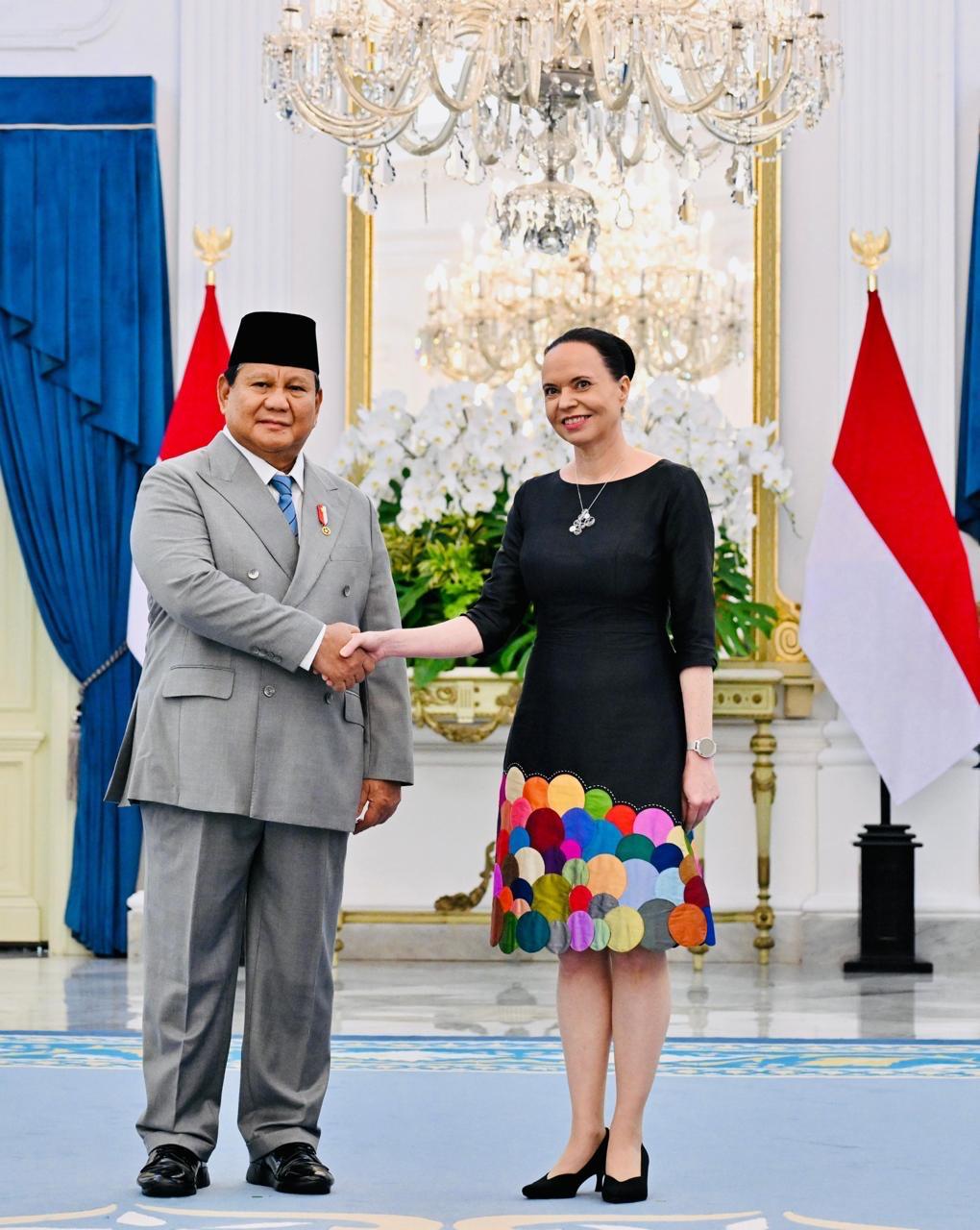
How would you describe your diplomacy style as the current Ambassador of Poland to Indonesia and ASEAN?
I believe diplomacy is ultimately about people. Agreements and official documents are important, but trust is built through personal relationships, dialogue, and mutual understanding. Sometimes, because of the impression that this job entails, people might immediately assume that a diplomat is always formal or rigid, but that is not the case at all. As a diplomat, my approach is to be open, approachable, and curious. I enjoy meeting people from different backgrounds: government officials, business leaders, students, artists, academics, and local communities. I believe effective diplomacy means listening as much as speaking.
I also follow a simple principle throughout my diplomatic career: whenever I am posted to a certain country, that country becomes my temporary home. My job is not only to represent Poland, but also to learn as much as possible about the country where I serve. That means getting to know its history, culture, literature, traditions, and, most importantly, its people. Indonesia is no exception, of course. For example, I am currently learning Bahasa Indonesia. Finding time is not always easy, and my progress is certainly not as impressive as I would like to be, but I have not given up yet. I believe learning a language is one of the best ways to understand a country and connect with people.
People sometimes ask me where my home is. I often reply: “My home is where my shoes are”. At the moment, my shoes are in Indonesia. Of course, Poland will always be my homeland, and my role as the Ambassador is to bring Poland closer to Indonesians. That being said, in order to do that effectively, I believe I must understand Indonesia as deeply as possible. On top of that, I am always keen on showing not only Poland’s achievements, but also the human side of our country: our culture, traditions, creativity, and values.
At the end of the day, regardless of our nationalities, we are all human beings who share the same joys in life.
For Poles who are new to Jakarta, how would you describe this city to them? And how would you describe the character of Indonesian people to them?
Jakarta is a city of energy. As one of the most populous cities in the world, Jakarta is very energetic, dynamic, diverse, and constantly evolving. At first, this city can seem overwhelming because of its size and pace, as well as its traffic and its flexible attitude towards time. However, once you get to know Jakarta, you will discover a city full of creativity, excellent food, vibrant cultural life, and remarkable opportunities. The key is to simply take your time, be patient, and always be curious.
As for Indonesian people, I would describe them as friendly, generous, warm, welcoming, and remarkably open-hearted. After spending almost a year in Indonesia, I often feel that I have gained not only professional contacts but also many Indonesian friends. I have also noticed that, like Poles, Indonesians are family-oriented and deeply respectful of traditions.
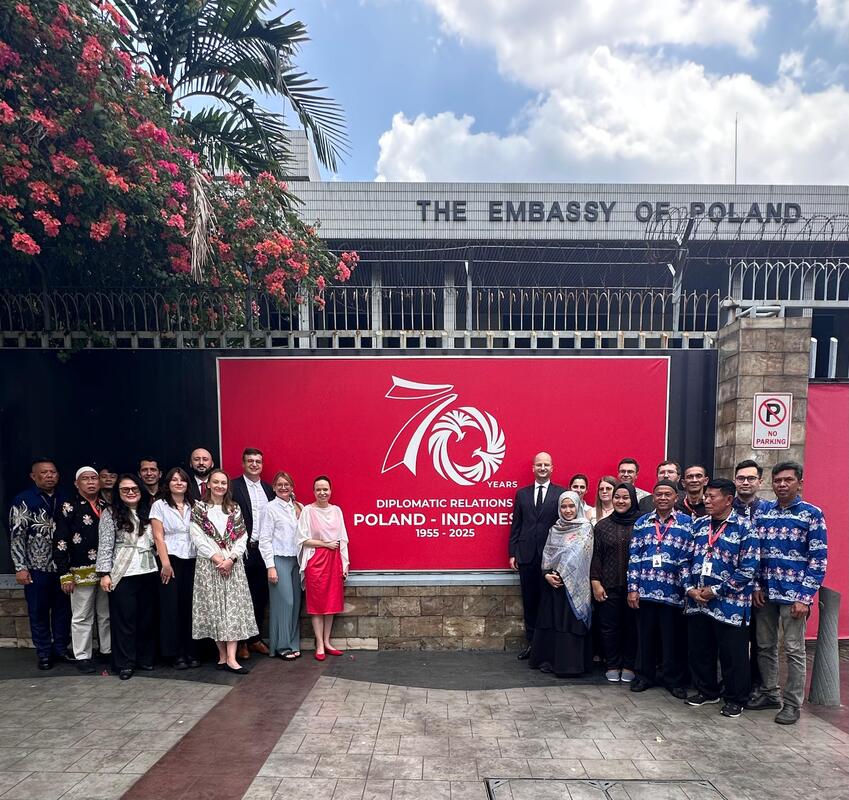
Not a lot of people may have known this, but Indonesia and Poland have actually shared a long relationship. Flores Island especially has a long history and close ties with Polish Catholic missionaries since the 1960s. How would you describe the relationship between the two countries as of today?
Our relationship is excellent and continues to grow stronger. In 2025, Poland and Indonesia celebrated the 70th anniversary of the establishment of diplomatic relations. But you are right: the story of our connections goes much further back than those seven decades.
One fascinating example is the story of Baron Michalski, who arrived in Sumatra in the second half of the 19th century and became an important figure in the development of tobacco plantations in what is now North Sumatra. His legacy can still be found today in Medan, where one of the city’s administrative districts is called Medan Polonia—the name Polonia derived from the Latin name for Poland. It is a remarkable reminder that the connection between Poles and Indonesians had actually taken shape long before the establishment of the two countries’ formal diplomatic relations.
Another important chapter of our shared history, as you have already mentioned, is the contribution of Polish Catholic missionaries, particularly in Flores and other parts of eastern Indonesia, whose work helped build lasting people-to-people connections between our societies. We also have another example in Professor Jozef Zwierzycki, a Polish geologist known as the first man to make the geological map of the Indonesian archipelago.
Today, Poland and Indonesia enjoy a broad and dynamic partnership. We cooperate in many areas, including trade, education, culture, science, defence, agriculture, and innovation. Our economic ties continue to expand, and we are seeing growing interest from businesses on both sides. Education, particularly, is one of the most promising areas of cooperation. Every year, more Indonesian students choose Poland as a destination for higher education, attracted by the quality of our universities, internationally recognised degrees, and scholarship opportunities. Academic exchanges, research partnerships, and student mobility programmes are creating a new generation of Indonesians and Poles who know each other’s countries firsthand.
What I find particularly exciting is the growing cooperation between our creative sectors. Poland is home to a globally recognised gaming sector—The Witcher franchise immediately comes to mind—whereas Indonesia has one of the most dynamic and rapidly growing creative industries in Southeast Asia. I believe these sectors will play an increasingly important role in our bilateral relationship in the years ahead.
Let’s talk a little bit about the recent headlines made by the Embassy of Poland. The Embassy, represented by its Deputy Head of Mission, Mr. Maciej Tumulec, participated in the iconic “Trail of the Kings” competition on Lake Toba, North Sumatra, this June. What can you tell us about it?
Lake Toba is one of Indonesia’s most spectacular destinations, combining breathtaking natural beauty with rich cultural heritage. In June, the “Trail of the Kings” race took place at Lake Toba as part of the UTMB World Series, bringing together athletes from over 30 countries. In this highly competitive event, Mr. Maciej Tumulec, our Deputy Head of Mission, achieved 10th place in the 100-kilometre distance. He was second in his age category!
Fun fact about Maciej Tumulec: he has been competing in ultramarathons for the past 10 years. Since arriving in Indonesia, he has taken part in numerous ultra-distance races across the country, including events in Lombok, Java, Sumatra, and Jakarta itself, achieving notable results along the way. The Embassy of Poland is extremely proud of his achievements.
What I particularly like about this story is that it shows that diplomacy is not only about meetings, negotiations, and official events. I believe diplomacy should not be confined to conference rooms. Sometimes diplomacy takes place on a hiking trail, during a sporting event, at a cultural festival, or over a cup of coffee. These experiences create connections that are often just as valuable as official meetings because they bring people together in a more personal way. It is also proof that diplomats are people with passion, and oftentimes, these passions can become an excellent bridge between countries.
Another fascinating initiative by the Embassy was the “Polish-Indonesian Friendship Batik Design Competition” back in May. I understand that the aim of this competition is, ultimately, to encourage cultural dialogue between Poland and Indonesia. What can you tell us about it? And why, despite the two countries’ long history, does such cultural dialogue remain essential?
The competition was one of the most inspiring projects we organised this year. We invited participants to combine Polish and Indonesian cultural elements through batik design, creating something entirely new while respecting both traditions, and the response exceeded our expectations. One of the most special moments of the project came when the winning pattern, created by Mr. Frangky Kurniawan, was transformed into a dress by Ms. Poppy Dharsono, who is one of Indonesia’s most celebrated fashion designers and a true icon of Indonesian fashion. I was particularly honoured to wear the dress during our National Day celebration, as it beautifully reflected the spirit of friendship and creative cooperation between Poland and Indonesia.
Seeing a design inspired by both Poland and Indonesia, brought to life by such a respected figure in Indonesia’s creative industry, was a powerful symbol of cultural dialogue in action. It showed how creativity can connect people across continents and generations. The competition itself was never only about batik. It was about building bridges. It encouraged Indonesian participants to learn more about Poland, discover our shared inspirations, and create something new. In many ways, that is exactly what diplomacy seeks to achieve.
Cultural dialogue remains essential because it helps us understand one another beyond headlines and statistics. In a world that sometimes feels increasingly fragmented, culture creates connections that are personal, emotional, and lasting. It reminds us that while we may come from different backgrounds, we often share similar aspirations, values, and dreams. We can appreciate the same music, the same paintings, the same beautiful things. Culture is something that truly brings people together.
I notice from your Instagram account that you are a big fan of coffee. Interestingly, the Embassy of the Republic of Indonesia in Warsaw continues to intensify economic diplomacy by promoting Indonesian coffee, most recently through participation in the Warsaw Coffee Festival back in February. What is it about Indonesian coffee that tugs on your heartstrings, personally? And do you believe that coffee can also be a powerful means of diplomacy?
Yes, indeed. I am a coffee enthusiast, and the first phrase I learnt in Bahasa Indonesia was “kopi dulu”. (in English: “first, coffee”) I am still discovering the wide variety of Indonesian coffee, and everywhere in this country, there is good coffee to enjoy. Indonesia has such an extraordinary coffee culture. What fascinates me is not only the quality and diversity of Indonesian coffee, but also the stories behind every cup. Coffee reflects geography, climate, local traditions, and the dedication of farmers.
From a diplomatic perspective, coffee is also about conversation. Some of the best discussions happen over a cup of coffee. It creates a relaxed atmosphere where people connect more naturally. Therefore, in that sense, coffee is indeed a form of diplomacy. It brings people together, creates opportunities for dialogue, and helps build mutual appreciation. I am delighted to see Indonesian coffee becoming increasingly popular in Poland, and I believe it has great potential to strengthen people-to-people connections between our countries.
Since our July issue is about property, architecture, and design, is there any building, edifice, or structure in Jakarta that reminds you of Poland?
If I had to choose one place in Jakarta that reminds me most of Poland, the answer would actually be the Embassy of Poland and the Ambassador’s Residence. It is not simply because that is where I work and live, though; it is because both buildings were designed by Polish architects. This modernist-style architecture was conceived back in 1995 by Polish architects Andrzej and Barbara Kaliszewscy, as well as Bohdan Napieralski from KANA Architekci sp. z o.o., with PT International Design Consultants as its local partner up to the middle of 1998 and PT Meinhardt from 1998 until completion in the same year. These structures, ultimately, represent a piece of Poland in the heart of Jakarta and are a visible symbol of the long-standing presence of Poland in Indonesia.
The Residence, particularly, features many elements that make me feel at home. One of my favourite items in the Residence is a statue of Fryderyk Chopin, Poland’s most famous composer and one of the greatest figures in our cultural heritage. It is a beautiful reminder of Poland’s rich artistic traditions and a place that many of our guests notice and appreciate. The Residence is also home to works by Polish artists, such as paintings by Jerzy Nowosielski, one of Poland’s most renowned twentieth-century painters. It is a place where I feel comfortable and connected to my roots, while at the same time, remaining fully engaged with Indonesia, which is currently my home away from home.
Last but not least, how can our readers get in touch with you and the Embassy of Poland in Jakarta?
We warmly invite everyone to follow the Embassy of Poland in Jakarta and our social media channels, where we regularly share information about cultural events, educational opportunities, bilateral cooperation, and consular services. On Instagram, you can find us under the name @pldiindonesia or my recently opened account @dubes_polandia. Readers can also visit the Embassy’s official website or contact us directly through our official communication channels. For consular issues, you can reach us by email dzakarta.konsul@msz.gov.pl.