


A gentle breeze, the soft chorus of chirping birds, and the lush, endless stretch of jungle… Have you ever wished you could bottle that feeling? That quiet, almost intangible sensation of simply being in Ubud?
People from all over the world are drawn to Bali for countless reasons. But Ubud, somehow, seems to attract a certain kind of crowd: the kind that longs to feel closer to nature, to something deeper and spiritual, something not easily put into words. I say this as someone who understands that pull all too well. Ubud has become synonymous with healing, wellness, spirituality—words that, admittedly, risk losing meaning through overuse. And yet, during my time at The Westin Resort & Spa Ubud, I found myself experiencing something that felt genuinely aligned with what Ubud has always promised at its core.
In Lodtunduh, just a short drive from the centre of Ubud, stands The Westin Resort & Spa Ubud, Bali. The resort doesn’t try too hard to announce itself, and perhaps that’s the point. It feels less like a destination you arrive at, and more like one you ease into. There’s a quiet emphasis on wellness woven throughout the space, not in an overwhelming or performative way, but in how everything seems designed to slow you down. The spa, in particular, sits slightly removed, overlooking layers of dense greenery, as if intentionally placed just far enough from everything else.
Following an elevator ride down to their lower level, I was guided past the infinity pool and the restaurant, both inhabited by joyful sounds of the resort’s guests enjoying themselves under the sun. One thing I have come to expect and yet have always cherished from spa experiences is the welcome drinks. I was welcomed at the Heavenly Spa with a refreshing pineapple-lime drink that my throat had desperately needed while filling out a preference form, eventually selecting the essential oil that would accompany my treatment.
The next step was to proceed to the Boreh-Making Activity. Growing up, I had been familiar with treatments like lulur, which is a traditional Javanese body scrub made from finely ground rice, herbs, and fragrant spices, typically used to exfoliate and soften the skin. I was not, however, familiar with Balinese boreh. Boreh, I came to learn, leans more towards a warming herbal paste, traditionally used to improve circulation and ease muscle tension. Being half Javanese and half Balinese, I found myself quietly fascinated by the discovery that many of the base ingredients overlapped, despite their different purposes. I spoke with Lea, the instructor, and Febriza, who would later become my masseuse, both of whom entertained my endless questions and curiosity.
The ingredients for boreh were laid out before me: galangal, ginger, kencur (aromatic ginger), lemongrass, clove, star anise, cinnamon, lime, and rice as the base. The rice had been soaked beforehand, softened for easier grinding, and together, everything was slowly worked into a paste using a traditional mortar and pestle. I’ll admit, I wasn’t particularly skilled at the grinding. I did find my rhythm eventually, with a lot of help from Febriza. She stepped in politely (never undermining me despite my clear lack of technique) and made the process feel less like a task and more like a learning experience.
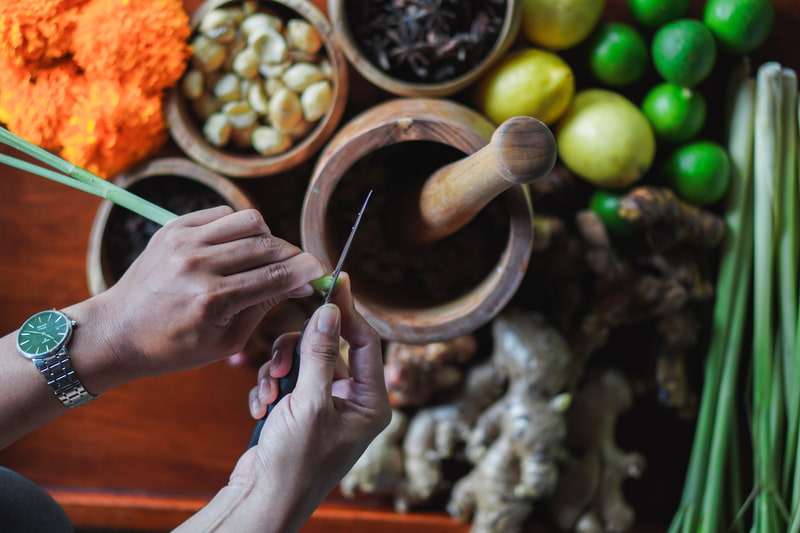
Through the process, I learned many things about the craft of boreh-making, as well as some fun little educational facts from my conversation with Lea and Febriza. One of which was about kunyit or turmeric. Despite its physical resemblance to ginger, it’s not commonly used in body treatments due to its high antiseptic properties. It’s more often reserved for herbal drinks or even applied directly to wounds. I found that oddly fascinating, a useful knowledge to have, just in case I ever find myself in a situation where I might need it (a bit paranoid, I know, but it is what it is!).
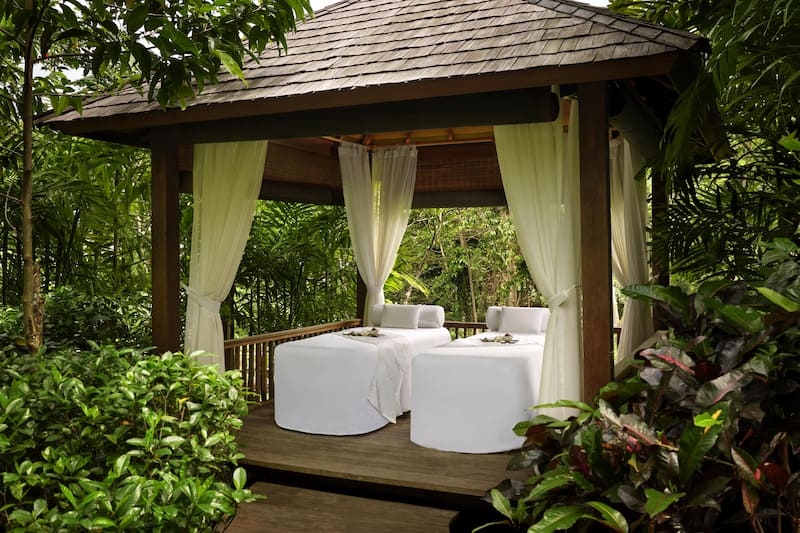
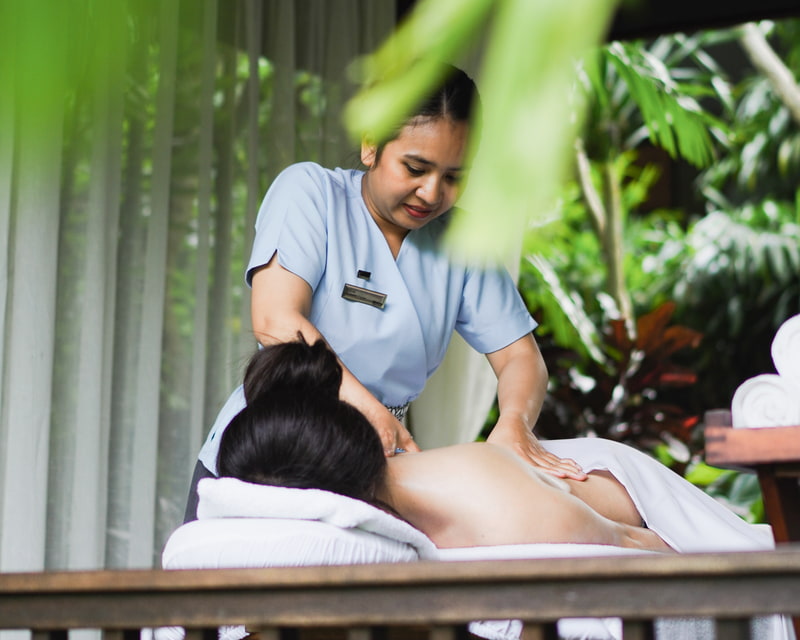
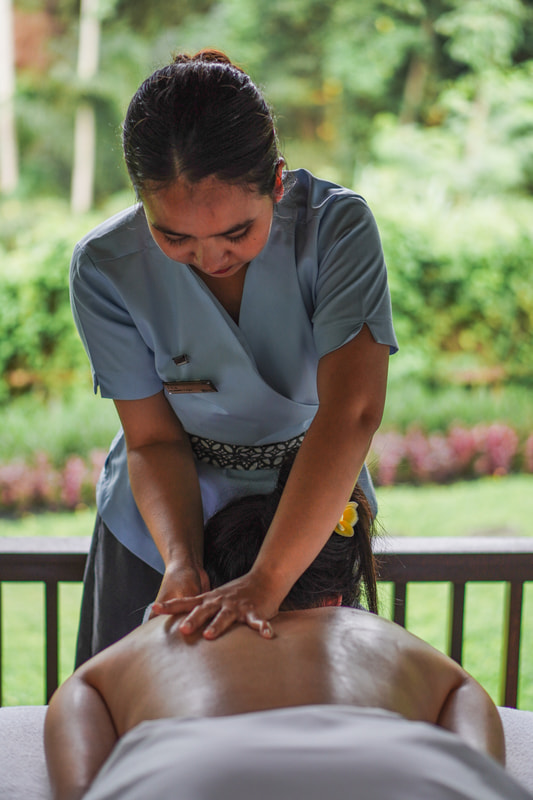
Once we had finished, it was time for the massage and the application of the boreh. I was led to a new setting—a gazebo-like space nestled within the garden. At its centre stood the massage bed, framed by soft white vitrage drapes that swayed gently with the breeze; it was both private yet highly connected to the outdoors. It was my first time experiencing a spa in such an open, natural setting. Unlike my previous indoor treatments, this felt… expansive. Almost surreal, if you will.
Before the massage began, Febriza performed a pre-treatment ritual, gently showering me with vibrant flower petals. She then washed my feet with water from a traditional Indonesian water crock, infused with delicate floral notes. During the massage, I found myself drifting in and out of sleep, lulled by a blend of soft ambient music and the natural symphony around me. The wind moving through the leaves, the distant chirping of birds, even the faint hum of crickets (was it crickets, in the middle of the day? We’ll never know)—it all blurred into something deeply soothing. Living in the southern part of Bali, this wasn’t a soundscape I encountered often. One by one, the tension I carried seemed to escape me, and in their place was instead a quiet certainty. At that moment, I was exactly where I needed to be.
After the massage came the application of the boreh. Its texture was coarse yet comforting, gently exfoliating as it was worked into my skin. The paste carried a cooling sensation, amplified by the breeze that moved through the open space. Having experienced store-bought lulur before, I could feel the difference—this was raw, grounded, unmistakably natural. There was something deeply ouroboric about the knowledge that what touched my skin came directly from the earth, and would return to it untouched by anything artificial.
As much as I wished to linger in that state, the treatment eventually came to an end. Febriza, with her ever-so-gentle voice, guided me back, suggesting I take my time in the locker room for a warm shower, and that tea would be waiting for me in the lounge when I was ready.
The warm water, paired with the lingering scent of the body wash, seemed to carry the relaxation even further—if there was such a thing as a final layer of calm, this was it. After changing, I made my way to the lounge, where, just as promised, a tray awaited me: a pot of ginger tea, chocolate squares, and almonds. I sat there quietly for a while, almost involuntarily thinking, “I really needed this. It’s been quite the week.” I also couldn’t help but appreciate every variable that made the experience what it was, starting from the venue, the activity, and the accommodating nature of all the Heavenly Spa staff.
I looked out over the resort’s garden and found myself reflecting on how easily we, as humans, take these luxurious joys for granted. It is in these current trying times that we are reminded of just how much of a blessing it is to be afforded rare moments of true rest and stillness. I realised, too, that I have been just as guilty of overlooking them. I took another sip, feeling more connected than ever to my own body, and to the environment, the living ecosystem in which I exist. And while I know I cannot bottle this feeling and carry it with me, there is comfort in knowing that it exists—that it is real, and that perhaps, in its own way, it will always remain here, waiting for me to return.
Heavenly Spa Ubud by Westin
- Instagram: @heavenlyspaubud
- Website: marriott.com/en-us/hotels/dpswr-the-westin-resort-and-spa-ubud-bali