



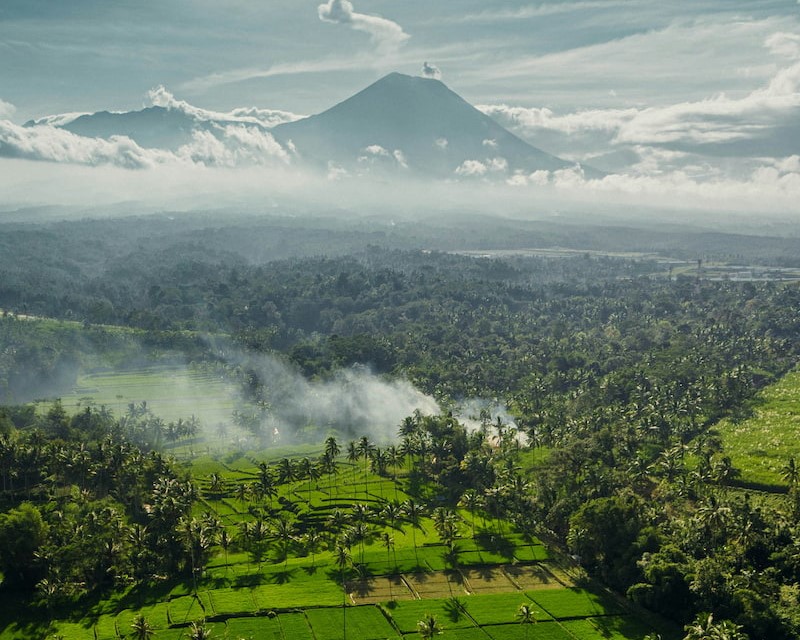
Indonesian tourism sector is at a crossroad—and it is time for global travellers and expatriates to play their part.
The Indonesian archipelago has long occupied a central position in the global imagination as an ethereal sanctuary of biodiversity and cultural depth. From the verdant highlands of Sumatra to the crystalline waters of Raja Ampat, the nation’s tourism sector serves as a vital economic engine, contributing significantly to the national gross domestic product.
However, as we approach the mid-point of 2026, the traditional paradigms of “Sun, Sea, and Sand” face an existential reckoning. For the discerning expatriate community and global travellers residing within these borders, the conversation must evolve beyond mere aesthetic appreciation. It is time to scrutinise the invisible infrastructure that sustains these destinations, specifically focusing on the critical nexus of water security, waste management, and the emerging concept of regenerative hospitality.
This evolution is not merely a response to global climate trends, but a necessary transition rooted in the rigorous application of environmental engineering and a reimagining of our relationship with the Indonesian landscape.
From ‘Sustainable’ to ‘Regenerative’
The current trajectory of Indonesian tourism often operates on an extractive model, where the immediate demands of high-occupancy hospitality place an unsustainable strain on local ecosystems.
In regions like Bali and West Sumatra, the rapid expansion of villas and resorts frequently outpaces the development of centralised municipal water treatment systems. This creates a precarious reliance on groundwater extraction, leading to land subsidence and saltwater intrusion in coastal aquifers. To sit by a luxury pool while the neighbouring village struggles with dry wells is no longer an acceptable paradox for the modern traveller.
This ‘resource displacement’ represents a hidden cost of tourism that standard economic metrics fail to capture. Transition from ‘sustainable’ tourism—which merely seeks to minimise harm—into becoming ‘regenerative’ tourism has become more imperative than ever, which should actively improve the health of the local environment.
No more resorts shall continue to be seen as an isolated bubble of consumption. Instead, it is time for those resorts to serve as a functional node in a larger ecological network—the node that contributes oxygen, clean water, and biodiversity back into the system.
The Shape of Water
Water, the lifeblood of any tourism destination, remains Indonesia’s most significant challenge and opportunity when it comes to travel and tourism.
While many high-end resorts boast infinity pools and lush tropical gardens, the underlying reality often involves the depletion of local village wells. One solution to consider in rectifying this disparity is the adoption of decentralised water treatment technologies, such as the point-of-use (POU) disinfection systems and advanced filtration methods currently being refined in academic laboratories.
On top of that, the concept of ‘green hospital’ offers a compelling framework for the future of Indonesian resorts as well. Just as modern healthcare facilities in Indonesia are beginning to prioritise indoor air quality, hazardous waste mitigation, and energy-efficient climate control, Indonesia’s tourism infrastructure may adopt similar rigours.
An expatriate living in Jakarta or Surabaya would understand the palpable impact of environmental degradation on the quality of life. Therefore, when these individuals travel domestically, they may increasingly seek destinations that demonstrate a transparent commitment to ecological integrity. This ‘environmental literacy’ among travellers may act as a powerful market force, incentivising hotel operators to move beyond ‘greenwashing’—such as the mere removal of plastic straws—towards more systemic changes like onsite composting of organic waste.
Disaster resilience also plays a pivotal role in the narrative of Indonesian tourism. Given the nation’s unique geographical position on the Ring of Fire, it is time for every tourism development to integrate disaster mitigation into its aesthetic design. The whole world has witnessed how environmental catastrophes, such as the 2025 floods in West Sumatra, can instantly sever the lifelines of regional tourism. A resilient tourism model, therefore, could anticipate these disruptions by maintaining independent, low-cost water purification systems and robust emergency protocols. When a resort operates as a bastion of safety and resource stability during a crisis, it strengthens its social licence to operate within the local community.
Not a Memory, But a Reality
As significant stakeholders in the local economy, expatriates actually possess the agency to demand higher environmental standards from the providers they frequent.
By choosing to support establishments that publish their sustainability audits and invest in local watershed protection, the international community accelerates the adoption of nationally-accredited scientific research into practical, commercial applications. Currently, we are seeing a burgeoning interest in ‘impact travel’, where guests participate in the restoration of mangroves or the installation of decentralised water filters in nearby villages. This may create a symbiotic relationship that enriches the traveller’s experience while providing tangible benefits to the Indonesian landscape.
The May 2026 travel season could be the ideal opportunity for a shift towards a ‘circular economy’ for the tourism sector. This may entail a rigorous assessment of the lifecycle of every material used, from the construction of bamboo eco-lodges to the disposal of industrial cleaning chemicals. If we can successfully implement alkali-treated aluminium precursors for water treatment at a household scale, for instance, then imagine the impact of scaling such innovations for a boutique resort. The goal is to create a closed-loop system, where waste becomes a resource and tourism becomes a catalyst for environmental healing.
Ultimately, the future of Indonesian tourism resides in our ability to harmonise modern engineering with indigenous wisdom. The subak irrigation systems of Bali and the traditional water management practices in Sumatra provide a blueprint for communal resource sharing that modern technology can enhance but never fully replace. As we navigate the complexities of the 21st century, the alliance between academic research, the hospitality industry, and the expatriate community will define the resilience of this nation.
By championing regenerative practices, we ensure that the breathtaking vistas of Indonesia remain not merely a memory of the past but a sustainable reality for generations of travellers to come.
This opinion piece was written by Taufiq Ihsan, an assistant professor at the Environmental Engineering Department of Andalas University, Indonesia.