



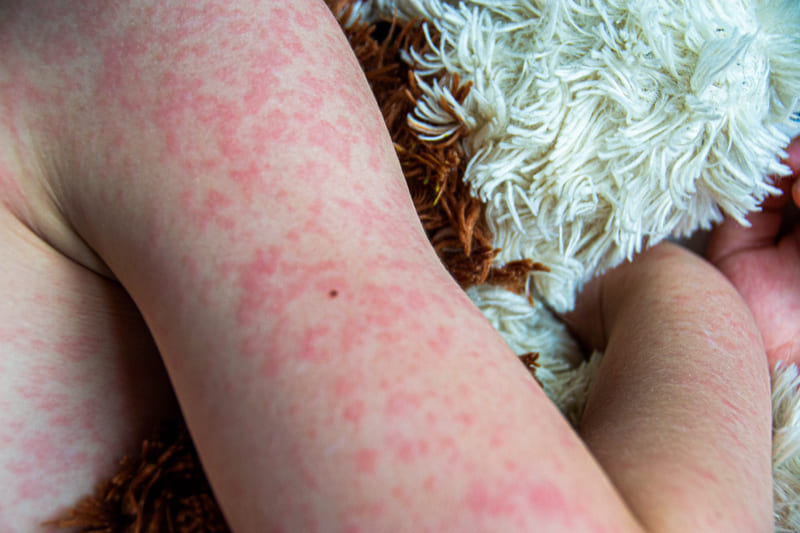
Recently, measles has once again become a serious concern in Indonesia. Data from the Ministry of Health of the Republic of Indonesia shows a rise in cases, as well as outbreaks (KLB), across various provinces and districts/cities from 2025 to early 2026.
Throughout 2025, the Ministry of Health recorded 63,769 suspected measles cases, with 11,094 cases confirmed through laboratory examinations and 69 deaths. By week 7 of 2026, there had been 8,224 suspected cases, 572 confirmed cases, and four deaths. In addition, 21 suspected measles outbreaks were reported across 17 districts/cities in 11 provinces.
This situation serves as a reminder that measles is a highly contagious disease that can lead to serious complications and may even be life-threatening if not properly managed.
What is Measles?
Measles is a highly infectious disease caused by the measles virus. It spreads through respiratory droplets released into the air when an infected person coughs or sneezes. The virus can also survive in the air or on surfaces for a period of time, posing a risk to those nearby.
After entering the body, the virus incubates for approximately 10–12 days before symptoms appear. In unvaccinated environments, a single infected child can rapidly transmit the disease to others.
Symptoms of Measles
In its early stages, measles symptoms often resemble those of the common cold, making it difficult for parents to recognise immediately.
Early symptoms typically include a high fever accompanied by the “3 Cs”:
- Cough
- Coryza (runny nose)
- Conjunctivitis (red, watery eyes)
A characteristic sign of measles is Koplik spots (small white spots inside the mouth), which usually appear one to two days before the skin rash develops.
The rash typically appears as the fever peaks, beginning on the face (particularly behind the ears) before spreading to the neck, body, arms, and legs. It initially appears as pale red spots, which then darken before gradually fading.
“Measles is often considered a common illness, but under certain conditions it can lead to serious complications and even death, especially in children who are not immunised or who have weakened immune systems. Possible complications include ear infections, severe diarrhoea leading to dehydration, pneumonia, and even brain inflammation (encephalitis),” said dr Venty, Sp.A, CIMI, Paediatric Specialist at Bethsaida Hospital Gading Serpong.
Measles Treatment
To date, there is no specific antiviral treatment for the measles virus. Management is therefore supportive and symptomatic, aiming to help the body fight the infection while relieving symptoms.
Supportive care includes:
- Ensuring the child gets adequate rest
- Providing sufficient nutrition
- Maintaining proper fluid intake to prevent dehydration
- Administering vitamin A supplementation according to age:
- Under 6 months: 50,000 IU
- 6 months to 1 year: 100,000 IU
- Over 1 year: 200,000 IU
“Vitamin A is given to reduce the risk of complications and mortality. It is administered over two consecutive days according to the recommended dosage. In children with malnutrition and/or eye complications, vitamin A may be given again two weeks later,” explained dr Venty.
Symptomatic treatment may include:
- Fever reducers and medication for coughs and colds, if necessary
- Eye care, including cleaning with sterile gauze soaked in boiled water and administering eye drops if required
- Skin care by keeping the skin clean and dry
- Antibiotics, if there is a secondary bacterial infection, as prescribed by a doctor
“Hospitalisation is required if the child develops complications such as diarrhoea with dehydration, pneumonia, malnutrition, first-time seizures or complex febrile seizures, and encephalitis. In addition, infants under six months and children with compromised immune systems require close medical monitoring,” added dr Venty.
Measles Prevention
Measles prevention involves both general and specific measures. General prevention includes maintaining clean and healthy lifestyle habits, such as:
- Regular handwashing with soap
- Practising proper cough and sneeze etiquette
- Isolating infected individuals at home during the infectious period (four days before until four days after the rash appears)
- Avoiding direct contact with high-risk groups, such as:
- Infants
- Pregnant women
- Individuals with weakened immune systems
Specific prevention is achieved through vaccination. Immunisation follows the schedule recommended by the Indonesian Pediatric Society (IDAI):
- MR vaccine (Measles and Rubella) at 9 months
- MR/MMR booster (Mumps, Measles, Rubella) at 15–18 months
- Additional MR/MMR booster at 5–7 years
“Parents are encouraged to adopt clean and healthy habits, practise self-isolation when necessary, and complete measles immunisation to break the chain of transmission and protect children from measles and its complications,” added dr Venty.
Given the high transmission rate and potential complications of measles, parents are advised to remain vigilant and seek medical attention promptly if symptoms arise.
Bethsaida Hospital Gading Serpong offers paediatric clinic services supported by experienced specialists and comprehensive medical facilities to assist with diagnosis, treatment, and overall child health monitoring.
dr Margareth Aryani Santoso, MARS, Director of Bethsaida Hospital Gading Serpong, stated that the hospital remains committed to providing the best healthcare services for children. “Bethsaida Hospital Gading Serpong is equipped with a paediatric clinic supported by experienced specialists and complete medical facilities to diagnose and treat a wide range of paediatric conditions, including infectious diseases such as measles. We encourage the public to remain vigilant and to seek early medical attention so that children can receive appropriate care,” she said.
With comprehensive medical services and increased public awareness of prevention and immunisation, it is hoped that the risk of measles transmission among children can be reduced, ensuring better overall child health.