




Indonesia is often described as confusing. In practice, what most people struggle with is not the system itself, but the information surrounding it, and how confidently that information is delivered.
Advice comes from many directions: a consultant, a notary, a friend who set up a company years ago, an online forum, or a WhatsApp message forwarded several times, usually beginning with, “Don’t worry, this always works.” Sometimes it does; sometimes it worked once; sometimes it worked before systems became digital; and sometimes it worked right up until the moment it very clearly didn’t.
Indonesia is changing. Government processes are becoming more digital, more integrated, and more traceable. Information that once lived in separate offices is now connected across platforms. The result is not confusion. It is a clarity that rewards preparation and punishes guesswork.
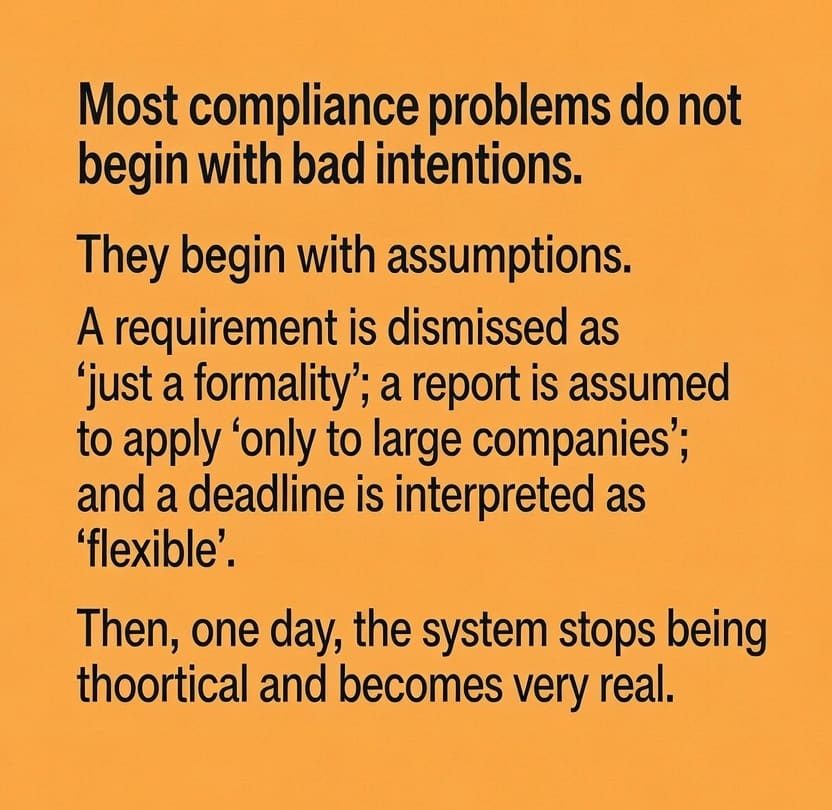 In this environment, speed without understanding has become a risky strategy. Clarity, on the other hand, has become valuable. Clarity does not mean memorising regulations or becoming a legal expert. It means understanding three essential things: what the regulation says, how it is commonly applied in practice, and where discretion or risk exists. Without that understanding, people are left guessing, and it often leads to stress, delays, or the uncomfortable realisation that the advice they followed was last accurate around the time everyone still printed their visa applications.
One area where this becomes particularly visible is administrative and compliance exposure. Many obligations in Indonesia are not dramatic. They are routine, periodic, and easy to postpone: annual submissions, data updates, and reporting confirmations. Since the consequences are not immediate, they are often treated as optional until they are not.
A related example that frequently catches companies off guard is Lapor Kemenaker. Not because it is a reporting obligation — it is not — but because it functions as a whistleblower platform: a channel through which employees, former employees, or third parties can submit complaints directly to the Ministry of Manpower. Many companies only learn this distinction when it becomes relevant to them.

The pattern is familiar. Everything appears fine. Operations run normally. Then a notification arrives, unexpected and uncomfortable. Issues that were once considered internal are suddenly logged, time-stamped, and visible.
The reaction is often the same: “We didn’t know this could happen,” closely followed by, “We didn’t think anyone would report this.”
Neither statement is unusual. Both assume that silence equals compliance. In increasingly digital systems, it does not.
The existence of platforms such as Lapor Kemenaker does not signal aggressive enforcement. It signals structural transparency. When channels exist, they are eventually used — not necessarily out of malice, but because systems invite participation and records do not forget.
The same logic now applies to administrative systems more broadly.
As highlighted in an official Instagram post by the Directorate General of Immigration (Direktorat Jenderal Imigrasi) in the first week of January, compliance is no longer something the system politely reminds you about. Missed or delayed submissions can now result in immediate access restrictions — quietly, automatically, and without negotiation.
This matters because blocked system access is not symbolic. It prevents further filings, changes, and approvals. In practice, it freezes progress. Reopening access usually requires compliance first, not explanations, not intentions, and certainly not references to how things used to work.
This shift reflects a broader direction. Indonesia is moving towards active compliance, not reactive enforcement. Systems are designed to expect accuracy and timeliness as a baseline, not as a favour. From the government’s perspective, this is administrative efficiency. From the user’s perspective, it can feel abrupt, especially if no one explained the rules clearly beforehand.

Globy was created to address exactly this gap. It is an AI assistant designed to explain permits, visas, licences, employment obligations, taxation, and other government processes in Indonesia clearly and responsibly. Its role is not to accelerate decisions, but to reduce misunderstandings before they become problems.
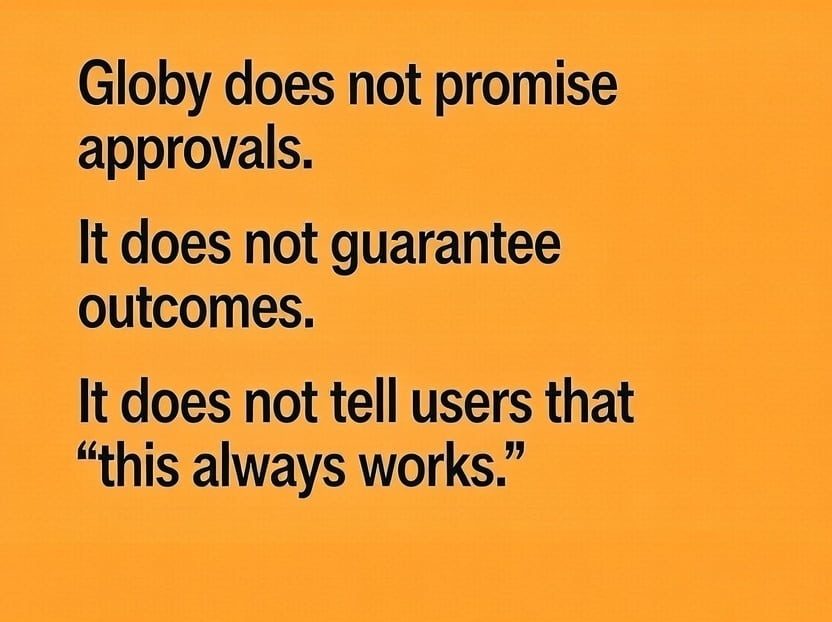 Rather than offering shortcuts, Globy explains the framework people are operating within, including deadlines, reporting obligations, system dependencies, and consequences that are often overlooked because they are not immediate.
This approach is deliberate. In a system where information spreads faster than accuracy, reassurance without context creates risk. Telling people what they want to hear may feel comforting in the short term, but it often leads to longer conversations later, usually beginning with the sentence, “I thought this wasn’t required.”
Another important aspect of clarity is who it is for. Compliance is often discussed as if it only concerns foreigners or large corporations. In reality, misunderstandings affect everyone, including directors, shareholders, employees, notaries, and partners. When reporting is missed or data is incomplete, the consequences ripple outward. Clear information protects not just individuals, but the broader ecosystem in which they operate. This is why clarity matters more than speed.
The beginning of a new year is often a moment for resetting plans. It is also when many people realise that “I’ll deal with it later” has quietly turned into “I should have done this already.” Speed can be useful, but only when direction is clear. Acting quickly without understanding the rules rarely saves time in the long run; it usually just postpones the paperwork, sometimes with added urgency.
Compliance is often framed as a burden. From another perspective, it creates stability. When requirements are understood, anxiety decreases. Planning becomes possible. Risks become visible rather than hidden. Fewer surprises appear later.
Globy supports users across areas such as immigration, employment-related obligations, business licensing, taxation, property documentation, and civil registration. Just as importantly, it maintains clear boundaries around what it will not do. It will not normalise unsafe practices or present assumptions as facts. Those boundaries exist because trust depends on transparency.
In Indonesia’s increasingly connected systems, calm does not happen by accident.
It is built through understanding, which is almost always cheaper emotionally, administratively, and practically than fixing things later.
Globy exists to make that understanding easier to access, more current, and a little less stressful — even when the rules themselves remain unchanged.
Globy, powered by The Permit House

📍 Jakarta Office
Tempo Scan Tower, Jl. H. R. Rasuna Said No. 3-4, Kuningan, South Jakarta
📍 Bali Office
Benoa Square, Jl. By Pass Ngurah Rai No. 21A, Badung, Bali
📞 T: +62 899 8100 841
✉️ E: office@thepermithouse.com
🌐 W: thepermithouse.com
📷 Instagram: @thepermithouse