



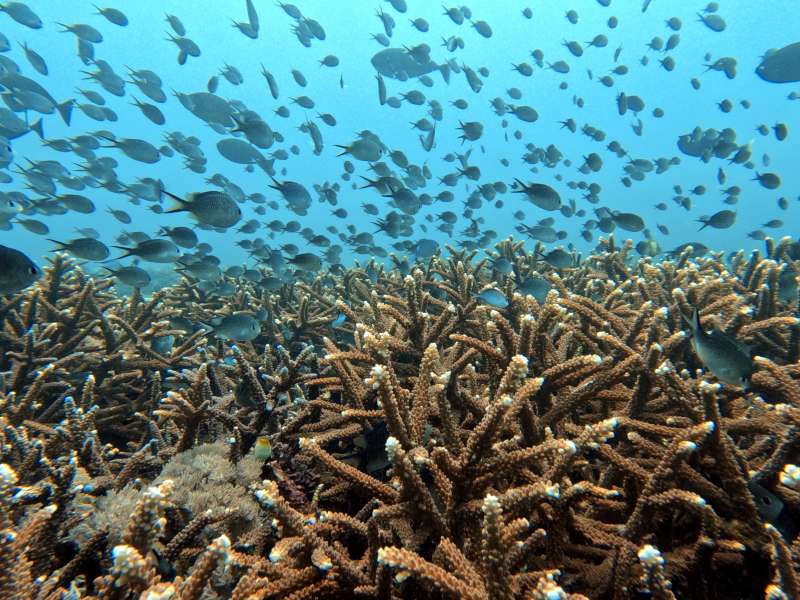
Since coral reefs play a vital role in Indonesia’s marine environment, Livingseas Asia contributes to restoring damaged reefs and revitalising the marine ecosystem.
Indonesia is the largest archipelagic country, whose ocean area measures approximately 5.8 million square kilometres. Within its vast ocean lie many kinds of marine resources, including fishery products, crude oil, and natural gas. In addition, the location between the Indian and the Pacific Oceans, between Asia and Australia, makes it one of the most strategic international trading routes.
It should also be noted that Indonesia is home to over 17% of the world’s coral reefs, with more than 500 species of coral found across its waters. Furthermore, these reefs not only support an estimated 25% of all marine life but also sustain the livelihoods of millions of Indonesians through fisheries and tourism.
Nevertheless, possessing a rich marine ecosystem will most likely attract unruly fishermen to engage in unfavourable activities. According to several environmental studies, more than 30% of Indonesia’s coral reefs have suffered significant degradation due to destructive fishing practices and pollution. Since some might think that catching fish in a normal way is more challenging and takes more time, they might be tempted to sail to the ocean and bombard the waters (most likely by using dynamite) to obtain as many fish as possible within a short time. This practice would consequently harm not only the fish but also the coral reefs beneath the surface.
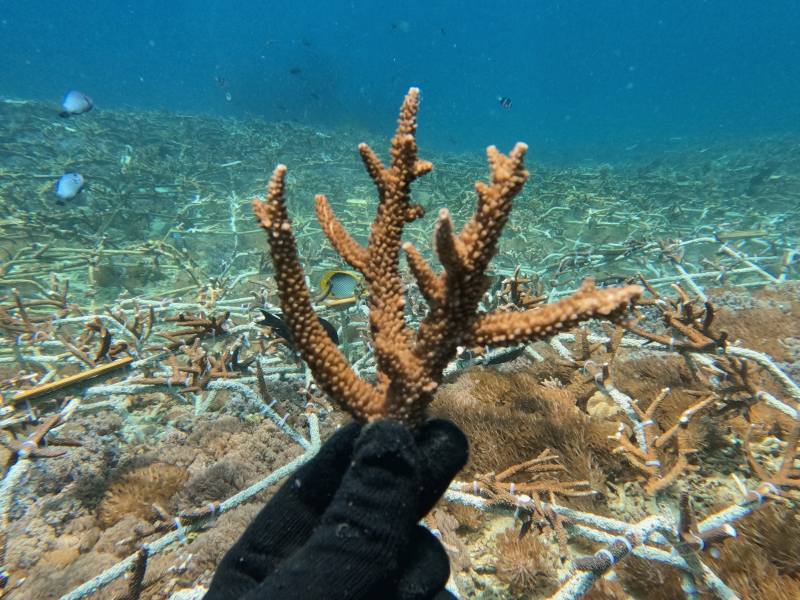
When coral reefs are damaged, it can lead to serious consequences, which include a decline in fish populations, deteriorating water quality, and an increased risk of coastal erosion. To boot, coastal villages are more likely to experience flooding, which could result in local fishermen catching fewer fish than usual. This, ultimately, could cause a ripple effect that might harm food supply, tourism, and even any long-standing local traditions connected to the sea.
That is why, to bring back the marine ecosystem, Livingseas Asia, a dive centre located in Padangbai, Bali, initiated a sustainable programme called “Coral Reef Restoration”. Even though the foundation was officially established in 2023, the restoration project had actually begun long before that. Today, Livingseas Asia’s “Coral Reef Restoration” programme is known as the largest reef project on the island.
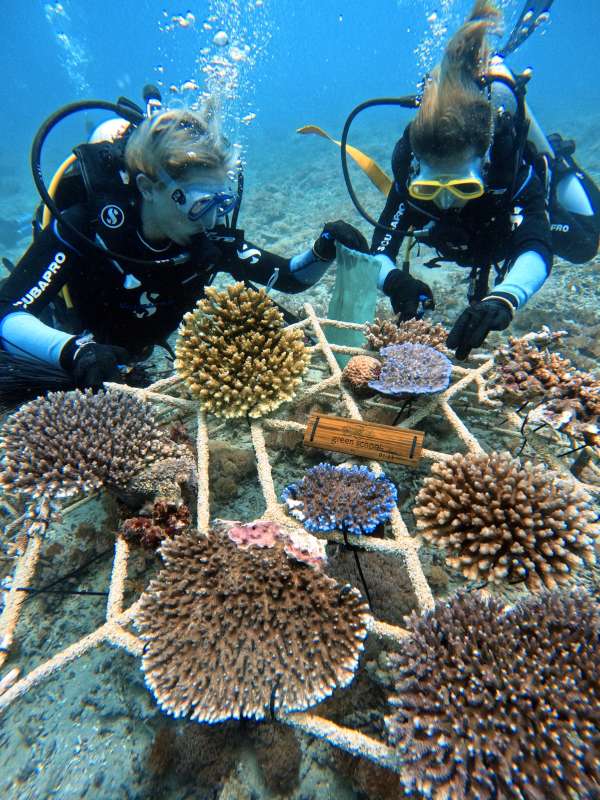
Padangbai, in particular, was chosen as the site of the programme for its good-quality water, which makes it an ideal place to grow corals. The reef restoration site is accessible 24/7, and the project is open to all kinds of volunteers and participants, including tourists, schools, corporations, divers, and snorkellers.
The founder, Leon Boey, stated that the goal of the programme is to raise awareness about coral restoration as well as encourage participation from all visitors.
“Anybody can join and help build this reef. That’s the idea I want to share: to let people know that there is such an activity in Bali in which people can come and contribute to the reef. You don’t need to be a diver; you can be a snorkeller. Corporate and school groups can do coral workshops, where they can join and then get more education [about the project],” said Boey.
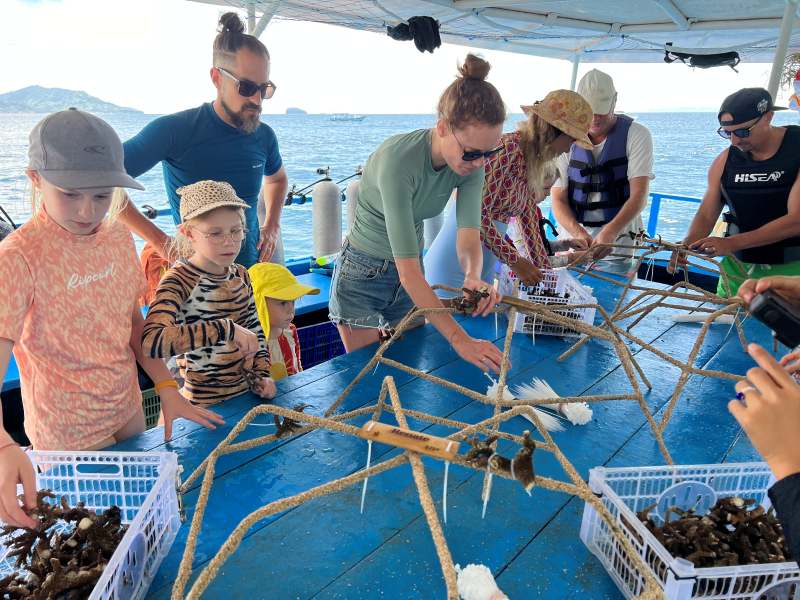
Livingseas Asia applies the regenerative tourism concept, where participants can join the restoration project and experience real hands-on coral planting. The project encompasses a Coral Workshop, a Coral Restoration Snorkel Tour (snorkelling activity in shallow water, around four metres deep), and a Coral Restoration UW Diving Package. As of the end of 2025, this project is still ongoing and has covered approximately 6,400 square metres — with over 315,000 corals having already been planted.
The foundation’s long-term goal, furthermore, is to expand the reef to five hectares (or approximately 50,000 square metres).
The restoration process starts by creating small, handmade reef structures (approximately 60 centimetres in diameter) in the workshop. Livingseas Asia offers online donations and corporate ESG programmes, allowing participants to purchase and plant their own reef structures as part of the restoration efforts. The corals are sourced from nearby sites, such as Candidasa, where reefs are being reclaimed to build a new beach. Once ready, the structures are connected underwater to form a strong web. 18 coral fragments are attached to the reef star with two cables tied, facing up towards the sun, allowing nature to take over.
Within one to one and a half years, these handmade reef structures are expected to become fully covered with coral. Subsequently, marine life—including various fish species and even baby sharks—have begun to return to the site. All these steps, of course, will be guided by professional marine scientists, divers, and guides.
To succeed in this programme, Livingseas Asia collaborates with the local authorities, including the Manggis District office, the Bali Governor’s office, and the local police. In addition, Livingseas Asia has submitted applications through the Coastal and Marine Resources Management Centre (Balai Pengelolaan Sumberdaya Pesisir dan Laut or BPSPL) to the Indonesian Ministry of Fisheries.
Meanwhile, besides Padangbai, other restoration sites by Livingseas Asia include Amed (North Bali), Uluwatu (South Bali), Lombok (West Nusa Tenggara), Banggai (Central Sulawesi), and even Phuket (Thailand). These projects are managed through various partnerships to ensure effective local monitoring as well as maintenance.
Last but not least, Livingseas Asia also aims to educate and empower everyone on how to live sustainably for the sake of protecting the overall environment. Such education encompasses how to dive or snorkel with care to keep the reef undamaged, how to apply mineral-based sunscreens, the significance of shopping in the local markets, the importance of avoiding single-use plastics, and how to support the reef restoration and preservation initiatives via the donation programme, as established by the foundation.
With continued collaboration between organisations and individuals, projects like Livingseas Asia’s “Coral Reef Restoration” in Padangbai could serve as blueprints for other coastal regions across Indonesia. The ocean’s recovery may take decades, but every coral planted today represents a step towards a healthier, more sustainable future. After all, protecting the sea is not merely an environmental act; it is an investment in humanity’s survival.
To learn more about Livingseas Asia and donate to their reef restoration project, feel free to visit them on Instagram @livingseas.asia and official websites as follows: