



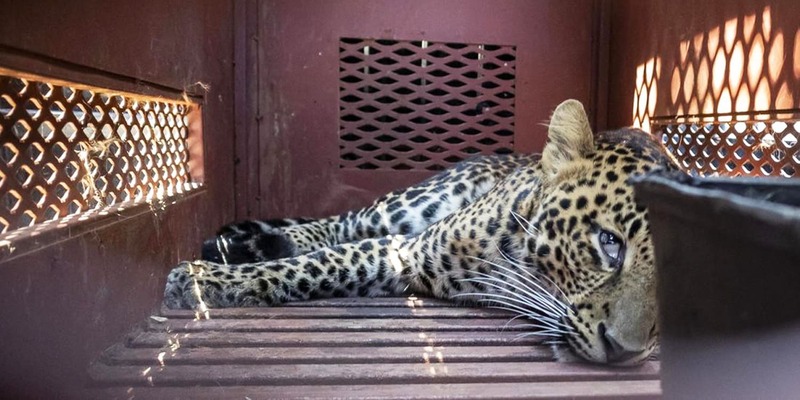
A leopard believed to have escaped from Lembang Zoo shocked residents after wandering into a hotel in Bandung, prompting a three-hour rescue operation by wildlife and emergency teams.
A leopard reportedly entered the Anugerah Hotel on Jalan Padasaluyu, Sukasari, Bandung, on Monday, the 6th of October. The wild animal is believed to have escaped from Lembang Zoo about a month ago.
The leopard was first sighted by hotel security at around 6.00 AM local time, when it was seen entering the hotel area, which was empty at the time.
A widely circulated video on social media shows the leopard cornered in front of a room on the second floor of the hotel, displaying aggressive behaviour during the recording. The hotel immediately contacted the Bandung City Fire and Rescue Department.
Keberadaan macan tutul di hotel Anugerah dikaitkan dengan satwa dengan nama latin Panthera Pardus yang pada 28 Agustus 2025 lalu kabur dari kandang penangkaran objek wisata Lembang Park & Zoo, Kabupaten Bandung Barat.#detikcom pic.twitter.com/B9RsZqcmRz
— detikcom (@detikcom) October 6, 2025
In his statement, Agus Arianto, Head of the West Java Natural Resources Conservation Agency, provided details on the chronology and the suspected cause of the leopard’s entry into the urban environment.
“We received information from the Fire Department regarding a leopard trapped in the hotel, and we then coordinated. There is indeed a connecting corridor between the forest area, which includes a valley, garden area, bushes, and a watercourse, allowing the leopard to approach the location,” said Arianto.
A joint team consisting of the Natural Resources Conservation Agency, the Fire Department, the police, and the Bandung Zoo arrived at the scene and immediately carried out an evacuation process that lasted approximately three hours.
Officers eventually managed to immobilise the leopard after firing two tranquiliser darts. Once sedated, the animal was placed in a transport cage.
Arianto explained that the leopard has been evacuated to the Cikananga Wildlife Rescue Centre in Sukabumi for further observation and identification.
Responding to the incident, Dr Abdul Haris Mustari, a wildlife ecology expert from IPB University and lecturer in Forest Resource Conservation and Ecotourism, explained that this case demonstrates how these predators can survive in the wild for several weeks after escaping from captivity.
“This incident highlights the need for greater caution among zoo and wildlife park managers. Enclosures must be genuinely secure, made of strong materials, and provide a sense of comfort for the animals inside,” said Mustari, as quoted from the IPB University website on Wednesday, the 8th of October.
Additionally, as the top predator on Java Island since the extinction of the Javan tiger, leopards are known to be excellent tree climbers and often rest on large branches. Stressful conditions in enclosures, such as a zoo, are often the reason animals attempt to escape, as in the case of the leopard that ended up in the hotel area.
“From these characteristics, it is clear that leopards are not suited to living in captivity, especially if the enclosure does not meet animal welfare standards,” added Mustari.