



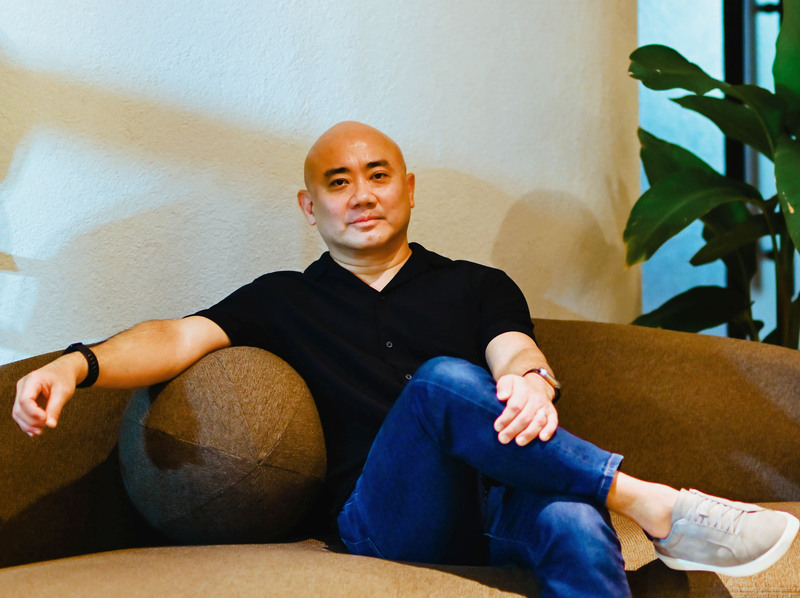
Padel has become the primadonna of Indonesian sports, and perhaps no one understands it better than Tim Utomo, the CEO and co-founder of Padeloom, which has impressively blossomed throughout this year into one of the most popular padel clubs in Jakarta.
In a conversation with Indonesia Expat, Tim Utomo discussed the idea behind Padeloom, what eventually makes Padeloom stand out among the growing padel clubs in the city, how Padeloom has also levelled up by becoming a one-stop lifestyle destination thanks to Padeloom Wellness and SupperClub, the direction in which padel sports in Indonesia is heading in the future, and much more.
Hi, Tim! Could you tell us about the journey and the motivation behind the founding of Padeloom?
My friends and I have always enjoyed sports. In 2023, my daughter—who now lives in the United States—introduced me to padel. A year later, my friends also became enthusiasts; padel is a truly engaging sport, distinct from other racket sports like badminton, tennis, or squash. From my perspective—now that I am in my fifties—padel is excellent for training reflexes, agility, and focus. It also provides great cardio exercise.
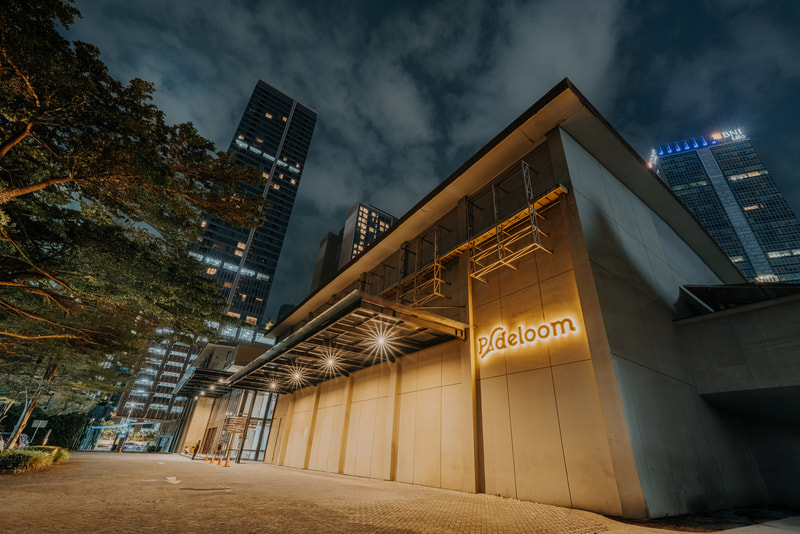
However, at the time, my friends and I realised that there were very few padel courts, especially in Jakarta. Even when courts were available, it was often difficult to secure a booking that aligned with everyone’s individual schedules. Leveraging my background in construction, we identified a space in South Jakarta that had formerly been a television studio. My friends and I then reconstructed and redeveloped the site into what is now known as Padeloom. We officially opened our doors and began operations in December 2025.
Given how Jakarta has seen quite a rise in the number of padel clubs recently, at least from your perspective, what makes Padeloom stand out among all padel clubs in the city?
First of all, we were very fortunate to secure a space that was formerly a TV studio, which means the walls were already padded—essentially soundproof. Furthermore, the ceilings are very high, and an air conditioning system is already in place.
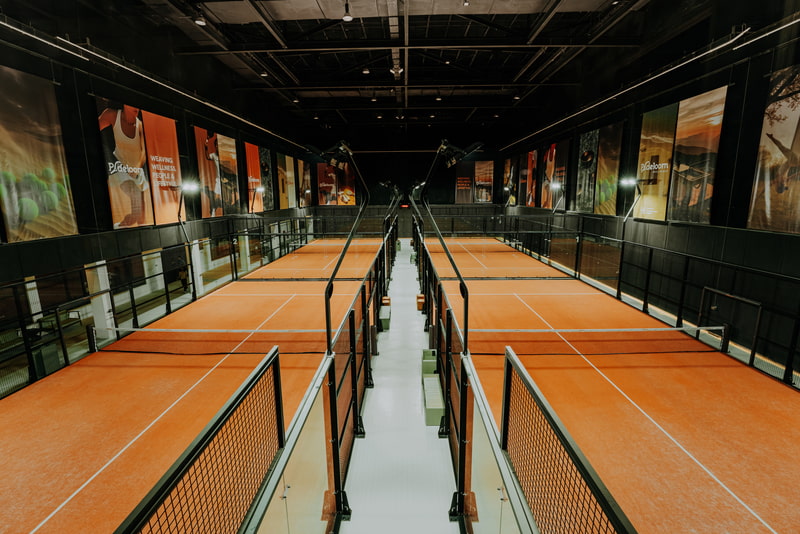
Ultimately, to differentiate ourselves, we strive to provide the best possible experience for our customers. For instance, most padel courts are semi-indoor—there is nothing wrong with that, but in Jakarta, it tends to get quite hot, rain can be noisy, and the air quality is often less than ideal. Consequently, Padeloom offers a padel facility where both humidity and temperature are managed, ensuring high air quality for the players. Moreover, thanks to the padded walls, you are completely insulated from the weather outside—whether it’s raining or sunny—and external noise is kept to a bare minimum, which also ensures maximum comfort for players as they spend their time here at Padeloom. We also have two VIP courts, which have been frequently used for events, meetings, and seminars.
In terms of uniqueness, one of the things that sets Padeloom apart is its physical structure. While most padel clubs feature dome-shaped roofs, we have opted for a design similar to a sports hall. Furthermore, we offer ample parking spaces and are situated in a highly strategic location—all to ensure the utmost convenience for Padeloom’s customers.
Speaking of uniqueness, one of the most interesting facilities at Padeloom is the glow‑in‑the‑dark padel court. What can you tell us about it?
That idea came from our partners, who once said that we should do something different. Also, the way I see it is like this: with us also having an enclosed padel court, we can create the glow-in-the-dark padel court not just at night but also at any hour of the day—which other padel clubs may not be able to do. It’s indeed a gimmick, but it’s the kind of gimmick that aims to provide a different and fun experience.
I’ve gathered that Padeloom has recently launched Padeloom Wellness in partnership with The Nakamatsu Institute, which provides various wellness classes from aerial yoga and bungee fly to group Pilates and energy healing. What is the motivation behind Padeloom Wellness?
First, this property includes an additional space that we can use for activities other than padel. Second, one of our partners happens to be trained by Gerson Nakamatsu—a Japanese individual born in Brazil who became a movement specialist with over 30 years of experience and is the founder of The Nakamatsu Institute. This guy is very gifted. If you have issues with your muscles, bones, or other health concerns, Gerson can tailor and customise treatments to address your specific needs. He’s become so busy that he’s no longer taking on new clients—he works strictly on a referral basis nowadays. Because of this, he’s realised that he needs to pass on his knowledge, and for that, he requires a dedicated space in a strategic location in Jakarta. This idea eventually led to Padeloom Wellness in partnership with The Nakamatsu Institute.
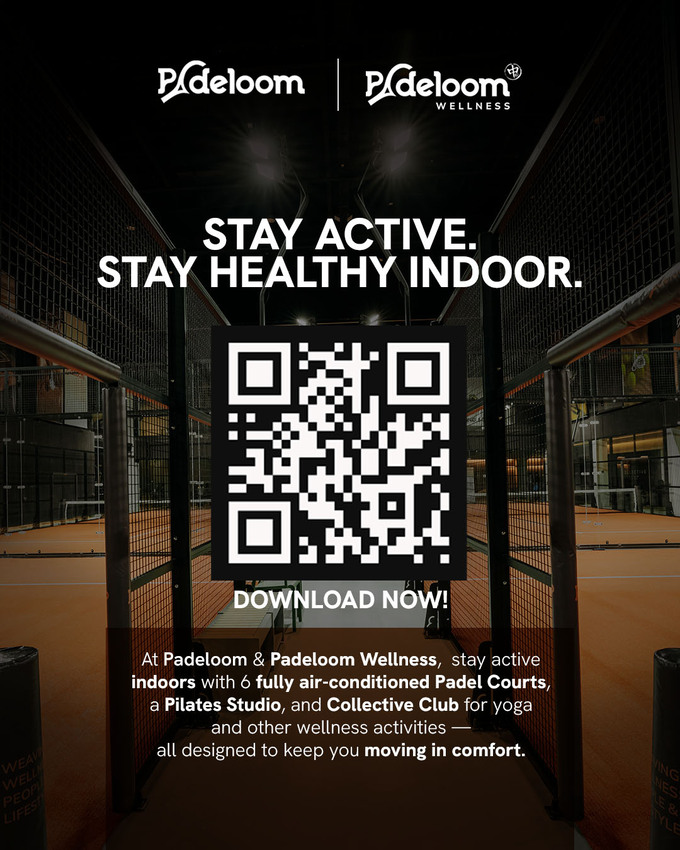
With the integrated facilities we have here—including padel courts, cold plunge areas, a rooftop bar, and a restaurant, just to name a few—Padeloom and Padeloom Wellness ultimately form a single, cohesive, integrated compound. For instance, a family could spend their time here together: the children might play padel, the father could relax at the bar, and the mother might attend a Pilates class or a healing session at Padeloom Wellness. That is our vision—for this space to serve as a one-stop lifestyle destination for everyone.
I’ve also gathered that Padeloom’s recently opened all-day dining restaurant, SupperClub, is starting to make quite a splash as one of Jakarta’s new hangout spots. How would you describe the meal and overall atmosphere provided at SupperClub?
Other padel clubs also offer food, but at Padeloom, we wanted to provide food and beverages that are on par with our facilities. We decided to partner with SupperClub so they could deliver a dining experience with a quality approaching that of a hotel. The Caesar salad at SupperClub is excellent, as are the mushroom soup and the burger. Personally, I’m a fan of the aglio e olio, but we also feature a special nasi goreng (fried rice), chicken porridge, and toasted bread. That is our vision: the food we provide is not like typical cafeteria or food-stall fare, but rather food that is, in terms of quality, on par with hotel meals.
I also feel that expatriates in Jakarta—many of whom work in the Mega Kuningan area in foreign embassies, multinational companies, banks, finance, the energy sector, or the insurance sector—will enjoy what Padeloom has to offer. It’s a good, comfortable, and serene place for them to spend quality time with their families. They can play padel, socialise, watch the games, have great meals, unwind, relax, and even get a massage, as many people out there could use a healthy sanctuary to get away from the hustle and bustle of Jakarta. We are also very fortunate that many of our customers have now become regulars who prefer long-term bookings.
What can you tell us right now regarding Padeloom’s plans for the future? Do you have any plans to add new facilities or establish branch clubs elsewhere?
We will always strive for continuous improvement across every aspect of our operations. For instance, we have just established a partnership with IVtamins. As we know, Indonesia is no stranger to fluctuating weather conditions. Therefore, given such a dynamic climate, many people may find themselves in need of a vitamin boost—something that IVtamins can now provide to Padeloom’s customers.
Beyond that, we have several other ideas in the works that we aren’t quite ready to reveal yet. That said, what you see of Padeloom today is certainly not its ‘final form.’ After all, Padeloom has only just begun its ‘first chapter.’
As the year 2026 is coming to an end, where do you see padel, as a sport and lifestyle, is heading in the year 2027 and onwards?
As I see it, padel will continue to grow. For Indonesians, racket sports—second only to football—are essentially considered their ‘native’ sports. With more padel courts appearing, the cost of playing would be decreasing, meaning padel would no longer be an expensive sport. Consequently, more people would be encouraged to give padel a try. Furthermore, the involvement of the Indonesian Padel Association (Perkumpulan Besar Padel Indonesia or PBPI) in fostering the growth of padel in Indonesia has been remarkable. In fact, PBPI is currently working to ensure that Indonesian athletes can compete in padel, which has recently been officially included in the Asian Games.
At the end of the day, I see significant potential for long-term growth in the padel sector. While it is true that Spain is currently the leading nation in padel, I believe Indonesia has the potential to become the largest padel nation in Asia. As for the future survival of padel clubs, it ultimately comes down to how they differentiate themselves.
Padeloom
- Address: Jl. Parkir Graha Mitra No.Kav. 21, Karet Semanggi, Setiabudi, South Jakarta
- WhatsApp: +62 811 1185 5856 (Customer Service)
- Instagram: @padeloom
- Website: www.padeloom.id