



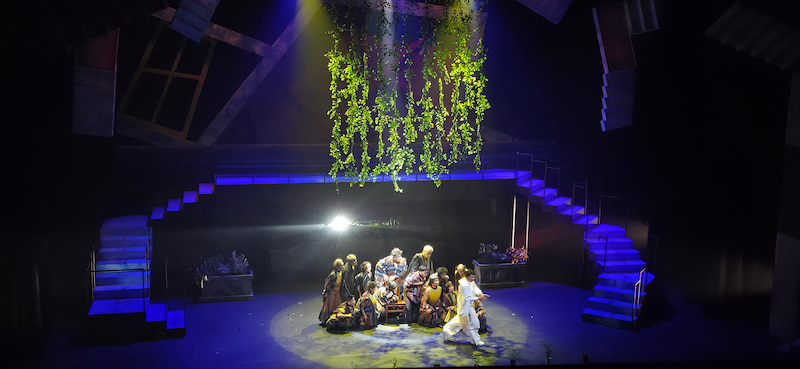
Rooted in rituals, music, and dance, Indonesian performance draws on traditions such as wayang and regional drama, alongside influences like European theatre.
Today, live theatre offers audiences a shared experience of laughter and reflection, distinct from films watched on a screen.
On the 1st of March, 1977, twelve artists in Jakarta founded a theatre group named after a punctuation mark: koma, the Indonesian word for comma. Nearly five decades later, Teater Koma has staged its 238th production and will celebrate its 50th anniversary in March 2027.
Through humour, music, and social commentary, Teater Koma keeps traditional performance relevant today. Its latest production, Koma Sejenak Vol. 1, presented two plays by founder N. Riantiarno, known as Nano, offering a glimpse into why Indonesian theatre still matters.
A sentence that never ends
In his 1980 essay Teater Tanpa Selesai (Theatre Without an End), Nano described theatre as a space for questions and a mirror for society.
A comma allows a sentence to continue. Nano’s wife and co-founder, Ratna, echoed this idea in a statement for the revival of a 1991 play: “As a group named Koma, we do not want artistic expression to stop.”
Teater Koma’s first production, Rumah Kertas (Paper House), opened in August 1977. In Maaf, Maaf, Maaf (“Sorry. Sorry. Sorry.”, April 1978), the group turned a traditional wayang story into comic chaos around a father who imagines himself to be Dasamuka, the demon king from the Ramayana.
Laughter with a point
Nano explored difficult questions through wayang kulit, Indonesia’s shadow puppet theatre. In Javanese wayang, the goro-goro is a comic interlude where clown-servants such as Semar, Gareng, Petruk, and Bagong comment on authority and society. Nano drew on this tradition through guyon parikeno, a Javanese expression for conveying deeper meaning through a simple joke or something said in jest. He described himself as someone who photographed life “with love, humour, and wit”, believing theatre should encourage people to reflect on problems and seek solutions together.
This approach comes through in Kebohongan di Atas Atap (Lies on the Rooftop), in which a businessman who preaches against greed while endangering his employees’ livelihoods finds his nose growing with every lie. The second play in Koma Sejenak Vol. 1, Srikandi, draws on the Mahabharata. Its warrior heroine and the clown-servants enter a forest to fight invisible enemies, then ask the audience whether they can see them too. Both plays, staged again in October, show how Nano’s social commentary continues to resonate.
Tradition in motion
Nano’s influences extended beyond wayang to Srimulat’s popular comedy, Masres folk theatre from Cirebon, Betawi lenong, and wayang golek, which uses wooden rod puppets. He adapted these traditions for contemporary theatre rather than simply preserving their outward forms.
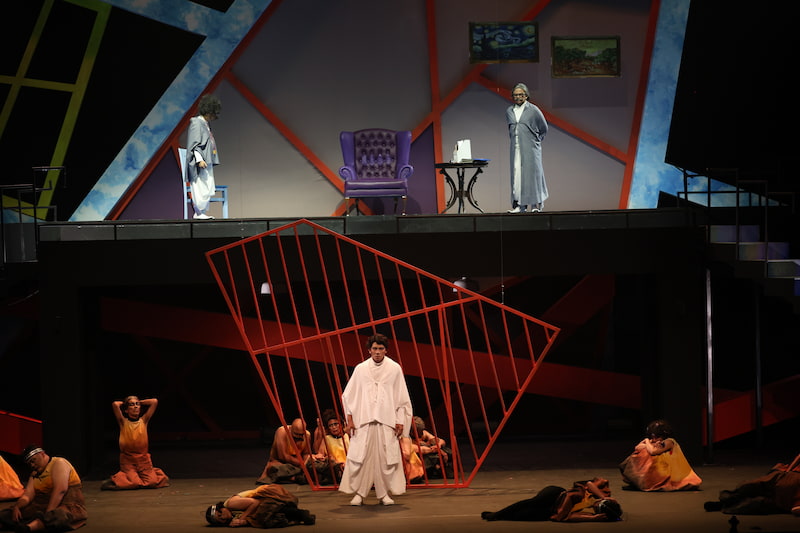
Teater Koma continues this approach in Mencari Semar (Searching for Semar, 2025), which places the wise wayang figure Semar in a futuristic fantasy, and Rumah Sakit Jiwa (Mental Hospital), a revival of its 1991 script. Of the 115 people involved, only six had taken part in the original production. Ratna returned to her role as Dr. Rogusta’s mother after 35 years, describing it as “like meeting an old friend again”. Time had given her a fresh perspective on the character.
In a 1997 essay, Nano wrote that “in art there is no old or new, no old or young.” His words reflect how traditions stay alive through each generation’s interpretation.
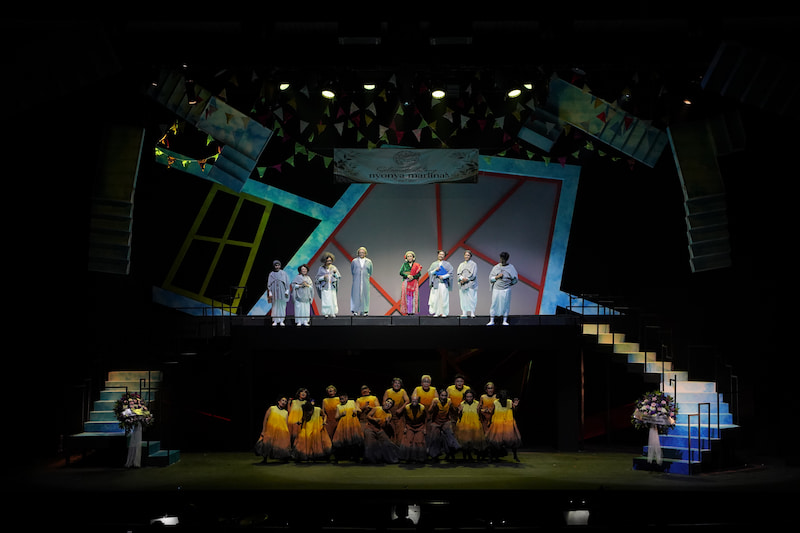
Music and visual design are integral to Teater Koma’s productions. For Rumah Sakit Jiwa, Fero Aldiansya Stefanus’s score followed each scene’s emotional shifts, while tiered platforms, staircases, and costumes by Samuel Wattimena and Rima Ananda conveyed the characters’ roles and relationships. Together with the acting and humour, these elements brought the production to life.
An audience that kept coming back
Teater Koma’s audience spans generations. Parents who once brought their children now return with families of their own. Nano saw audiences as partners rather than passive spectators. In a published account of the company’s history, he recalled how a lieutenant assigned to monitor the 1978 production of Maaf, Maaf, Maaf enjoyed it and later returned with his wife and children. By then retired, he could attend simply as a member of the audience.
The bond reaches younger audiences too. In Rumah Sakit Jiwa, young doctor Rogusta believes empathy can heal patients but clashes with an entrenched system. The play leaves audiences to consider whether people can still treat one another with humanity. Director Rangga Riantiarno, Nano’s son, expressed his hope that audiences would take home a simple reflection: “to keep treating other people as human beings”.
Staying alive under pressure
Under President Suharto, whose rule ended in 1998, speaking openly on stage was not always easy. Maaf, Maaf, Maaf was banned in three cities in 1978, while Suksesi (Succession) was stopped on its eleventh day in 1990. Nano was subsequently interrogated.
Modest pay did not deter actors who also worked in film and television from returning to the stage. Their commitment sustained the company, but passion alone cannot keep a theatre running.
In recent years, Mencari Semar and Rumah Sakit Jiwa have received support from the Bakti Budaya Djarum Foundation. Its programme manager, Billy Gamaliel, said the company showed that theatre could “not only survive, but keep growing and give birth to new generations”. Through its Indonesia Kaya initiative, the foundation also provides free performance spaces, helping companies like Teater Koma reach new audiences.
Next year, Teater Koma will celebrate its 50th anniversary with events in Jakarta, including a tribute concert honouring composers who have shaped Indonesian modern theatre since the 1970s.
Asked which of his plays was his best, Nano once replied that his best work was always the next one. That spirit lives on through Ratna, his wife and fellow co-founder, their son Rangga, and generations of artists and members who carry his vision forward. Together, they keep Nano’s legacy alive.
A comma does not close a sentence. It leaves room for another thought, another voice, and another generation.
The sentence is not over.