



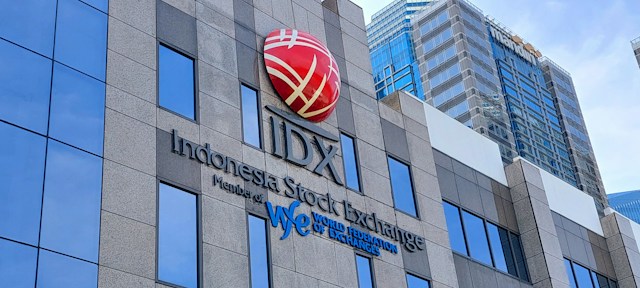
Indonesia’s benchmark stock index, the IDX Composite (Indeks Harga Saham Gabungan or IHSG), initially opened 8.01% lower on Friday morning, the 16th of October, triggering a 30-minute trading halt before losses deepened to more than 11%.
This drop followed the proposal by Morgan Stanley Capital International (MSCI) to reclassify Indonesia from “Emerging Market” to “Standalone Market” status.
On Friday morning, the 16th of October, the IHSG opened at 5,393.92, down 469.86 points or 8.01% from Thursday’s close of 5,863.78. The decline triggered a 30-minute trading halt on the Indonesia Stock Exchange (IDX). After trading resumed, the index fell further, losing as much as 11.4% intraday and heading for its steepest one-day drop since January 1998, during the Asian financial crisis.
The IHSG drop followed MSCI’s announcement on the previous Thursday (the 15th of October) that it had launched a consultation on a proposal to reclassify the MSCI Indonesia Indexes from “Emerging Market” to “Standalone Market” status. The consultation will remain open until the 30th of April, 2027, with MSCI expected to announce its final decision on or before the 30th of June, 2027.
MSCI raises concerns over market transparency
In its announcement, MSCI indicated a potential downgrade in status, driven by persistent concerns regarding investment accessibility and the governance of the Indonesian stock market. Market participants have raised serious questions about the investability of the Indonesian stock market.
“As part of the June 2026 Market Classification Review, MSCI reported that market participants had raised significant concerns regarding the investability of the Indonesian equity market, including persistent opacity in shareholding structures and suspected coordinated trading behaviour,” the index provider said in a press statement published on Thursday, the 15th of October.
MSCI also stated, “Market participants have indicated to MSCI that, to date, sufficient progress has not been observed consistently across the Indonesian equity market. Despite the announced reforms, significant concerns remain around market dysfunction, including continued suspected coordinated trading behaviour and lack of evidence of meaningful enforcement.”
Potential impact on foreign investment
If implemented, the reclassification could result in Indonesian equities being removed from relevant MSCI global indexes. This could force funds that track those benchmarks to sell Indonesian holdings and lead other investors to reassess their exposure to the market.
The prospect of capital outflows has added to concerns about foreign investor confidence, market liquidity, and the cost of raising capital for Indonesian companies. The scale of any eventual outflows will depend on the final classification decision and how investment funds respond.
The IHSG drop also coincided with a sharp weakening of the rupiah. The currency fell to approximately Rp18,070 per US dollar on Friday, its weakest level since early August and close to its reported record low of around Rp18,190. The simultaneous declines in equities and the currency added to concerns about Indonesia’s financial markets.
Meanwhile, the Indonesia Stock Exchange (IDX) intends to seek clarification from MSCI regarding the rationale and assessment criteria behind the proposed reclassification of the Indonesian stock market from an “Emerging Market” to a “Standalone Market.” IDX President Director Jeffrey Hendrik stated that this request for clarification is prompted after considering the various advancements and reform measures that have been implemented within the Indonesian capital market.
Hendrik also emphasised that the current MSCI announcement is still the opening of a consultation period and is not yet a final decision regarding changes to the classification of the Indonesian stock market.
“The IDX respects MSCI’s independence in conducting assessments and determining market classifications based on its own methodology,” the IDX President Director said, as quoted by the press on Friday.