



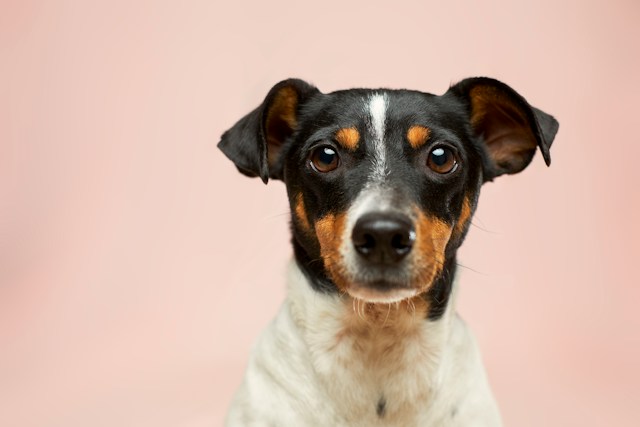
From Jabodetabek townhouses and apartments to Bali villas, cafés, beaches, hotels, and even family holidays, protecting dogs from heat starts with fresh water, clean bowls, and understanding how quickly ordinary routines can become unsafe.
As a veterinarian, pet nutrition and canine longevity consultant, and dog parent living in Indonesia, I have learned that some of the most important health decisions are also the easiest to overlook. We may compare foods and functional ingredients, yet forget the water bowl our dog uses every day.
Whenever Tokyo—my pug’s name—returns from his walk, I let him recover in the shade while I wash his bowl, refill it with cool mineral water from the refrigerator, and then let him drink calmly. That simple routine connects two subjects that belong together in Indonesia: heat protection and bowl hygiene.
Dogs do not cool themselves like humans
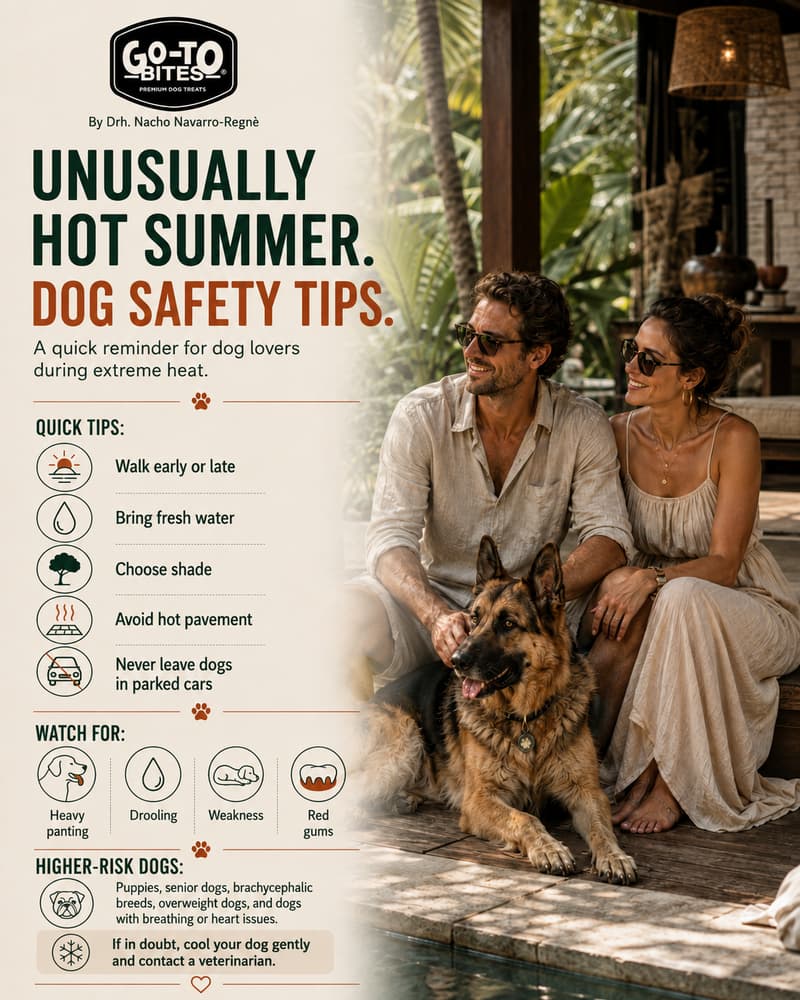
Dogs do not sweat efficiently across their bodies as humans do. Instead, dogs regulate much of their temperature through panting and evaporative cooling across the respiratory tract, with only limited sweating through their paw pads. In high humidity, evaporation becomes less effective, so a dog may continue panting while its temperature rises.
Panting after activity can be normal, but recovery matters. Breathing should gradually slow after reaching shade, cool water, and ventilation. Puppies, seniors, flat-faced breeds, overweight dogs, and dogs with heart or breathing problems require particular care.
“Panting is natural cooling, but during extreme heat it can become a warning that the dog is losing the battle against temperature.”
Key Takeaways
- High humidity makes cooling less effective;
- Observe how quickly breathing returns to normal;
- Vulnerable dogs need extra protection.
Walk early, carry water, and know when to skip the walk
Walk early or later in the evening, when air and ground are cooler. During the hottest canícula hours, skipping the walk may be safest. Indoor scent games, short training, and calm play can provide stimulation until conditions improve.
Hot asphalt, stone, tiles, sand, and decking can injure paw pads. Test the surface before walking. Properly fitted dog shoes can add protection, and a portable shade umbrella can help when shade is limited. Never leave a dog inside a parked car.
Carry fresh, cool water in an insulated container and replace it at least every two hours during long outings—or sooner if it becomes warm or dirty. An ice cube may help for dogs that enjoy it. Bring your own clean bowl and wash it before and after use.
At hotels, beach clubs, marinas, cafés, and restaurants, check that shade, air conditioning, or effective ventilation will remain available throughout your stay.
“Dog-friendly means dogs are permitted. Heat-safe means their physical needs are protected throughout the visit.”
Key Takeaways
- Walk early or late, and skip exercise when heat is extreme;
- Carry fresh cool water and your own clean bowl;
- Recheck shade and ventilation as conditions change.
Clear water can still be in a dirty bowl
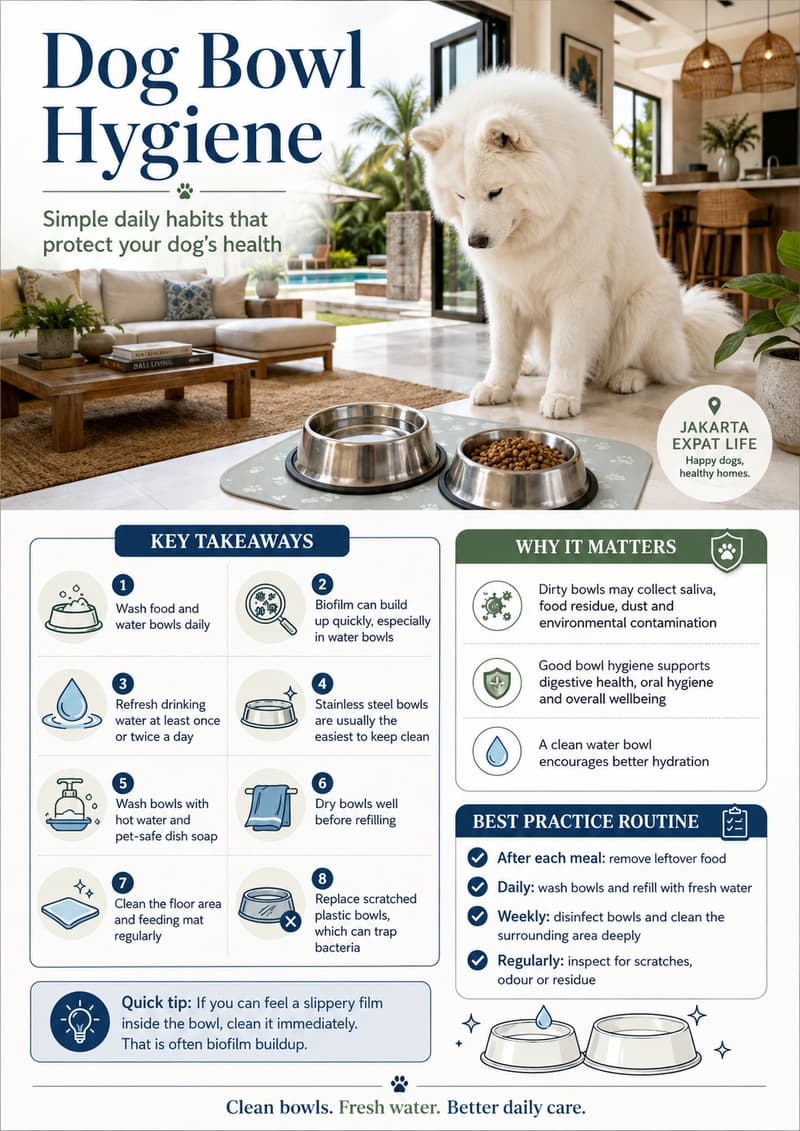
Clear water does not necessarily mean a clean bowl. Saliva, dust, and food particles collect on the surface, particularly when water is repeatedly topped up. The slippery coating sometimes felt inside a neglected bowl may be a biofilm, which is microorganisms attached within a protective matrix. A quick rinse does not reliably remove it.
Wash food bowls after every meal and water bowls at least daily. In Indonesia’s warm and humid conditions, outdoor or shared bowls may need more frequent cleaning. Use dish detergent and friction: scrub the base, corners, sides, and rim, rinse thoroughly, and dry before refilling. Replace deeply scratched plastic, cracked ceramic, or chipped bowls.
“Refilling a bowl is not the same as washing it, and clear water does not always mean clean water.”
Key Takeaways
- Wash water bowls daily and food bowls after meals;
- Use detergent and scrubbing, not water alone;
- Replace damaged bowls.
Recognising heatstroke: Cool first, then get veterinary help
Heatstroke is a life-threatening emergency. Dangerous panting may become frantic, harsh, or raspy and may be accompanied by thick saliva, drooling, red gums, a dark red or unusually pale tongue, weakness, vomiting, confusion, poor coordination, or collapse.
Move the dog immediately into air conditioning, strong ventilation, or deep shade. Wet the body with cool water—not freezing water—while arranging immediate veterinary care. Do not wrap the dog in a wet towel because it may trap heat as it warms. A conscious and coordinated dog may be offered small amounts of water, but never force water into a confused or collapsed animal.
Even if the dog improves after cooling, veterinary assessment remains important because heat-related illness can continue affecting internal organs.
“When heatstroke is suspected, cooling should begin immediately, but cooling must never replace urgent veterinary intervention.”
Key Takeaways
- Watch for frantic panting, thick saliva, weakness, vomiting and confusion;
- Cool with cool water and never wrap the body in a wet towel;
- Seek immediate veterinary care.
A clean foundation for a longer life
Canine longevity is often discussed through nutrition, supplements, and advanced veterinary care, but healthier lives are also built through ordinary decisions repeated every day. Choosing a cooler hour for a walk, carrying fresh water, checking the shade, and washing the bowl properly are simple forms of preventive care.
“Longevity is not only about what we add to our dogs’ diets. It also begins with removing avoidable risks from their everyday environment.”
Key Takeaways
- Heat protection, hydration, and hygiene are connected;
- Preventive care begins with simple, consistent habits;
- A longer life with our dogs should also be a healthier and happier one.
WRITTEN BY: Drh. Nacho Navarro Regnè, DVM.
Drh. Nacho Navarro-Regnè is a veterinarian, entrepreneur, and published author specialising in pet nutrition and canine longevity. Founder of Go-To Bites®.
www.gotobites.com | premium@gotobites.com | @officialgotobites |
Email: nachobarcadvm@gmail.com | Instagram: @dr.nacho.barca
All images are courtesy of Drh. Nacho Navarro Regnè, DVM.