



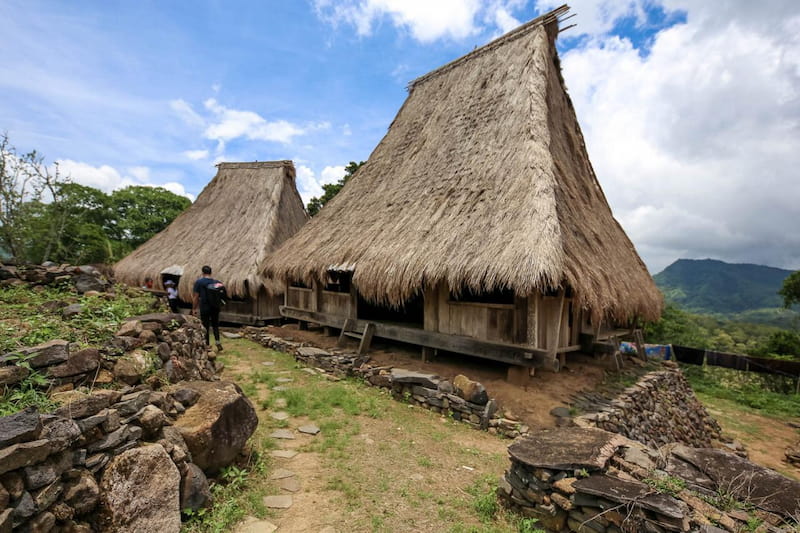
Long before sustainability became a global concern, Indonesia’s traditional communities were already practising it—not as policy, but as a way of honouring the forest, the community, and the generations still to come. Carbon footprints tell only part of the story. For architect Yori Antar, the lesson goes beyond materials. It is about love, trust, and belonging.
Having spent years rebuilding traditional houses across the archipelago, he believes the older way of building holds lessons for a lifetime about materials, community, and culture that modern construction has long forgotten.
Looking outward, then coming home
Travelling with friends to see architecture across Europe and Japan, Yori kept asking himself one question. “What was happening in Indonesian architecture, which seemed to just go with the flow, as if it had no roots?”
The answer arrived unexpectedly in a letter from the Dalai Lama, tracing Tibetan Buddhism back to a teacher from Sumatra, the ancient “Golden Island.”
“When I read that, I was ashamed, because I myself didn’t know who Dharmakirti was,” Yori recalls. “It means we have never truly known and understood our own history.”
That discomfort became a philosophy he still repeats today: “If you don’t know it, you don’t love it.” His journey would now take him deep into his own country.
Flores: a revelation
It was in Flores that the search became a calling.
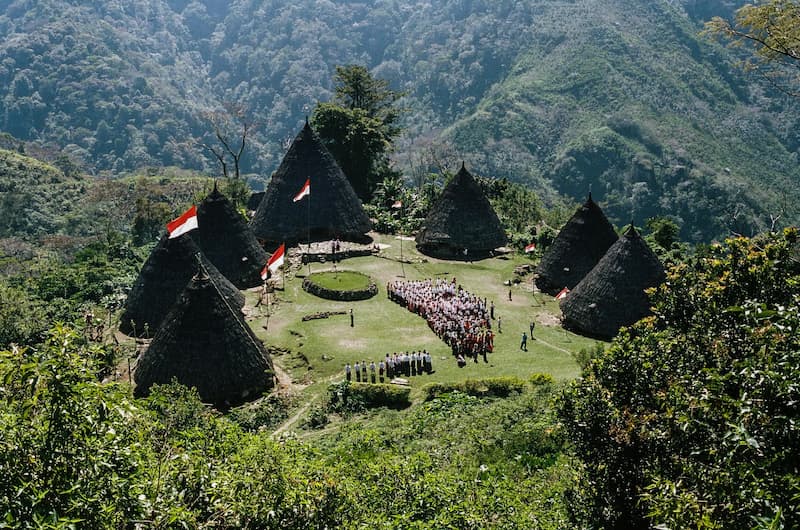
“We visited Wae Rebo, which was not on any map; all we had was a photo from the internet,” Yori recalls. The cone-roofed village in the Manggarai highlands was reachable only on foot, with its houses reduced from seven to four.
The village head said their arrival was like the return of their ancestors. Yori thought, “If we were their parents, would we stay silent?
“A tourist comes, takes photos, takes knowledge. The community is used as a power socket that we plug into to drain their knowledge.”
In August 2008, Yori decided to retire from being a tourist. “I no longer wanted to look from the outside in, but from the inside out. I wanted to become part of the community,” he says.
A triangle of trust: rebuilding from memory
Rebuilding Wae Rebo was not a matter of following a blueprint. With no written records, the houses had to be rebuilt from what the community remembered. “They rebuilt them, relearning how their ancestors had built them,” Yori says. They worked without modern tools, nails, or concrete, with each house taking six months to build. “All their knowledge is oral,” he adds.
To secure donations for Wae Rebo, he adapted gotong royong, the Indonesian tradition of collective effort and communal cooperation, to a modern context, creating a system through which funds went directly to the villages. “The money went directly to the community, not through me,” he says. “A triangle of trust was formed, and gotong royong worked.”
Yori’s relationship with the communities grew beyond the work itself. Having arrived as an outsider, he gradually became part of their lives; in Wae Rebo, the community embraced him as family.
Learning from the people who know
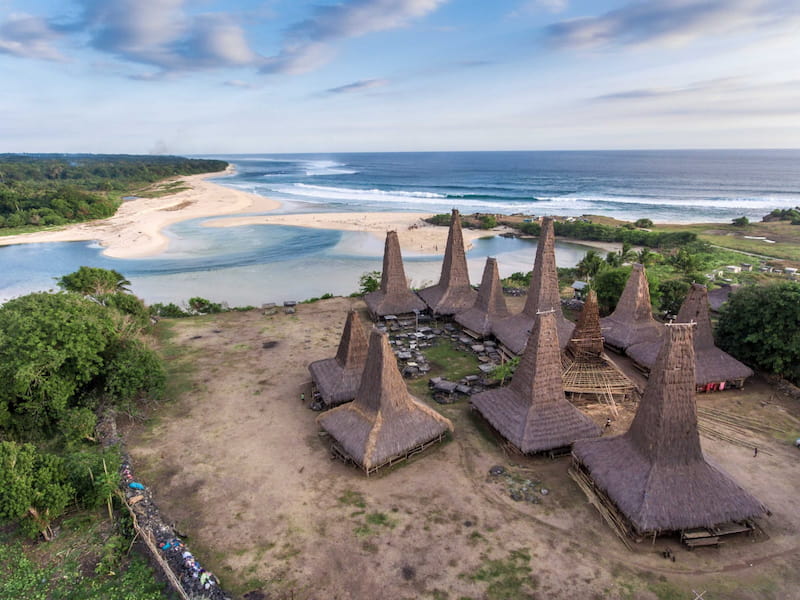
Three generations worked together through gotong royong, sharing labour and knowledge. Architects were allowed to help, but the people of Wae Rebo were the experts because they knew how their houses were built.
Yori also brought university students into the village, sending them only a one-way ticket. He specifically instructed them not to intervene but to document its oral culture. “You come from a written, top-down culture, and now you must learn from an oral, bottom-up tradition,” he guided them. The experience was deeply inspiring for the students, who later told him: “What we did in a month and a half here is more than what we did in three years of study.”
Through rebuilding, Yori also began identifying what he calls a “70% formula”—principles that could be applied to other traditional houses across Indonesia. The aim was not to copy Wae Rebo, but to understand the principles behind its construction.
Building with nature
Before a single tree is felled in Wae Rebo, permission is asked of the forest, the spring, and the tree itself.
“To determine an auspicious day or location, they pray and seek answers from their ancestors,” Yori explains. “150 felled trees were replaced with 3,000 seedlings,” he continues. “They only build houses to be passed down, so they keep nature in balance.”
The value of traditional architecture lies in understanding its principles—how buildings respond to landscape, resources, and time, as well as what they leave for those who come after.
Living the values
Much of what Yori has learned was never set down on paper. The values he has learned through the communities are not principles simply to be taught, but are meant to be lived.
The values behind Yori’s work have also been recognised by anthropologists, who told him that what he was doing reflected the values of Pancasila. “It turns out I myself never knew, never realised such things,” he says. “It took outsiders to see it.”
Yori believes, “Culture can’t be frozen. We have no dead monuments; we must have a living culture.”
That knowledge itself is part of Indonesia’s architectural heritage.
Carrying forward
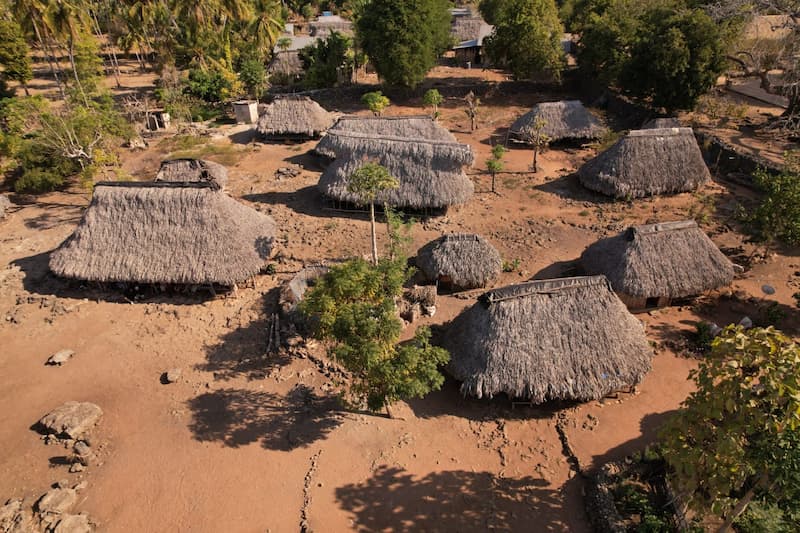
Many young architects still dream of studying abroad, chasing “world-class” design, as Yori once did. “I didn’t understand Indonesians at first, but after travelling around Indonesia extensively, I became an Indonesian myself,” he says.
Yori’s message to younger generations is simple: “Experience this heritage directly and learn from the communities who carry this knowledge.” For him, the greatest threat is not simply that a traditional house disappears, but that the next generation stops caring about what it represents. “Modernisation has brainwashed us, so that we can’t see for ourselves what we have,” he explains.
What Yori found was not an architectural style to copy, but a way of thinking: building consciously, living responsibly with nature, and carrying knowledge forward. Building green, in his telling, is about sustaining the relationship between nature, community, culture, and generations.
“If you don’t know it, you don’t love it,” he says.
All images are courtesy of Yori Antar.