



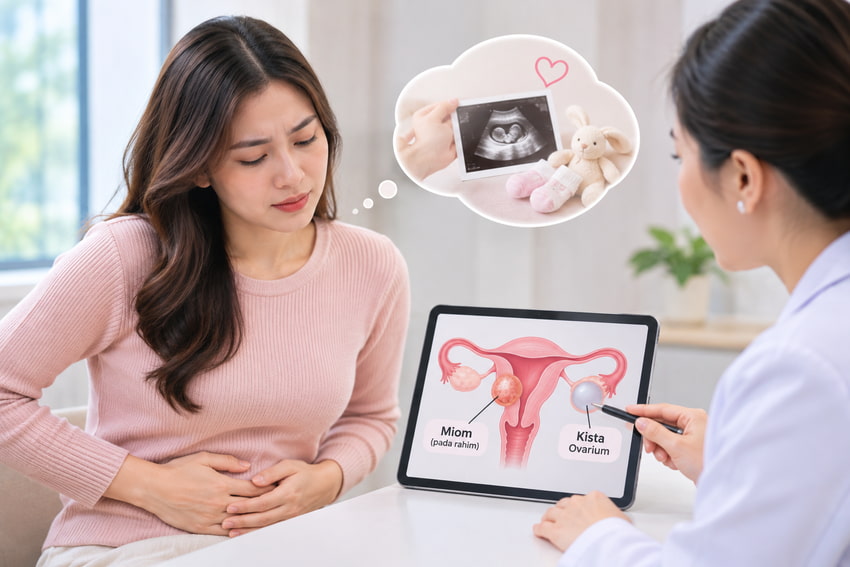
For many women who are still planning to have children, being diagnosed with uterine fibroids or ovarian cysts can be a source of concern. When surgery is necessary, one important consideration is how the procedure can be performed while preserving healthy reproductive tissues and organs, allowing reproductive function to be maintained as much as possible.
For certain gynaecological conditions, minimally invasive surgery assisted by robotic technology may be an option, depending on each patient’s condition following medical examinations and consultation. For women who are still planning a pregnancy, the management of fibroids, cysts or endometriosis requires consideration of the condition of the uterus, ovaries and fallopian tubes, ovarian reserve, age and pregnancy plans from the outset. These factors are also important in determining whether surgery is necessary.
Dr Malvin Emeraldi, Sp.OG, Subsp.FER, from Mayapada Hospital Jakarta Selatan, explains: “The goal of treatment is not only to address the existing condition but also to consider reproductive function and future chances of pregnancy. Therefore, the choice of procedure needs to be tailored to the nature of the condition, the organs affected, the patient’s age and their pregnancy plans.”
One such condition is uterine fibroids, which are growths that develop in or around the uterus. They can cause heavy menstrual bleeding, pain or a feeling of pressure in the abdomen, urinary or bowel problems, and may also be associated with fertility issues.
When surgery is necessary for women who are still planning a pregnancy, robotic-assisted myomectomy may be an option. “Robotic myomectomy may be suitable in certain cases to remove fibroids while preserving the healthy structure of the uterus. With the support of 3D visualisation and flexible instruments, robotic technology can help doctors perform procedures with greater precision, particularly when fibroids are located in hard-to-reach areas,” explains Dr Malvin.
Consultation on Fibroids, Cysts and Pregnancy Prospects
Similar considerations also apply to endometriosis. “In complex cases of endometriosis, where diseased tissue has attached itself to surrounding organs, robotic technology can help doctors perform procedures with greater precision in hard-to-reach areas. The aim is not only to remove the affected tissue but also to preserve the function of the reproductive organs as much as possible, allowing fertility-related conditions to be managed while taking the patient’s future chances of pregnancy into account,” explains Dr Malvin.
He continues: “In addition to helping preserve reproductive organ function, robotic technology can also be used in complex cases of endometriosis that require more extensive procedures, including hysterectomy (removal of the uterus) and oophorectomy (removal of the ovaries), when medically indicated,” Dr Malvin explains.
Robotic technology provides three-dimensional visualisation and more precise instrument control, enabling doctors to remove diseased tissue more thoroughly, including in hard-to-reach areas. Compared with open surgery, a robotic-assisted minimally invasive approach may also help reduce blood loss, the risk of certain complications, including surgical site infections, and post-operative pain, supporting a more comfortable recovery for patients.
Robotic surgery is not limited to complex cases; it is also used to treat various other gynaecological conditions. According to Dr Putri Deva Karimah, B.Med.Sc, Sp.OG, from Mayapada Hospital Jakarta Selatan, one such condition is an ovarian cyst, which is a fluid-filled or tissue-filled sac that develops in or on the ovary.
If a cyst persists, grows larger or causes symptoms, doctors may consider robotic-assisted ovarian cystectomy to remove it while preserving healthy ovarian tissue. “In suitable cases, robotic technology can support a more targeted procedure, allowing the cyst to be treated while taking care to preserve the ovarian tissue,” explains Dr Putri.
Robotic technology can also be used in various other gynaecological surgeries that require a high degree of precision, particularly in areas close to surrounding organs. “This technology helps doctors perform more stable and controlled movements, enabling greater precision while reducing the risk of damage to surrounding tissues. For patients, this minimally invasive approach can help reduce blood loss, shorten hospital stays and support a faster recovery,” explains Dr Putri.
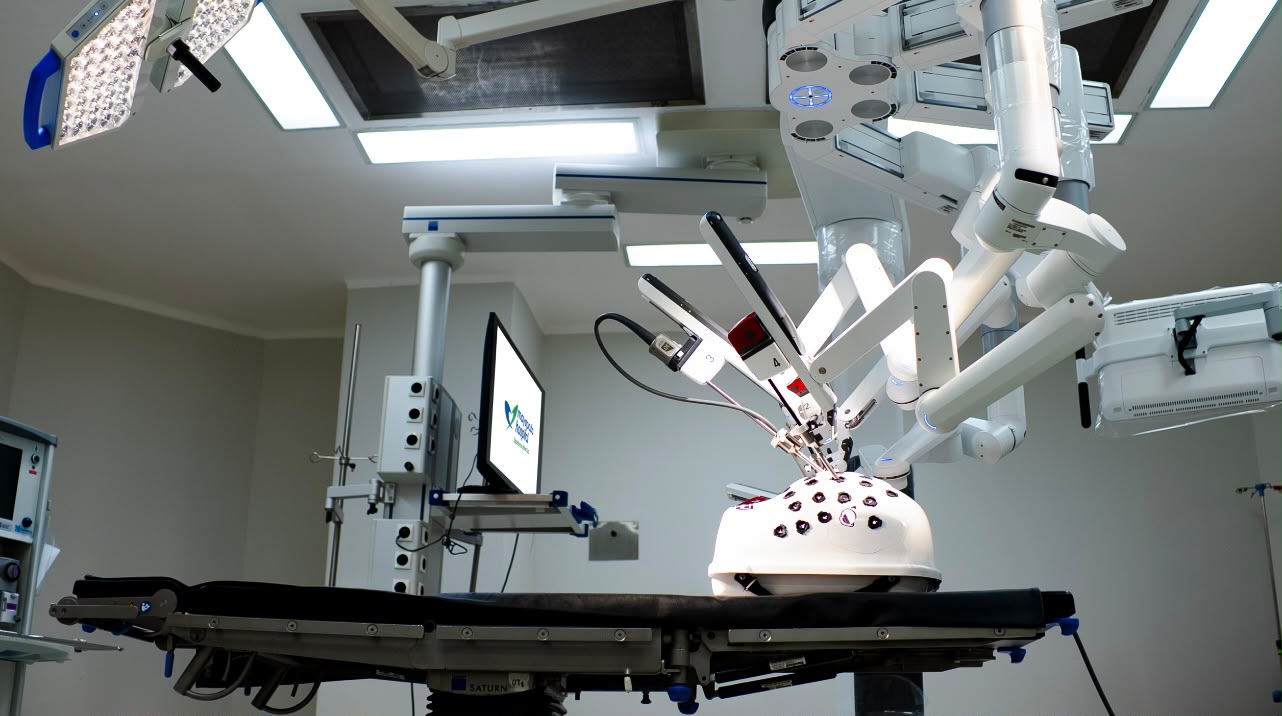
To support these needs, Mayapada Hospital offers an Obstetrics and Gynaecology Centre that addresses a wide range of women’s reproductive health conditions, supported by specialist and subspecialist doctors. Its services include minimally invasive surgery assisted by the da Vinci Xi robotic system, available at Mayapada Hospital Jakarta Selatan.
In addition to treating conditions affecting the female reproductive organs (gynaecology), this technology is also used to support the management of selected cases in cancer care (oncology), the urinary tract (urology), and the digestive system and liver (gastrohepatology).
For further consultations, contact the Call Centre on 150770 or WhatsApp 0817-17-150770. In an emergency, call 150990 or use the Emergency Call Button in the MyCare application.