



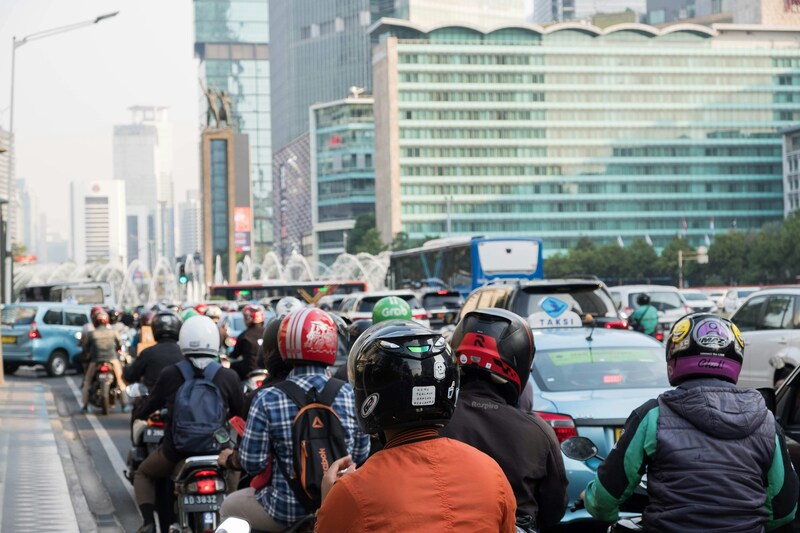
Indonesia’s capital, Jakarta, is now regarded as the world’s most populous capital with 42 million residents, according to the latest United Nations (UN) report World Urbanization Prospects 2025: Summary of Results, released on Tuesday, 18th of November.
Jakarta’s figure is followed by Bangladesh’s capital, Dhaka, with nearly 40 million residents, and Japan’s capital, Tokyo, with 33 million residents. The report was released by the United Nations Department of Economic and Social Affairs (UN DESA).
“Over the past quarter-century, the population of Tokyo has grown more slowly than the populations of Jakarta and Dhaka, and consequently, Tokyo’s rank among the world’s largest cities fell from first in 2000 to third by 2025. Looking to the future, Tokyo’s population is expected to shrink from 33.4 million in 2025 to 30.7 million in 2050, when it will have descended to seventh in rank among the world’s most populous cities,” the UN wrote in the World Urbanization Prospects 2025: Summary of Results.
The UN also noted that the number of residents in Jakarta this year managed to exceed what was initially projected.
“In 2025, according to the Degree of Urbanization definitions, Jakarta (Indonesia) was the world’s most populous city [42 million inhabitants]. Yet, when country-specific city definitions were used in the 2018 revision of the World Urbanization Prospects, the population of Jakarta was projected to be just 12 million in 2025, with the rank of 30th among the world’s most populous cities,” the UN wrote as well.
Nonetheless, the UN projected that Jakarta would not hold the title of the world’s most populous capital city for long.
“Dhaka and Shanghai are expected to grow the fastest among 2025’s ten most populous cities, with projected growth rates close to 5% per year between 2025 and 2050. By mid-century, Dhaka is expected to overtake Jakarta as the world’s largest city, while Shanghai is expected to ascend in rank from fifth to third,” the UN also wrote.
Additionally, the UN highlighted how urbanisation has become an influential driving force worldwide.
“Urbanization is a defining force of our time. When managed inclusively and strategically, it can unlock transformative pathways for climate action, economic growth, and social equity. To achieve balanced territorial development, countries must adopt integrated national policies that align housing, land use, mobility, and public services across urban and rural areas,” said Li Junhua, United Nations Under-Secretary-General for Economic and Social Affairs, as quoted from the UN press release published on Tuesday, 18 November.