



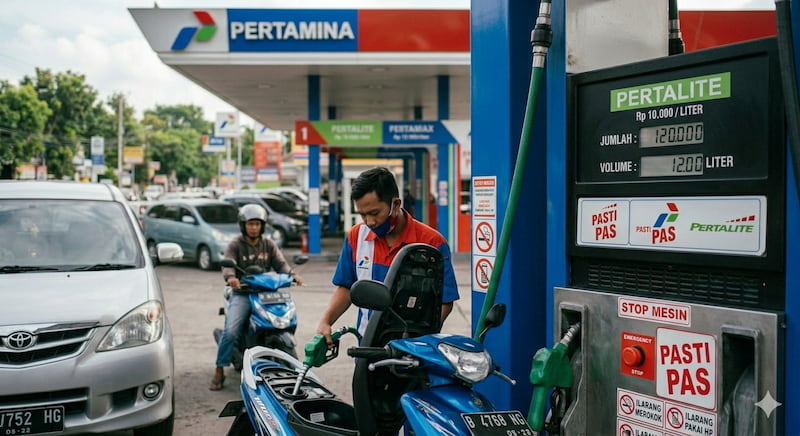
New regulations by the Downstream Oil and Gas Regulatory Agency (Badan Pengatur Hilir Minyak dan Gas Bumi or BPH Migas) limit Pertalite and Biosolar purchases per vehicle as the government seeks to manage fuel consumption amid global uncertainties.
As a precaution against the potential risk of an energy crisis stemming from ongoing conflict in the Middle East, the Indonesian government has emphasised the importance of energy efficiency. Limiting fuel purchases is seen as one of the key control measures.
BPH Migas has issued regulations restricting the purchase of subsidised fuel, effective from the 1st of April, 2026. The policy is outlined in the Decree of the Head of BPH Migas Number 024/KOM/BPH.DBBM/2026, signed by BPH Migas Head Wahyudi Anas on Monday, the 30th of March. The decision follows a Limited Cabinet Meeting held last Saturday (the 28th of March).
“Based on these considerations, it is necessary to stipulate a Decree of the Head of BPH Migas concerning the Control of the Distribution of Certain Types of Fuel, namely Diesel Fuel and Special Assignment Fuel Types, namely Gasoline [RON 90], by assigned business entities for motorised transportation for the transport of people and/or goods,” the decree states.
Under the new regulation, limits are imposed on the purchase of subsidised fuel, including Pertalite and Biosolar. The provisions are as follows:
- Private four-wheeled vehicles are limited to a maximum of 50 litres of Biosolar per day per vehicle or 50 litres of Pertalite per day per vehicle;
- Four-wheeled public transport vehicles are allocated a quota of up to 80 litres per day;
- Vehicles with six wheels or more are limited to a maximum of 200 litres per day;
- Public service vehicles, such as ambulances, hearses, fire engines, and refuse trucks, are limited to a maximum of 50 litres of biodiesel per day and 50 litres of Pertalite per day.
Fuel consumption exceeding these limits will not be subsidised. Any excess volume will be charged at the non-subsidised (commercial) fuel rate.
The regulation also requires the recording of vehicle registration numbers for every diesel and Pertalite purchase transaction. Assigned business entities must submit periodic reports every three months, or at any time if required.
However, Anas has yet to provide a detailed explanation of the policy, stating that an official announcement will be made by the government.
“Regarding the programme to adjust fuel purchases to a more appropriate pricing scheme, the government will make the decision. We, as implementing agencies supporting the government, will await further instructions,” Anas said at the BPH Migas office in Jakarta on Tuesday, the 31st of March.