



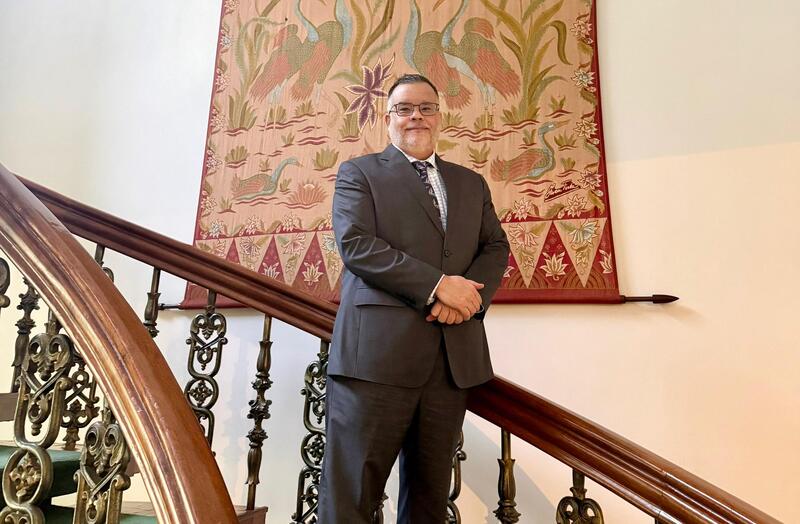
Indonesia Expat had a chance to get to know Mario Ignacio Artaza, who has been serving as the Ambassador of Chile to Indonesia, ASEAN, and Timor Leste since November 2023.
In a very inspiring conversation, Mario Ignacio Artaza shared, among many things, his journey from being a young journalist to a world-travelled diplomat that he is today, how he sees the work of a diplomat as a constant service on behalf of Chile, the fascinating history shared between Chile and Jakarta, Chile and the royal house of Surakarta, and why diplomacy is—first and foremost—about people.
Hi, Mario! Let’s start with your background a bit. What can you tell us about yourself?
Well, I was born in Santiago, which is the capital city of Chile. When I was less than a month old, I actually travelled inside a basket carried by my mother on an aeroplane to live for the first time in Washington, D.C., the United States, where my father was a diplomat at the Embassy of Chile. I lived there for five years, then we went back to Chile, and then we lived for three years in Lima, Peru. We went back to the United States, for the second time, where we lived for a little bit more than a decade before I returned to Chile again to study journalism at the Pontifical Catholic University of Chile, followed by postgraduate studies in international relations at the University of Chile while simultaneously working as a journalist.

In April 1993, I was accepted to the “Andres Bello” Diplomatic Academy of Chile, after going through a rigorous public application process, officially joining the Chilean foreign service. I graduated from the academy a year later, and my first diplomatic responsibility was being part of the team responsible for Chile’s trade relations with the United States, Canada, and Mexico. I was privileged to be a part of the team responsible for negotiating Chile’s first free trade agreement with a G7 country, Canada. Afterwards, in 1996, I was posted to Singapore, where I worked as the Director (Programme) at the APEC Secretariat. I participated in the Malaysia, New Zealand, China, Brunei Darussalam, Mexico, Thailand, Chile and Korea APEC Years.
My next journey afterwards was returning to Chile to work at the APEC Department of the Ministry of Foreign Affairs, which was responsible for preparing and undertaking the APEC Chile 2004 Year. Then, I was posted to Beijing to contribute to and coordinate the work regarding the first free trade agreement between the People’s Republic of China and an individual country, which was Chile. After another brief return to Chile, I was posted as the Consul General of Chile in Hong Kong SAR and Macau SAR. Chile also successfully negotiated an FTA with Hong Kong during my tenure as Consul General.
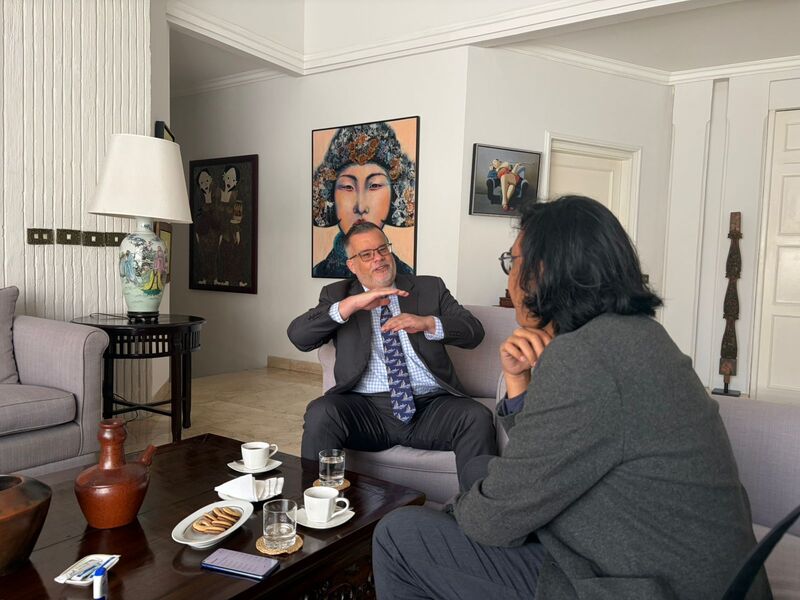
After three years, I decided to take a leave of absence to lead the team responsible for setting up the first Chilean bank in Hong Kong, Banco Security. I achieved other highlights during those years, mainly serving in the Chambers of Commerce relating to trade, business, and finance in Hong Kong. I returned to Chile and the diplomatic service in 2017, as I was offered to be the Executive Director for the APEC Chile 2019 Year. It turned out to be short-lived, as I was transferred after eight months to serve as the Deputy Director at the department responsible for Antarctica.
In 2020, I was posted to New York as the Consul General of Chile, challenging years due to the COVID pandemic. It was my final posting before being named Ambassador of Chile to Indonesia, ASEAN, and Timor-Leste.
How would you describe your leadership and diplomacy style as the current Ambassador of Chile to Indonesia, ASEAN, and Timor-Leste?
I like to be very hands-on. I like to be outside of my office and outside of my desk. To be in constant movement is key. I like to be very close to people, meeting, talking, and learning everyday. I like to be very well-informed, and the best way to be well-informed is by nurturing relations as well as building trust. I also believe that I’m not only the Ambassador of Chile in Indonesia, but in a way, I see myself also as a link of Indonesia to Chile, as my fellow Chileans like to know more about Indonesia through me. My experiences and thoughts are important, and I am convinced that by learning and communicating, we are able to strengthen the relationship. It’s all about contributing to more active people-to-people diplomacy.
Furthermore, as a diplomat in Indonesia, I believe it is important for me to show that I have a genuine interest in Indonesia, including this country’s past, present, and future, as well as its people, culture, and traditions. I believe that it is important for me to figure out how I can better link up Indonesia with Chile, and how Chile can also be able to support the road that Indonesia is taking in terms of trade and building relations with the Asia Pacific Region—with Chile as part of the equation. The diplomacy that I stand for is one of presence, trust, and building long-lasting relationships, which in turn are vital for peace, stability, and much greater interaction.
Despite the significance of my post, I see myself as coming second. Chile, as well as my family who have supported me all these years, will always come first. This job has its ups and downs, but ultimately, isn’t service to one’s country the highest honour one can attain? Diplomacy is a constant service, as you are constantly giving yourself to others on behalf of your country. There is nothing better than serving with enthusiasm and a permanent commitment to much more diplomacy.
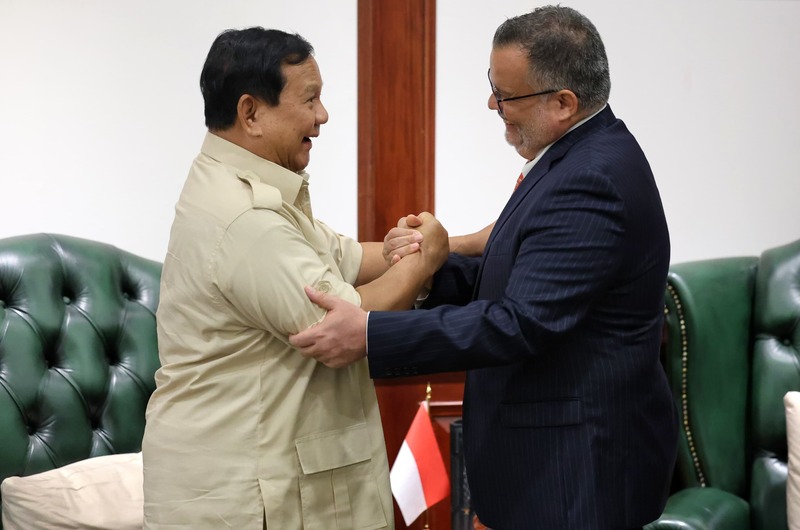
For Chileans who are new to Jakarta, how would you describe this city to them? And how would you describe the character of Indonesian people to them?
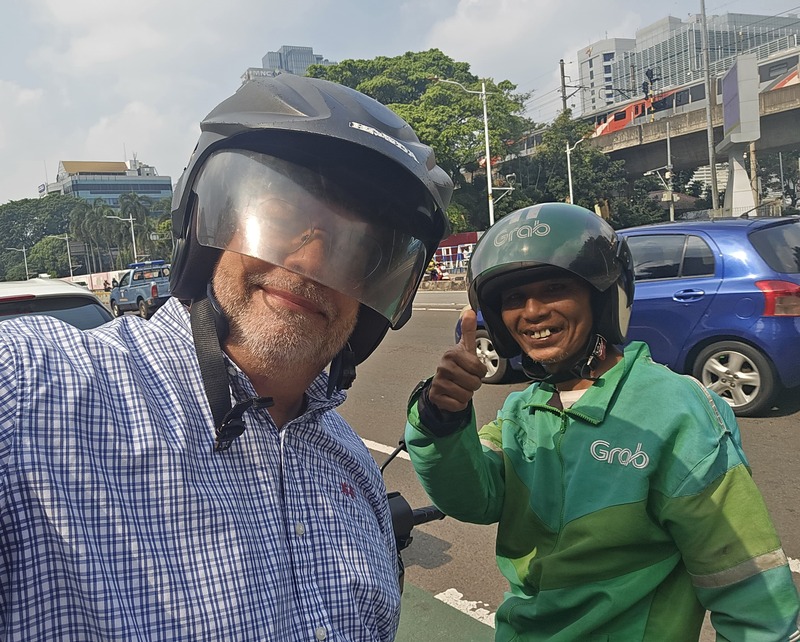
For my fellow Chileans who are new to this city, I would describe Jakarta as the city where you have to put all of your senses at play at once. In this city, your senses are in complete activity from the very moment you open your eyes—and that is what makes Jakarta such a challenging, exciting place. It’s up to you to choose if you want to make Jakarta a welcoming experience. For example, I have had the opportunity to attend meetings via the official car, a Bluebird taxi, and a Gojek motorbike. I have experienced Jakarta at its fullest, and it has been a positive, welcoming experience, indeed.
Moreover, I would describe Indonesian people as very warm and friendly. They’re always willing to help and guide you. They may not understand you, linguistically, and you may not understand them either. However, Indonesians are always generous and willing to help you if you ever get lost or need support. Jakarta is home today, and as such, I endeavour to enjoy it to the fullest. We are, in fact, living in the world’s most populous capital city. That’s a tremendous experience.
What do you love to do during your off days in Jakarta? Are there any particular places in this city that have become your personal favourite?
In my pastime, I enjoy having a quiet day for moments of introspection, as well as some quality time with my wife. As for my personal favourite spots in Jakarta, I have always been drawn to places that have historical significance. For example, I enjoy exploring Kota Tua—Jakarta’s old town—where the first Chileans arrived when they came to Batavia—the former name of Jakarta—in the early years of the 19th century for the first time. I also like to stroll around Jakarta’s older neighbourhoods, such as Menteng. Fun fact: people sometimes forget that Pablo Neruda, a Chilean poet-diplomat and politician who won the 1971 Nobel Prize in Literature, was once stationed in Batavia and resided in the Menteng neighbourhood. He married a Dutch Javanese girl here, and they had a daughter as well.
Besides exploring the city, I also enjoy visiting small shops, such as the ones in Glodok, that sell old watches, old radios, old vinyls, and such. Jakarta is a city of discovery as well as rediscovery. I enjoy photography of people on the street, food stalls, buildings, and historical landmarks as well. One does not get bored in Jakarta. Quite the opposite. It is a city which beckons you to explore and discover.
Now, let’s talk about the recent breakthroughs made by Chile with regard to the relationship with Indonesia. In April, Chile made headlines after it was reported that Indonesian tempeh products are officially entering the Latin American market through a US$125,000 distribution agreement with Chile. What can you tell us about it?
It was a result of a partnership between two companies. A company from Indonesia, which produces tempeh, is going to sell their product to a company in Chile, and the latter will then introduce tempeh to the Chilean market as a high-protein food. As you are well aware, today people are much more health-conscious with regard to the food that they are consuming. Tempeh, meanwhile, is healthy to consume, as it is made of soybeans. Ultimately, the objective is for other countries in Latin America—not just Chile—to start introducing Indonesia’s tempeh and incorporating it into the diets of Latin Americans.
With this partnership, we are breaking new ground, especially with regard to the internalisation of Indonesian traditional foods among Latin Americans in the same way that we’re also seeing how foods from Latin America—including Chile—have reached the dining tables of Indonesians. For instance, Indonesia is a market for Chilean wines, fruits, and salmon. So, when you talk about food, you also talk about culture as well as diplomacy. Food bridges cultures and contributes to learning more about traditions, the lands, and the people where they come from.
Another exciting headline back in April was when you attended the Kraton Art Festival 2026 in Surakarta, during which you were personally received by the current Susuhunan of Surakarta, Sri Susuhunan Pakubuwono XIV. I also understand that there is a long history between Chile and Surakarta. What can you tell us about it? And why is this particular relationship important to keep preserving?
Well, an important element of the equation of serving Chile in Indonesia is to travel throughout this country—not just Jakarta. That’s why my life is permanently on the move. This year, I have made a point of visiting the Susuhunan of Surakarta, and I’m also planning to visit the Sri Sultan of Yogyakarta. I was able to have dinner and have conversations with members of the royal family as well as the municipality of Surakarta. On top of that, I was invited to see a very beautiful cultural presentation of music and dance with Gamelan.
Now, why am I mentioning all this? Because while we were watching this presentation, one of the Susuhunan’s aunts told me the story of the first Chilean merchants, who arrived at the royal palace back in 1836 with Chilean copper. The merchants brought over sheets of copper to be sold in Surakarta in exchange for spices and coffee. The copper was then used to craft musical instruments for the royal palace, such as the Gamelan.
I was both excited and honoured to listen to the story of Chileans back in an early part of our history as a nation, arriving with the same flag that you see today outside the Residence and Embassy of Chile in Jakarta. And to imagine how those Chilean merchants and their copper, travelling over 15,000 kilometres by sea, had been employed to create traditional musical instruments that had thrilled so many Indonesians for centuries, made me feel very proud to be a Chilean as well.
Since our June issue is about sports and health, is there any sports-and-health project or initiative that the Embassy of Chile in Indonesia is working on for the foreseeable future?
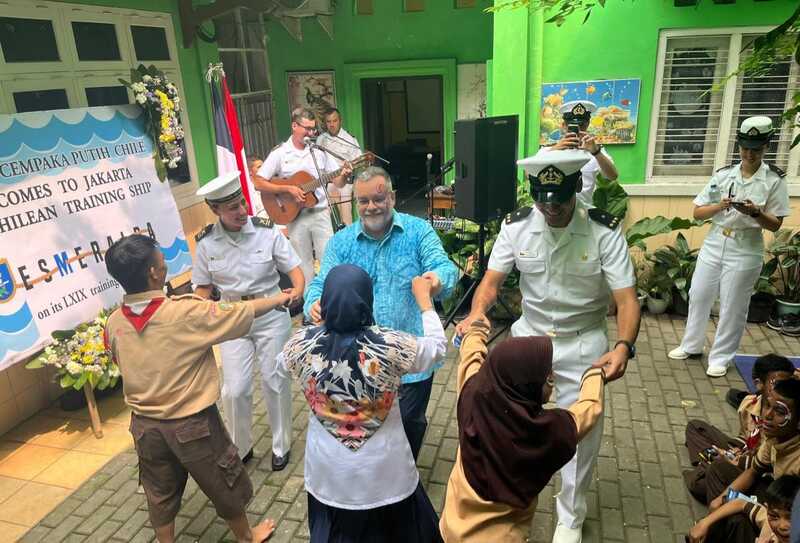
We are a community-oriented mission, which means we’re out there with the people and the local community. For example, on some days, we also participate in the car-free day in Jakarta. If you see the Chileans on a car-free day, you will also see us jogging or on a bike while wearing our national team jersey.
If you ask me what the most important aspect of sports and recreation in Jakarta is, that would be the opportunity to be among hundreds and thousands of Jakartans who, on every Sunday morning, would wake up early and break a sweat—together as one community. Seeing thousands walking next to you in one of Jakarta’s main roads is quite an experience, with many asking for a selfie or just saying hello.
With the growing medical issues worldwide (i.e. the hantavirus outbreak, growing tuberculosis cases in Indonesia), how does the Embassy of Chile in Indonesia distribute the most up-to-date information and maintain health-related awareness among the Chileans currently based in Indonesia?
We have around 150 Chilean professionals living in Indonesia right now, most of whom are currently based in Bali and, age-wise, are considered millennials with young families. There are also Chileans in the more remote places of the country, such as the Moluccas and the southern part of Lombok Island. That means a proper information distribution is very important, for both the Embassy of Chile and the Chileans who are currently visiting or staying in Indonesia. Thanks to our active communication channels, via the Embassy’s social media and email, we have made for ourselves a very manageable community, especially in terms of information updates. And the great thing about us Latins is how we can get word of mouth to travel really quickly among us. We make it a priority for our community to know what is going on and where Chile stands today through activities via our social media.
Last but not least, how can our readers, especially Chileans in Indonesia, get in touch with you and the Embassy?
You can reach us via email (echile.indonesia@minrel.gob.cl or yakarta@consulado.gob.cl) and social media. We are also active on Instagram, with the page name @chile_in_indonesia. The Embassy of Chile to Indonesia, ASEAN, and Timor-Leste will respond to your message as quickly as possible. We make it a priority to serve our Chilean community with efficiency and pride.