


The Minangkabau concept of beauty reminds us of what the mainstream global beauty industry so often forgets: that true radiance is sustainable only when it serves a purpose higher than individual vanity.
In a hyper-connected global landscape dominated by the rapid-fire scroll of digital feeds, modern beauty standards have become increasingly homogenous, hyper-focused on youth, and overwhelmingly superficial. We are routinely told that beauty is skin-deep, temporary, and easily bottled. Yet, tucked away in the lush, volcanic highlands of West Sumatra, Indonesia, the Minangkabau people—the world’s largest thriving matrilineal society—have spent centuries nurturing a wildly different philosophy. For the Minang, true aesthetic allure is utterly inseparable from leadership, structural resilience, and social ethics.
To understand Minangkabau beauty is to look far beyond physical symmetry or cosmetic enhancement. It requires stepping into a vibrant cultural ecosystem where a woman’s ‘glow’ is measured not by her conformity to a mirror, but by her foundational capacity to sustain, guide, and protect her community.
Beauty as Strength: The Living Pillar
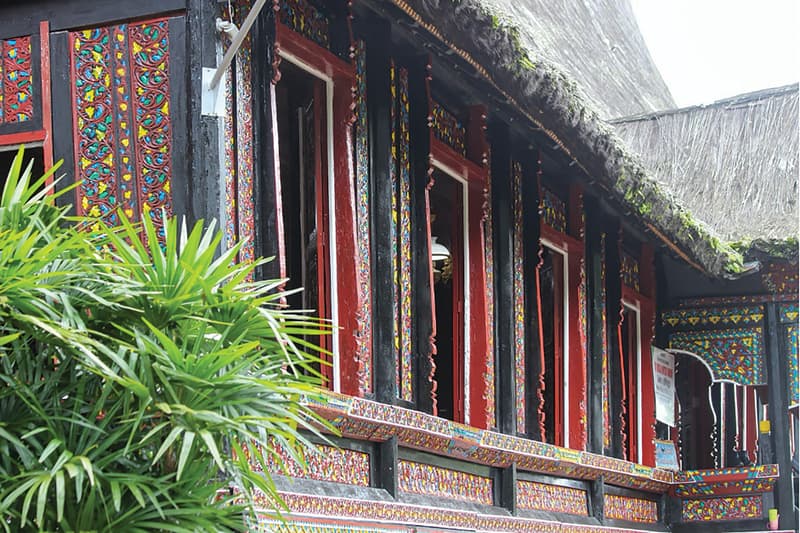
At the physical and spiritual heart of traditional Minangkabau society sits the Rumah Gadang, the majestic, clan-owned longhouse characterised by its dramatic, sweeping roofs that mimic the curved horns of the water buffalo. In Minang philosophy, a woman of noble character, intellect, and presence is formally referred to as the Limpapeh Rumah Nan Gadang—literally translating to the “central pillar of the grand house.”
Far from being a passive, ornamental figure confined to domestic spaces, a Minang woman derives her social radiance from her tangible, institutional power. Under the intricate legal and cultural framework of adat (traditional customary law), all ancestral property, fertile rice paddies, and family names are passed down strictly from mother to daughter. The Limpapeh is the sovereign custodian of this ancestral wealth, managing the land that feeds the clan and preserving the heritage that defines them.
Consequently, a Minang woman’s beauty is explicitly tied to her strength. She is a sanctuary for her family, a legal anchor for her lineage, and a stabiliser of the community’s economy. Her radiance does not fade with the arrival of wrinkles or the passing of years; instead, it deepens and matures, fueled by her evolving role as a pillar of community survival and cultural continuity.
The Weight of Elegance: Carrying the Suntiang
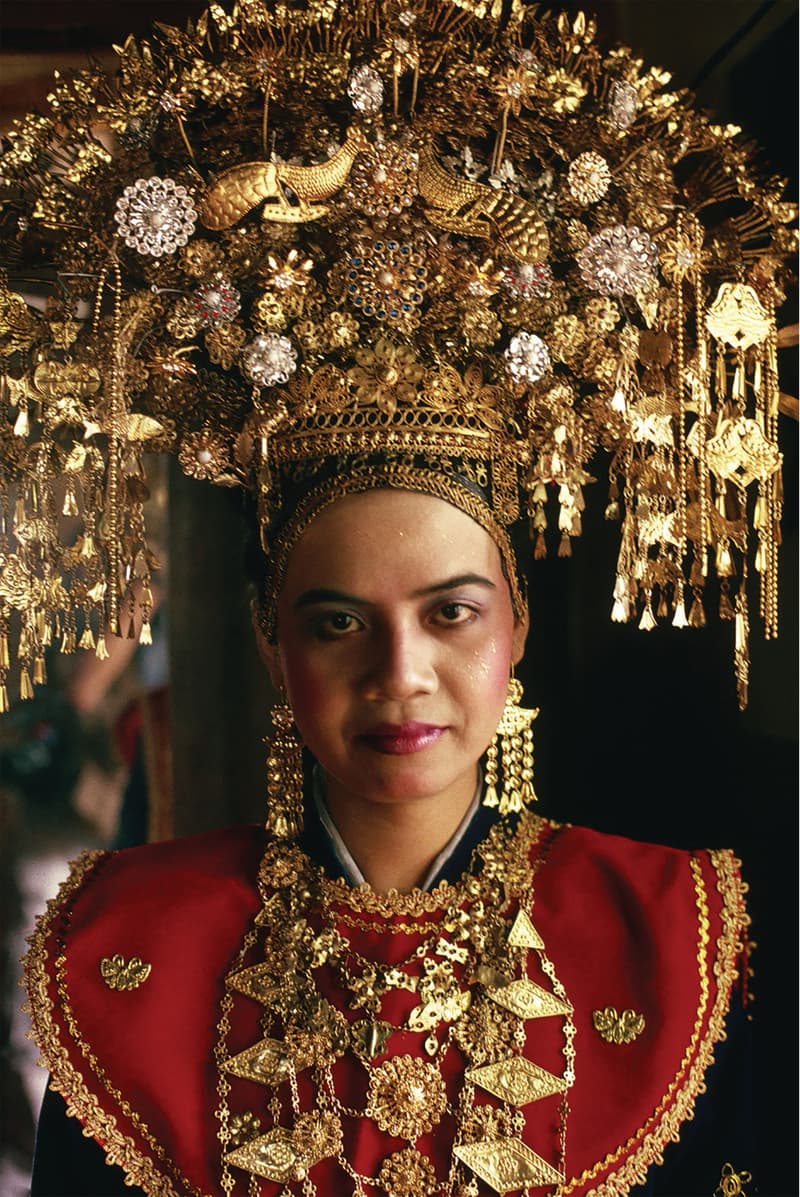
Nowhere is the intersection of aesthetics and duty more visibly striking than in the Suntiang: the breathtaking, tiered golden headdress traditionally worn by Minangkabau brides during their wedding ceremonies. Constructed from layers of intricate metallic flowers, birds, leaves, and delicate filigree, this crown rises into a spectacular, shimmering arc. It is a visual masterpiece, but it comes with a physical price: the structure can weigh up to five kilograms (11 pounds).
Watching a Minang bride glide effortlessly through her wedding festivities, maintaining an unbothered, serene, and welcoming expression for hours on end, is a masterclass in poise. However, the Suntiang is far more than a stunning matrimonial accessory; it is a profound physical manifestation of societal responsibility.
The heavy crown serves as an early, unforgettable lesson for a woman stepping into her full adulthood. It signals that marriage and maturity in a matrilineal society do not bring passive privilege, but rather massive social, familial, and economic duties. True elegance, according to Minang custom, is not the absence of burdens, but the learned ability to carry heavy societal expectations with absolute grace, physical balance, and quiet dignity. The bride’s physical beauty on her wedding day is validated by her inner fortitude to bear the weight of her future clan.
Rancak di Labuah: The Counter-Narrative of Public Grace
While modern social media landscapes often champion self-absorption and curated individualism, Minang culture anchors its aesthetic values in public accountability via the concept of Rancak di Labuah. This phrase literally translates to “beautiful on the main road“, or, more conceptually, “public grace“.
Rancak di Labuah dictates that a person’s true allure lies entirely in their behavioural beauty—the precise way they walk, speak, listen, dress, and resolve conflicts within the public sphere.
According to this ethos, physical perfection is rendered completely meaningless without moral substance. A person who possesses striking physical traits but acts selfishly, speaks arrogantly, or treats neighbours with disrespect is completely stripped of the label rancak (beautiful). Conversely, an individual with modest features but who carries themselves with humility, wisdom, and kindness is celebrated as truly stunning.
By tying attraction directly to social ethics and interpersonal harmony, Minang philosophy offers a refreshing, sustainable alternative to modern hyper-fixations. It effectively shifts human energy away from an exhausting, endless pursuit of bodily perfection and redirects it towards a lifelong cultivation of character, empathy, and collective well-being.
Matrilineal Modernity and the Global Modest Fashion Movement
The centuries-old philosophies of West Sumatra are not dusty relics confined to anthropology textbooks; they are actively driving modern Indonesian identity and reshaping global fashion movements. As a primarily Muslim society that fiercely maintains its ancient matrilineal customs, the Minangkabau region has become a massive creative engine for the burgeoning global ‘modest beauty’ industry.
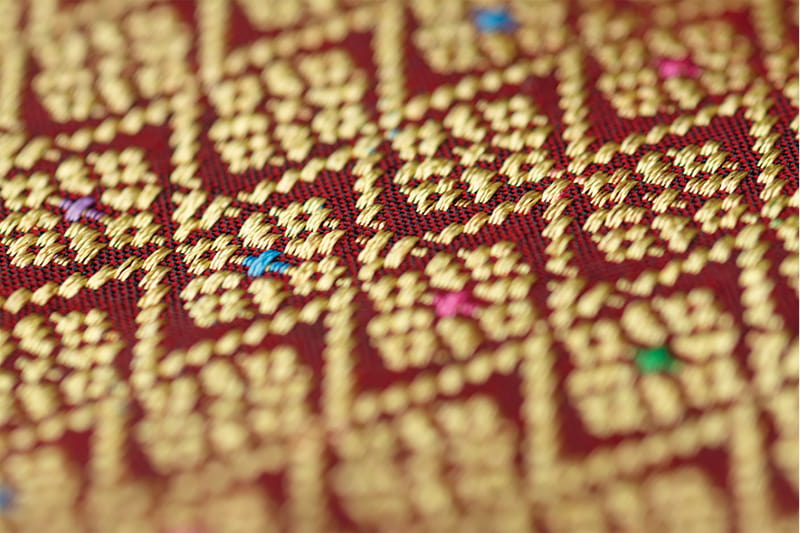
Modern Minang designers are increasingly looking to their roots, translating the bold geometric patterns, vivid silks, and intricate gold threads of traditional songket weaving into contemporary haute couture. This fusion allows young women to project a distinct form of empowerment on international runways. It is a visual style that outright rejects Western paradigms of hyper-sexualisation while simultaneously bypassing traditional patriarchal restrictions. What emerges is a vision of femininity that is fiercely independent, deeply rooted in history, and undeniably chic.
Ultimately, the Minangkabau concept of beauty reminds us of what the mainstream global beauty industry so often forgets: that true radiance is sustainable only when it serves a purpose higher than individual vanity. By anchoring allure to resilience, leadership, and communal grace, the Minangkabau offer a timeless, empowering blueprint for a more ethical, respectful, and beautifully grounded world.