



Contributing writer Pramod Kanakath chronicles his experience getting to know Mentawai culture (and wisdom) for the first time.
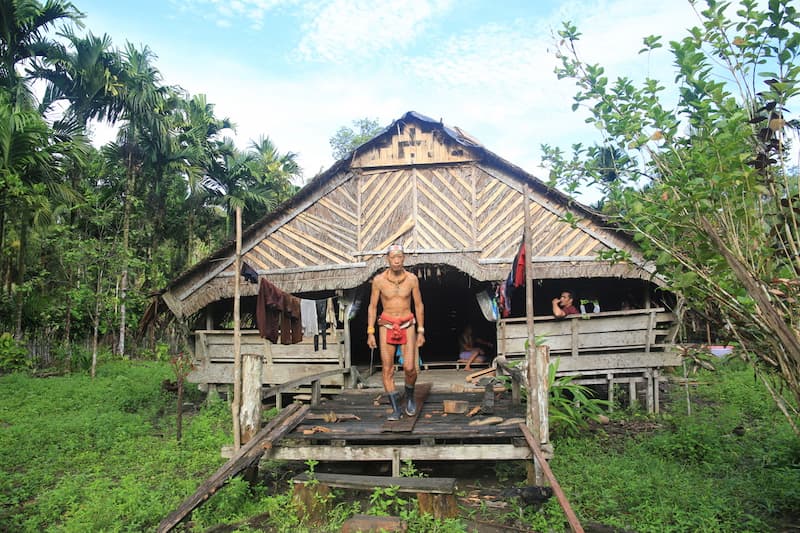
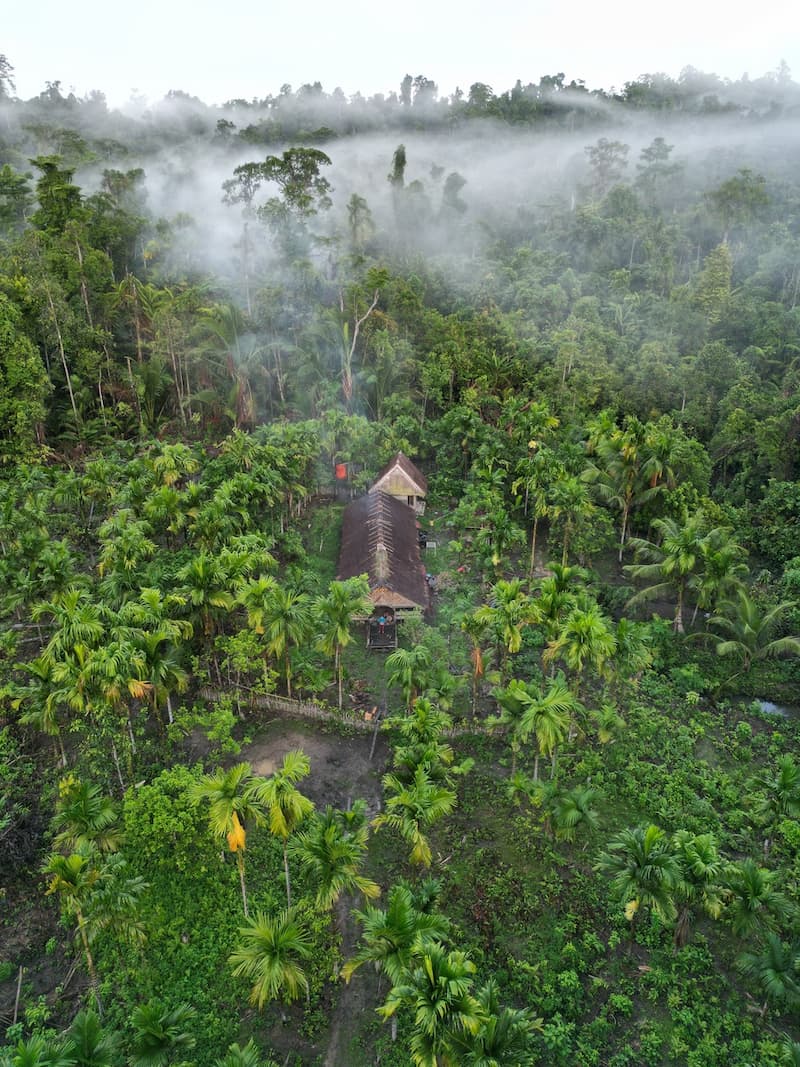
I woke up in an uma — the traditional Mentawai longhouse — on a cold summer morning, when mist and foliage of tall trees jostled for space in the air.
Overnight rain had made everything wet, but wetness did not have much significance in a greenery-soaked forest. Following the elders in the family, I untied the mosquito net, folded it, then kept it in a corner. Stretching myself, I quizzically glanced at the animal skulls that decked the beam above the front door — one of the first assurances that beyond the tropical postcard of Mentawai is a world untouched by resorts or itineraries. Deep in the jungles of Siberut Island lives one of Indonesia’s isolated communities, the Mentawai, who have preserved their animistic traditions for centuries.
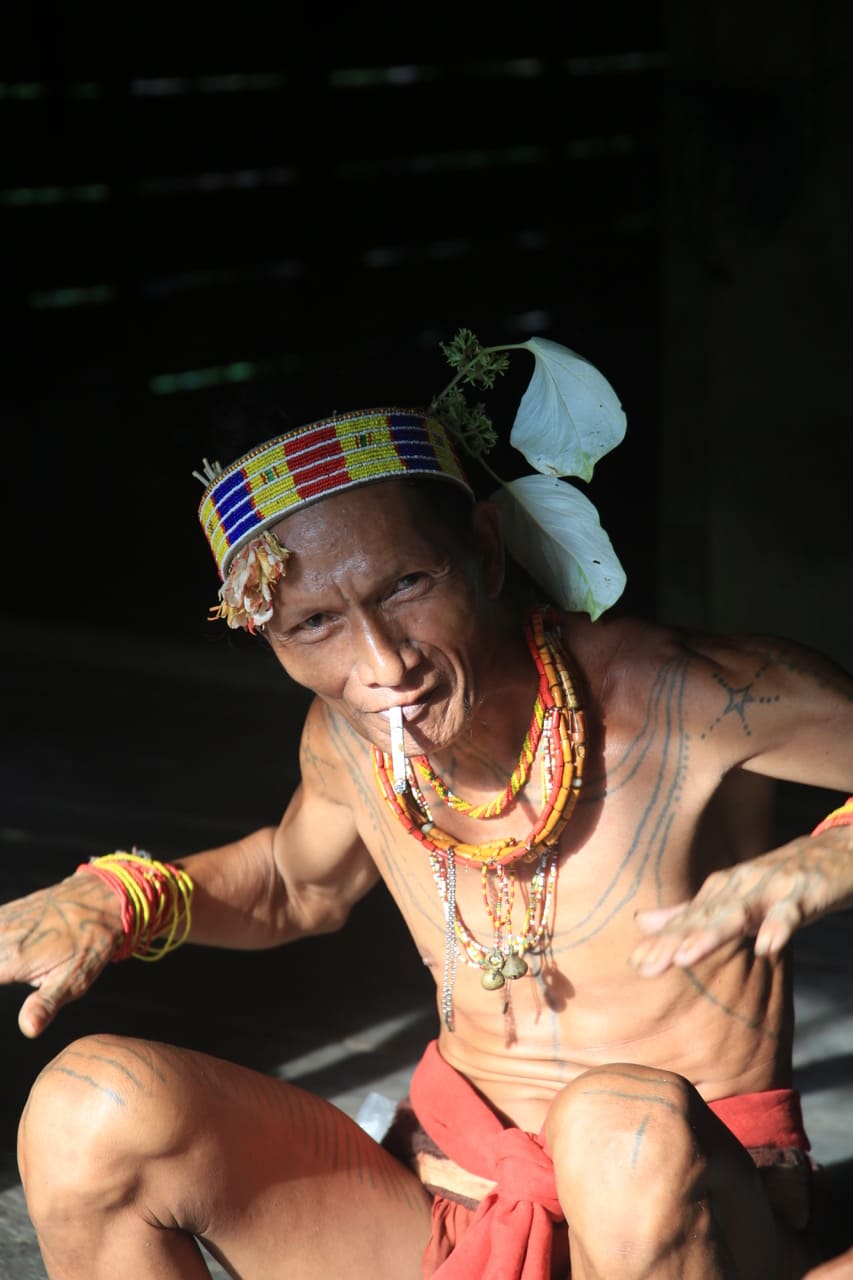
Oncy Oni, a young Mentawai in his early thirties, belongs to the generation that moves between tradition and modernity. Fluent in English and Spanish, apart from his native Mentawai and Bahasa Indonesia, he travels across the archipelago to share stories of his people.
“Culture is what keeps us balanced,” he told me. “We live with the forest, not on it.”
The journey to his village led me through layers of silence and green. When I arrived at his uma, after an hour’s canoe ride on the Siberut River, the air itself seemed alive. Built on stilts, framed with various woods and roofed with palm as well as other forest tree leaves, the uma stands as both home and temple. Its wooden walls bear painted animal symbols and, from the rafters, hang skulls of pigs, monkeys, deer, and remnants of feasts and ceremonies. Cats slept under wooden benches, chickens pecked at hidden insects, and the occasional pigs meandered along bushes.
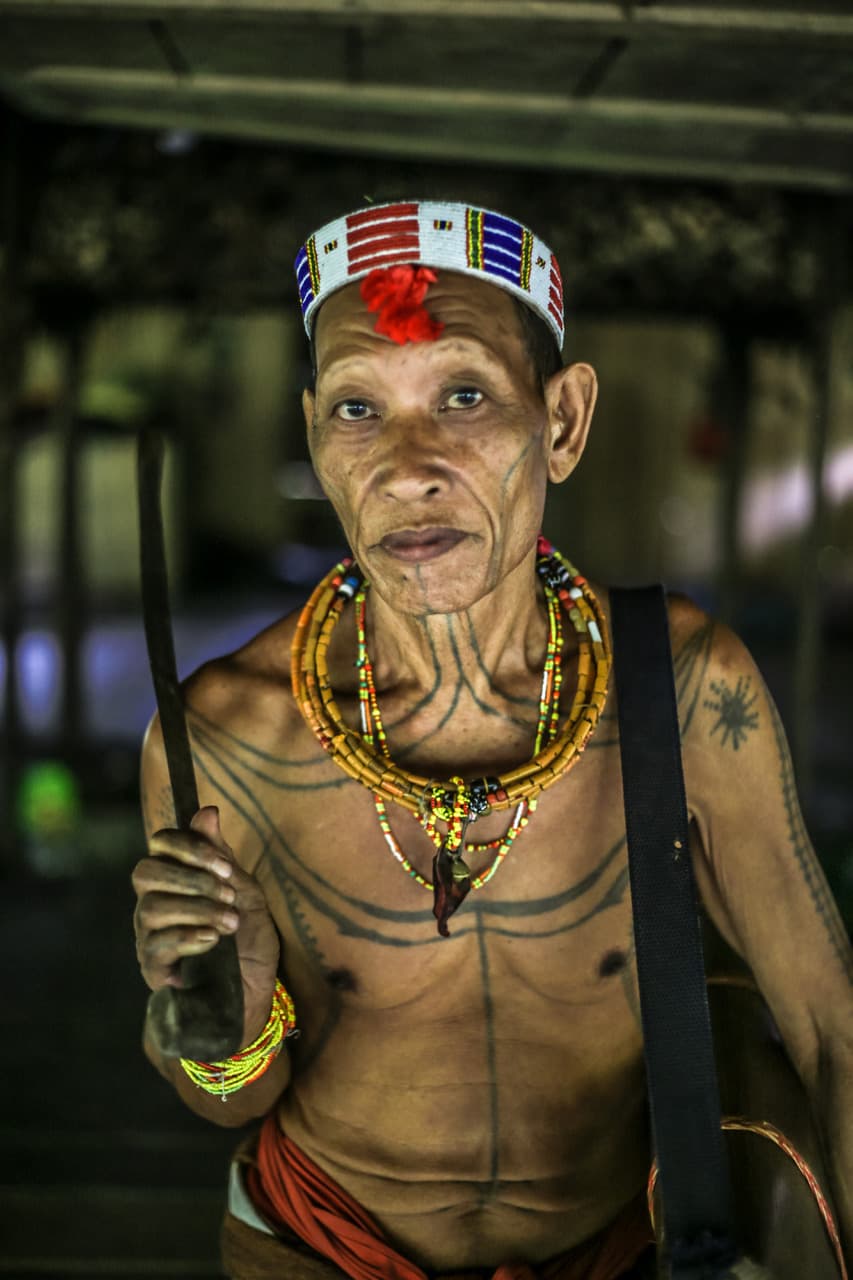
Life in the uma is one woven with rituals. Every act — eating, carving, planting — carries meaning. The tattoos that cover the men’s arms, legs, and torsos are not decoration; those are their identity. Their lines map a life: family ties, skills, and protection from malevolent spirits. Each mark is made with care, the ink mixed from charcoal ash and burned sugarcane juice, and the process is both painful and sacred. Each stroke is made with batak, a palm-wood hammer mounted with a nail on the body parts, and it is carefully executed.
To wear tattoos is to carry the tribe’s memory on one’s skin.
Pigs, meanwhile, are the tribe’s true currency. They measure wealth, love, and honour. No marriage or celebration can occur without them. To give pigs is to give respect; to receive them is to accept a bond. Along with pigs, chickens and durian trees are also given to the bride’s family as part of the wedding. Oftentimes, this offering is not made by just one family but by the bridegroom’s clan, who will get their own shares when daughters from their families get married.
The Mentawai’s economy is built not on money but on reciprocity — a system older and more enduring than any marketplace.
The day usually begins early in the uma. Men would sharpen machetes before walking into the forest to gather baiko tree bark, which would be turned into loincloths. Their blades strike the trunks in a steady rhythm — thwack, pause, thwack — and the sound would echo through the canopy. Down by the river, they beat the bark on smooth stones until it softens, then hang it to dry — pale ribbons fluttering beside the laundry.
The women, meanwhile, would tend the fires inside to roast sago, which is their staple food. They peel and pound the pith, wrap it in leaves, and place it over open flames until the scent of earth fills the air. The taste is plain, yet it has sustained the Mentawai for generations.
Around every meal, ritual hums quietly. Before eating, a small portion is offered to the spirits — an unseen sharing that keeps the world in balance. The Mentawai believe in Arat Sabulungan: an animistic faith in which every creature and object possesses a soul. The forest is not a resource; it is a living companion. Cutting a tree or hunting an animal requires apology, permission, and gratitude. Nothing is taken without a word of thanks.
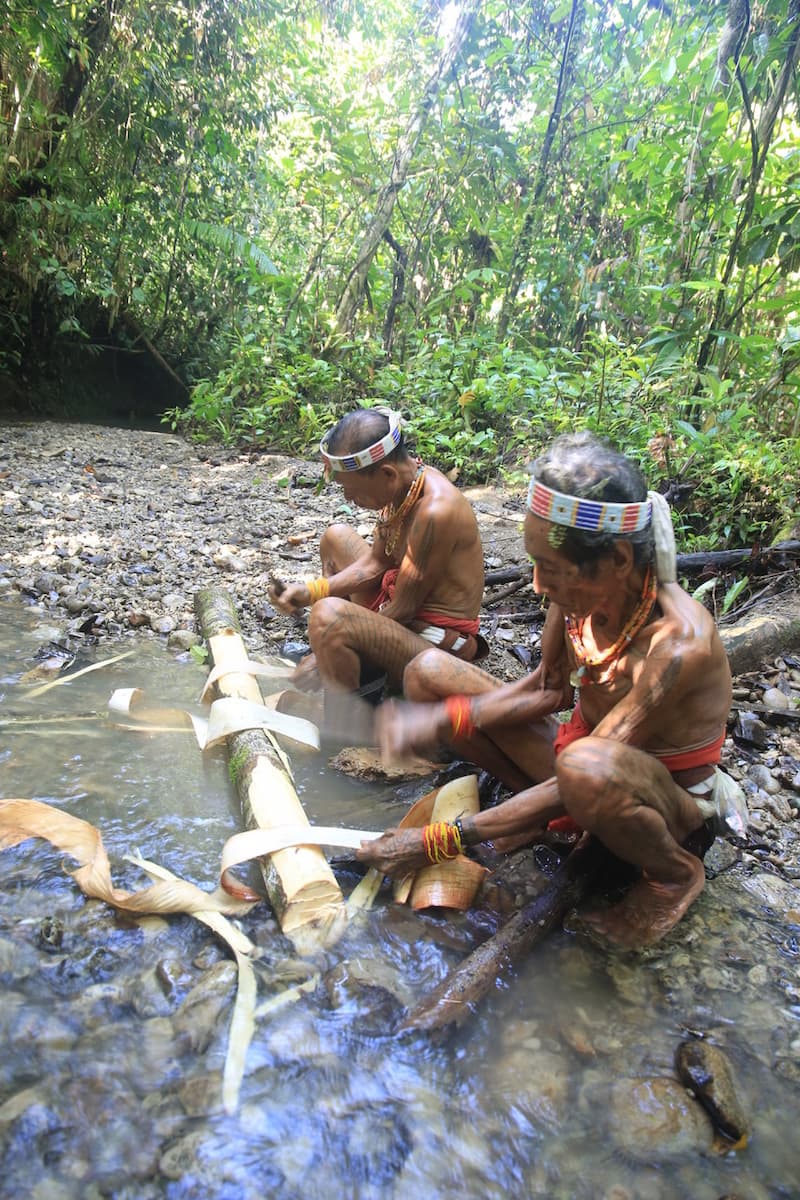
Hunting itself is an art of precision and respect. In preparation, the men would collect forest leaves — raggi, laingi, baklau — and mix their juices with a fiery chilli called dara to create poison for arrow tips. The mixture’s strength is adjusted depending on the prey. The knowledge is ancient and empirical, passed through observation rather than instruction.
“The forest teaches,” an elder, also a shaman, said. “If you listen long enough, it tells you everything.”
I took a closer look at the hearth above, which hangs skulls of pigs, monkeys and deer. Those became reminders of hunts and ceremonies past, of the delicate balance between taking life and honouring it.
Here, evenings descend softly. The uma glows dimly with oil lamps. The chickens would climb up a tree using a bamboo pole fixed for them, for fear of being attacked by pigs at night. The women would sort palm leaves for the next day’s weaving. The elders would smoke in silence, faces illuminated by orange embers, while younger men scroll through their phones, laughing at snippets of Asian music from a radio app. Modernity arrives here in whispers — borrowed songs and flickering screens — but the heartbeat of the old ways remains steady. The forest hums beyond the walls, its chorus of crickets and frogs blending with human voices in seamless harmony.
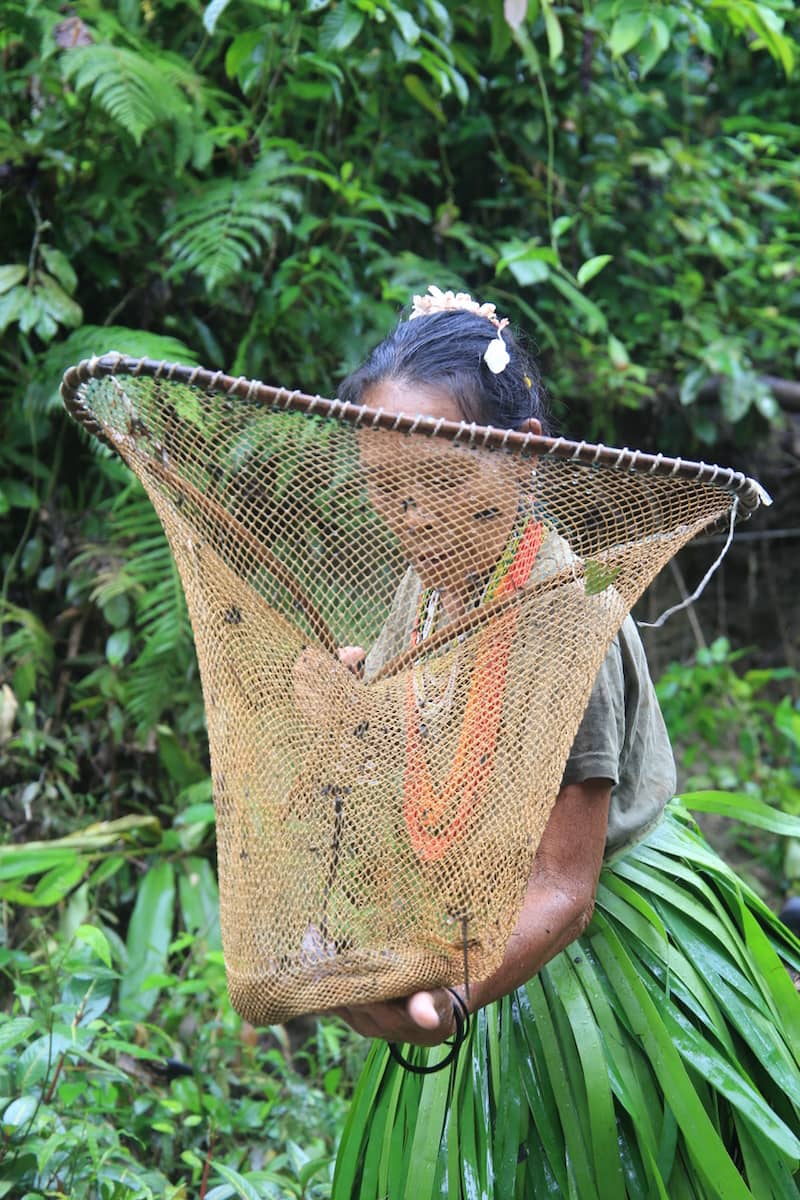
At dawn, mist curled low again over the forest, turning the air into silver. The elders sat by the doorway of the uma and puffed their cigarettes — their silhouettes blurred by smoke. The forest then revealed itself slowly — green upon green, infinite shades of it. The people of the uma moved unhurriedly, each task carried out with quiet assurance. They seemed to measure time not in minutes but in cycles: the softening of bark, the drying of sago, the gathering of firewood.
The Mentawai’s wisdom lies in continuity, not change. In a world that measures progress by speed, the tribe reminds us that true knowledge often grows in silence, patience, and belonging. Their lives follow the same pattern as the river that sustains them — flowing, steady, timeless. And, as I left that world behind, I understood what their culture truly preserves: not just tradition, but a way of seeing the world as a whole. A world that is alive and sacred.
All photos are courtesy of Pramod Kanakath.