


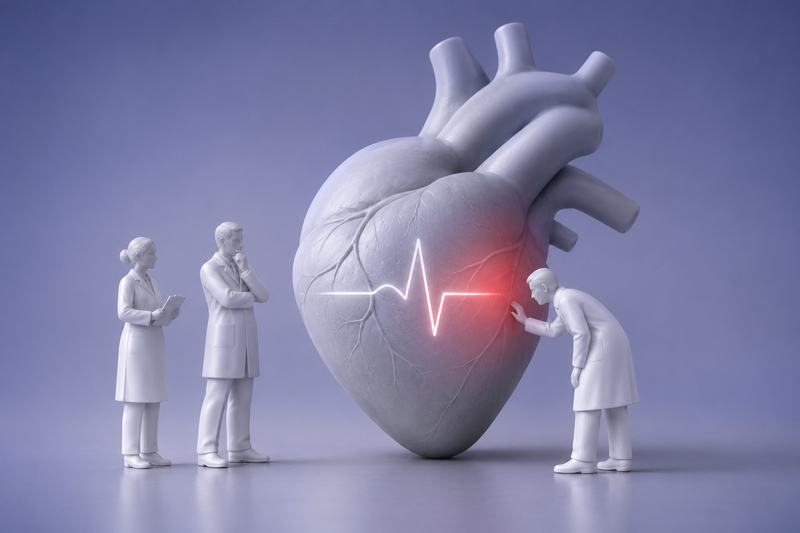
Hearing that a family member is experiencing a decline in heart function can naturally raise concerns and questions about their chances of recovery. One examination that can help provide answers is the SPECT Viability Study, a cardiac muscle viability assessment that uses Single-Photon Emission Computed Tomography (SPECT) Scan nuclear medicine technology.
This examination helps doctors assess whether areas of the heart muscle experiencing reduced function still contain living tissue that may recover if blood flow to the heart can be restored. The service is already available in Indonesia, although access remains limited and is generally found in hospitals equipped with nuclear medicine facilities.
According to Dr Sidhi Laksono, Sp.JP(K), MARS, MH, from Mayapada Hospital Jakarta Selatan, a decline in heart function can occur in patients with coronary artery disease (CAD) or those with a history of a heart attack.
“In certain cases, heart muscle that has received an inadequate blood supply over an extended period may reduce its activity even though the tissue is still alive. This condition is known as hibernating myocardium. There is also a condition in which heart function temporarily decreases following a disruption in blood flow, known as stunned myocardium. In certain circumstances, heart function may still improve once blood flow is restored through appropriate treatment tailored to the patient’s condition,” explained Dr Sidhi.
Dr Sidhi added that a SPECT Viability Study may be considered, particularly for patients experiencing reduced heart function due to coronary artery disease or ischaemic cardiomyopathy. The results are then evaluated alongside the patient’s clinical condition and other cardiac examinations to help doctors determine the next treatment strategy, including whether the patient may benefit from Percutaneous Coronary Intervention (PCI) or Coronary Artery Bypass Grafting (CABG).
Explaining the SPECT Viability Study, Dr Lim Andreas, Sp.KN, from Mayapada Hospital Jakarta Selatan, said, “The examination uses a radiopharmaceutical as a tracer, with a relatively low level of radiation exposure. The substance follows the blood flow towards the heart muscle, after which the SPECT camera captures its distribution to provide a more accurate picture of the condition of the heart muscle tissue.”
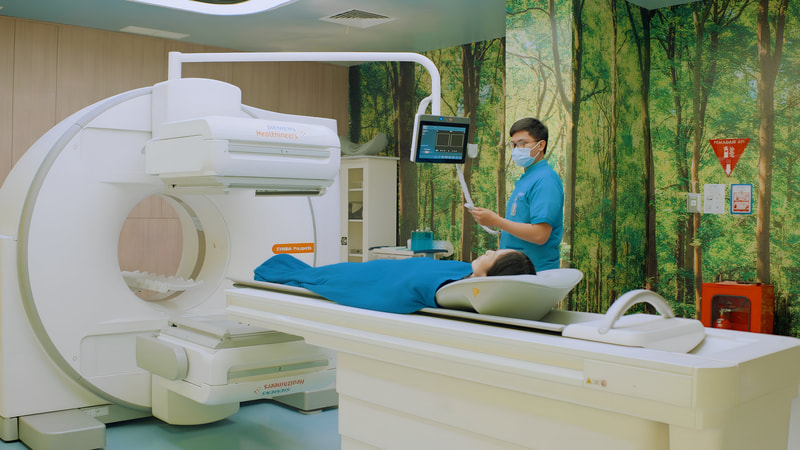
The examination can identify areas of heart muscle tissue that show signs of remaining viable. “In viable tissue, blood flow or tracer uptake can still be detected even when the heart’s ability to pump blood has decreased. Conversely, very low tracer uptake may indicate more severe tissue damage,” added Dr Andreas.
For patients and their families, a SPECT Scan provides a clearer picture of the condition of the heart muscle, including areas that may still have the potential to regain function. “This information helps patients understand that treatment options may still be available when heart muscle tissue has the potential to recover. The next steps can therefore be considered together with their doctors, based on each patient’s individual condition,” explained Dr Andreas.
Advances in nuclear medicine technology are now expanding public access to comprehensive cardiac examinations in Indonesia. This service is available at Mayapada Hospital Jakarta Selatan (MHJS) through its Nuclear Medicine & Molecular Theranostic Centre, which provides SPECT Scan services with whole-body imaging capabilities and a structured care pathway.
This technology also complements the services offered by the Mayapada Hospital Cardiovascular Centre, which addresses heart and blood vessel conditions, from detection to minimally invasive procedures. In the event of a cardiac emergency requiring prompt and appropriate treatment, MHJS provides a 24/7 Cardiac Emergency service, supported by cardiologists and anaesthesiologists who are on-site and on standby to facilitate further procedures according to the patient’s condition.
To arrange a consultation with a doctor regarding nuclear medicine examinations at Mayapada Hospital, contact the call centre on 150770, WhatsApp 0817-1715-077, or use the MyCare application. In the event of an emergency, contact the call centre on 150990 or use the emergency call button in MyCare.