



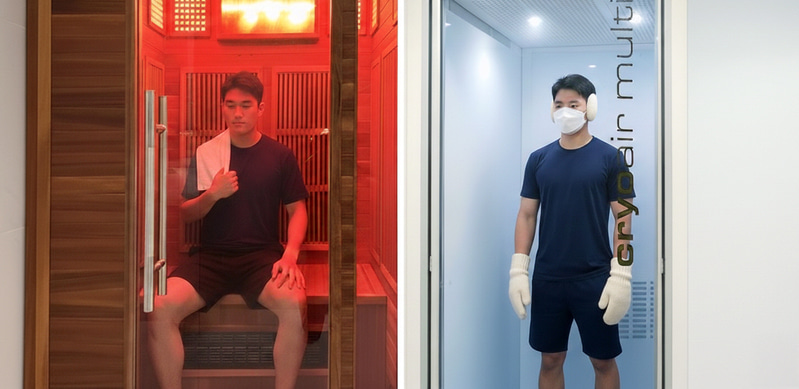
From muscle fatigue to performance dips, experts highlight why structured recovery—combining heat and cold therapies—is essential for athletes and active lifestyles.
For athletes, fatigue is often not a choice. Training must continue, schedules keep moving, and targets cannot be postponed. There are days when the body feels heavy and the muscles have not fully recovered, yet the next training session is already waiting. This pattern is increasingly reflected in modern urban lifestyles, where many individuals in Indonesia incorporate exercise into their daily routines. However, they often experience issues such as prolonged muscle soreness, fatigue that sets in too quickly, or a body that is not fully ready to return to activity or training the following day—even when their programmes are followed consistently and in a structured manner.
These conditions are generally not caused by insufficient training, but rather by a recovery process that is not yet optimal. Intense physical activity triggers muscle tension, nervous system fatigue, and mild inflammation in body tissues. Without proper recovery strategies, this physical stress accumulates and can affect performance, training consistency, and the risk of injury. Therefore, recovery should be positioned as a core strategy rather than merely a complement to training. This can be achieved through body-based assessments, targeted interventions, and structured recovery programmes designed to maintain performance and support sustainable physical activity.
Recovery from a Sports Medicine Perspective
In the context of sports medicine, recovery involves more than simply resting. It is a complex biological process involving the muscular system, blood circulation, metabolism, and the body’s hormonal responses. When recovery is not optimal, the risks of prolonged fatigue, mild inflammation, and even declining performance can increase.
According to Dr Nahum, Dipl. CIBTAC, Sp.K.O., a sports medicine specialist at Seraphim Medical Center, Paramount Gading Serpong, recovery is an essential phase of the overall training cycle.
“Without a proper recovery phase, the muscle adaptation and performance improvements we expect from training may actually be hindered. Medically planned and monitored recovery helps the body regain readiness for the next session,” explained Dr Nahum.
Infrared Sauna: Therapeutic Heat for Muscle Recovery
Infrared sauna is a heat therapy that uses infrared waves to penetrate deeper into tissues than conventional saunas. This mechanism helps improve blood circulation, promotes muscle relaxation, and supports nutrient delivery to tissues experiencing tension.
In the context of post-exercise recovery, scientific studies show that infrared sauna sessions after training can reduce muscle soreness and support neuromuscular performance recovery, compared with passive rest alone. Infrared sauna can help:
- promote blood and oxygen flow to muscle tissue
- reduce muscle tension and support relaxation
- support the perception of faster physical recovery
“Infrared sauna works by increasing deep tissue temperature, helping muscle relaxation and recovery after intense physical activity,” said Dr Nahum.
Cryotherapy: Cold Temperature for Inflammation Control
In contrast to heat therapy, cryotherapy involves short-term exposure to extreme cold temperatures to trigger physiological responses that support mild inflammation control and reduce muscle pain after training.
The benefits of cryotherapy have been widely studied and used for post-exercise recovery, particularly to help:
- reduce inflammation and swelling
- relieve muscle and joint pain
- accelerate tissue recovery
- support the body’s readiness for the next training session
According to Dr Nahum, cryotherapy is especially relevant for individuals with high training intensity or those in mild injury recovery phases.
“Cold exposure helps control inflammation and provides a natural analgesic effect. In sports contexts, cryotherapy is often used to accelerate recovery so the body can return to optimal function in a shorter time,” he explained.
Combining Infrared Sauna and Cryotherapy for Balanced Recovery
Applying both methods in an integrated way creates a balanced recovery approach—combining the relaxing effects of heat with the inflammatory control of cold. This allows the body to recover not only from muscle tension, but also from nervous system and metabolic responses after physical activity.
“There is no single method that fits everyone. The combination of heat and cold therapies can be tailored to individual needs, physical conditions, and fitness goals,” added Dr Nahum.
An Integrated Approach at Seraphim Medical Center
As part of its Sports & Rehabilitation Centre, Seraphim Medical Center offers an evidence-based, integrated sports medicine approach. Each individual undergoes a comprehensive evaluation before beginning a programme, ensuring that the strategy provided truly aligns with their physical condition.
This evaluation includes physical activity history, muscle and joint condition, sleep patterns, stress levels, body composition, and metabolic factors that influence performance and recovery processes. With this approach, recovery and performance enhancement programmes are designed personally, structured, and carried out under the supervision of a sports medicine specialist.
“Recovery is not only for athletes. Anyone who is physically active or has high physical demands also needs proper recovery strategies so the body remains optimal and less prone to injury,” explained Dr Nahum.
Various modalities such as infrared sauna, cryotherapy, and other supportive therapies are applied in a targeted manner rather than generically. Recovery is positioned as a strategic component within the training cycle—not merely a response when the body already feels exhausted.
Fit to Sport & Performance Programme
Beyond recovery services, Seraphim Medical Center also offers the Fit to Sport & Performance Programme, a comprehensive physical preparation programme for individuals who wish to return to exercise after a break, increase training intensity, or prepare for competition.
The programme begins with a thorough assessment to identify potential injury risks, muscle imbalances, movement pattern dysfunctions, and the body’s metabolic readiness. The results of this evaluation form the foundation for developing corrective training strategies, targeted strengthening programmes, and more precise recovery planning.
“Performance improvement is not only about training harder, but ensuring the body is structurally and metabolically prepared. With proper evaluation, injury risks can be minimized and training adaptations become more optimal,” added Dr Nahum.
This programme is relevant not only for professional athletes, but also for active individuals with urban lifestyles who wish to exercise safely, strategically, and sustainably.
Recovery as a Long-Term Performance Investment
From a sports medicine perspective, peak performance is not determined solely by how hard someone trains, but by how intelligently they manage the balance between training and recovery cycles. When recovery is planned and medically monitored, the body has the opportunity to adapt, strengthen tissues, and prepare for the next physical load.
“Training creates controlled stress on the body. Proper recovery allows the body to adapt and become stronger. Without this phase, performance improvement can be hindered and may even increase the risk of injury,” concluded Dr Nahum.