



Born in South Africa before the end of apartheid and driven by a desire to be a changemaker through his art, Ricky Lee Gordon has recently moved to Bali, where he has established a contemporary art gallery in the heart of Canggu—one that certainly hasn’t gone unnoticed.
Why would a passionate young professional, who also happens to be an internationally recognised artist, come to Bali to shake up the local art scene? It’s certainly not due to a lack of attention—the island is rich in traditional creativity and already boasts a vibrant artistic community that has long attracted international interest and investment. So, what’s the story?
Let’s try to answer that question with the man himself…
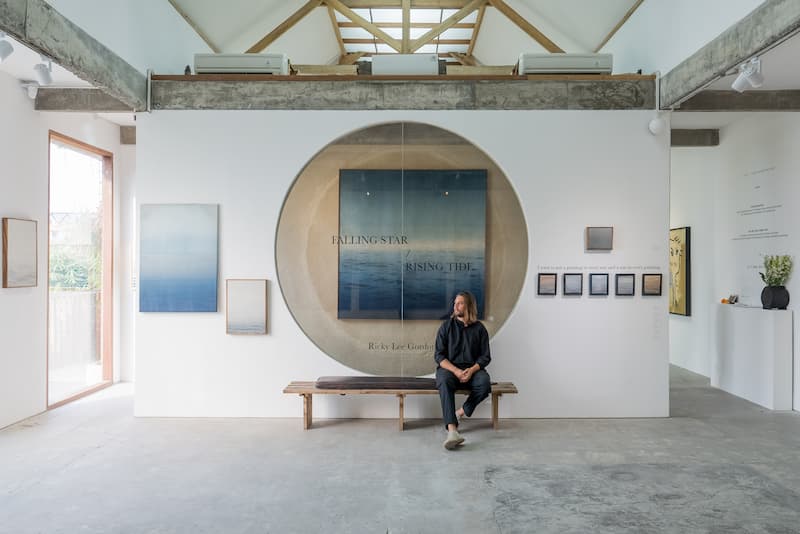
Now in his early 40s, this thoughtful artist has painted murals across dozens of countries around the world. Quite the feat—one that many might view as more than enough to rest on his laurels and enjoy the spoils of fame and the financial success that comes with it. But perhaps it’s worth delving into his earlier life as a young entrepreneur in South Africa to understand him better. At just 18, he launched his first initiative: a gallery and production agency designed to bridge the economic divide in a community still deeply affected by the legacy of segregation. After several years of success, he transitioned the project into a non-profit organisation, supporting education, collaborating with advertising firms, and working alongside government bodies. Then, at 27, burnout struck.
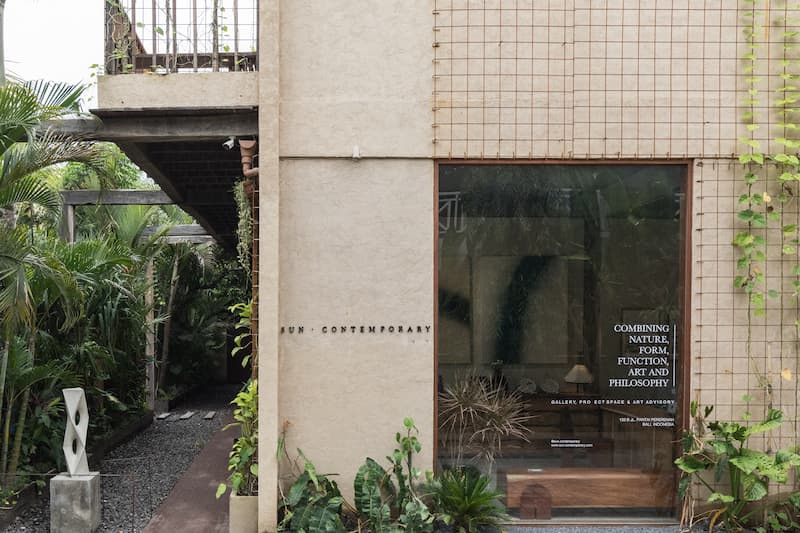
“I lost my way and my philosophy. I was serving others, but not myself. I used my creativity to make money for other people in the end,” he confides, speaking from the meeting room of his gallery in Pererenan.
Contemplating the structure of a meaningful, sustainable project
Ricky Lee Gordon then immersed himself in Buddhist practice, attending retreats in India and Sri Lanka, where he came to a realisation: he wanted to give everything up and focus solely on drawing lines—a meditative return to his core self. A scholarship to study art took him to Los Angeles, where he finally learned the technical foundations he felt he had been missing. Yet, he recalls feeling deeply unhappy in the City of Angels. That changed when he was invited to an artist residency in Bali—a moment that transformed his life nearly a decade ago.
“How could I go back to LA after discovering Bali?” he asked himself after just one day on the island.
“I wanted to live a simple, spiritual life. Like many others, I immediately felt a powerful, energetic connection to this place. It reminded me a little of South Africa—there’s something in the ground, something in the air. But unlike South Africa, there’s no tension or trauma here. I can live with my door unlocked,” he explains.
Just before the COVID-19 lockdown, Ricky Lee Gordon returned to Bali and began working with natural pigments—techniques he had previously studied in Sri Lanka—and held exhibitions that reconnected him with the art communities in both Bali and Jakarta. At the time, opening a gallery wasn’t yet on his mind; he was still carrying the weight of his past experiences in South Africa. He spent the next two years nurturing his own creative expression while quietly contemplating what the structure of a meaningful and sustainable project might look like here.
“The day I secured my legal permit to stay and work as an artist in Indonesia, I sold three paintings. It felt like I was being rewarded for playing by the rules,” he reflects.
Over time, Bali became his most productive environment, and his artistic reputation continued to flourish.
The global art market is one of the worst industries
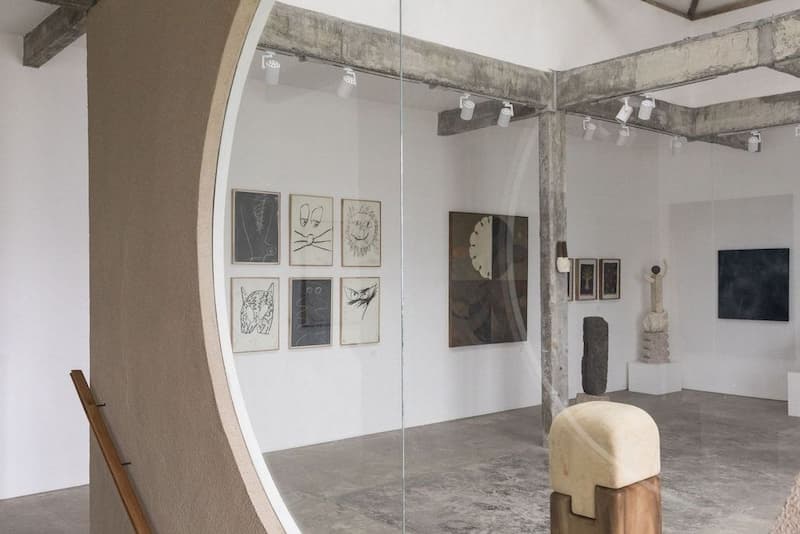
As everything began to fall into place, he decided to launch a new gallery project as a way of “giving back” to Indonesia. It would need to be a business that followed the rules, employed local staff, supported Indonesian artists, cultivated an international community, and hosted educational workshops and talks. In short, it would be a place of inspiration, not just artistically, but in terms of its business model too. Remarkably, he chose not to take any dividends or salary for at least five years.
“I invested a significant portion of my own earnings as an artist. My sales support my lifestyle. That means any profit made from the gallery goes straight back into the gallery. It’s not really a business—it’s an art project,” he explains.
The truth is, Ricky Lee Gordon is not only trying to do something meaningful for Indonesia, but also for the art world at large. Too idealistic? Perhaps. To him, the global art market is one of the worst industries in existence.
“There’s no regulation, and investors and speculators can easily inflate the value of an artist’s work and resell it for… well, there’s no ceiling!” he adds.
With a team of represented artists that includes both international and local names on equal footing, Ricky Lee Gordon emphasises that each contract is unique and individually tailored.
“That’s how the gallery works. Everything is flexible. I want the artists to feel comfortable. That’s what sets us apart as a business model,” he explains.
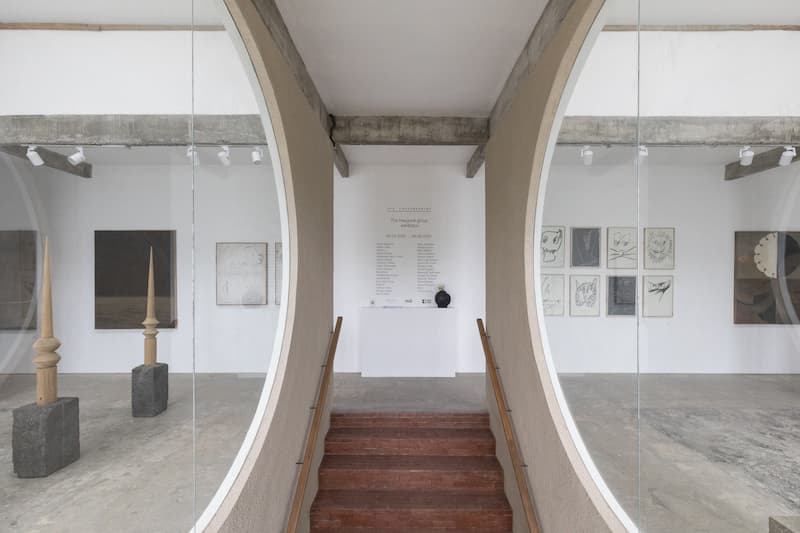
So, does SUN.CONTEMPORARY sell well? Gordon says he has strong faith in the future of the Indonesian art market and proudly points to their successful showing at the most recent Art Jakarta fair. He also believes that his buyers purchase out of genuine joy and taste, not speculation.
So, who is the typical SUN.CONTEMPORARY buyer? According to Gordon, 25% are tourists enjoying their stay in Bali, 25% are Bali-based residents buying for interior decoration, 25% are art connoisseurs from Jakarta, and 25% are international collectors who discover the works via the gallery’s platforms. And if you’re wondering about the price range: prints sell for between $150 and $300, while original pieces range from $300 to $10,000.
Perhaps the best way to judge is to see for yourself, on your next trip to Bali.