



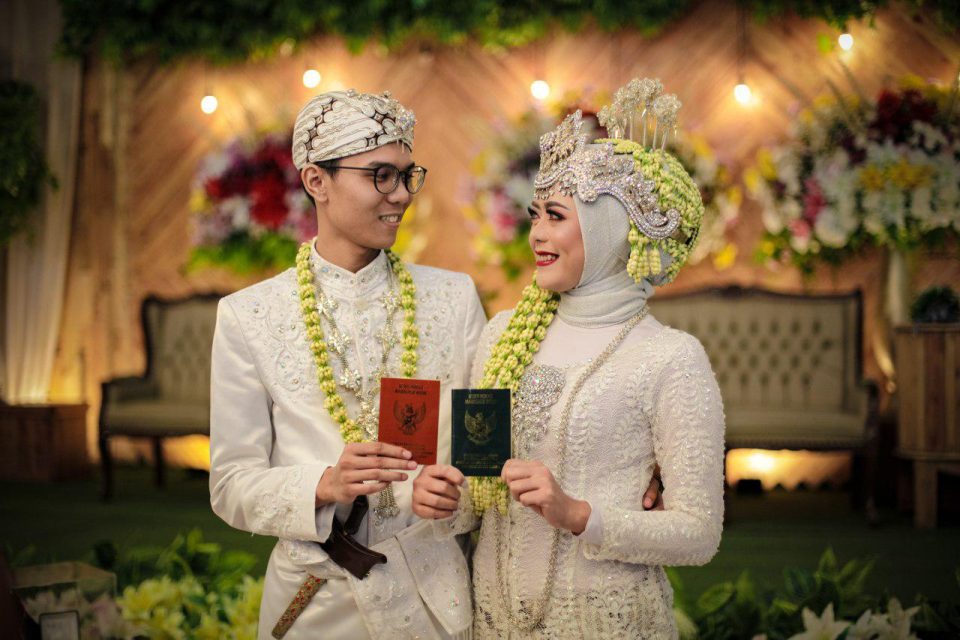
Be it an expat or a local, if marrying a Sundanese person is on your mind at the moment, here is a quick guide to Sundanese wedding traditions—encapsulating the pre-wedding as well as the wedding-day rituals.
As the second most populous ethnic group in Indonesia, with approximately 36.7 million people, the Sundanese (Suku Sunda) have a rich array of cultural traditions and customs—and weddings are no exception. Sundanese weddings have gained popularity, especially among public figures—such as Raditya Dika, Vidi Aldiano and Yura Yunita—as they (or their partners) have Sundanese heritage.
The strong adherence to customs, traditions and cultural values is a unique attraction for couples to hold Sundanese weddings. The procession takes place not only on the wedding day but also several days or even a week before. Each of these ceremonies carries profound philosophical significance.
PRE-WEDDING RITUALS
First of all, the pre-wedding rituals start from neundeun omong. This ceremony brings the families of the prospective bride and groom together before the proposal. During this occasion, the prospective groom asks for their blessing and then inquires with the bride’s family about her readiness to accept the proposal.
After both sides have agreed to get married, the narosan (proposal event) will be held. At this stage, the groom needs to prepare various things for the formal proposal ceremony. Preparations for this event generally include jewellery, food, betel leaves and clothing for the bride-to-be.
Then, the ritual proceeds to nyandakeun (gift ceremony), during which the groom’s family presents various wedding essentials, including money, clothing, household items, food and other gifts. Similarly, the bride’s family reciprocates with gifts given to the groom. The gift ceremony in Sundanese traditional weddings usually takes place a week before the wedding day.
Before the wedding day, the bride’s family will perform ngecagkeun aisan, during which the bride-to-be is carried by her parents using a sling, while her father will walk forward carrying a candle towards the sungkeman place. This stage signifies that the parents’ services know no bounds. Afterwards, upon arriving at the sungkeman place, the sling used to carry the bride-to-be is removed.
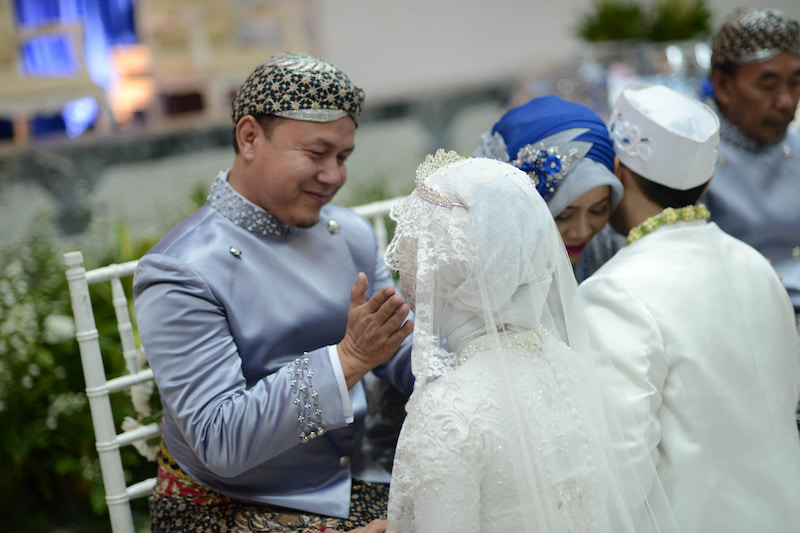
The bride and groom will then proceed to ngaras as they seek their parents’ blessings. This ritual is done by sungkem: kneeling before the parents, bowing the head, and gently washing their parents’ feet. The atmosphere during this procession is generally emotional. After the bride washes her parents’ feet, the siraman ceremony takes place. During this ritual, the bride is bathed in water mixed with seven kinds of flowers, symbolising that a good marriage should begin with a clean body and sincere intentions. Another ritual, called ngerik, is also carried out, during which the fine hair around the bride’s face is trimmed to help create a neat and beautiful make-up appearance.
In addition, on the eve before the wedding, the bride and groom may ask for their parents’ permission and blessings. This moment is witnessed by family members, relatives and guests—a tradition also known as ngeuyeuk seureuh.
WEDDING-DAY RITUALS
After going through a long process of pre-wedding rituals, the bride and groom still need to conduct several Sundanese customs on their actual wedding day.
The ceremony starts with mapag panganten: a welcoming ritual when the groom arrives at the wedding venue with his family and relatives. They must wait until the bride’s family is ready to receive them and formally welcome their arrival. Once everything is prepared, Ki Lengser—the respected elder who leads the ceremony—gives a signal to the panayagan (musicians), pager ayu (dancers), punggawa (guards) and the bride’s family to welcome the groom. The groom is then greeted by the bride’s mother, as the latter will place a jasmine flower garland around the groom’s neck. This gesture symbolises that the bride accepts the groom with a sincere heart and a warm welcome.
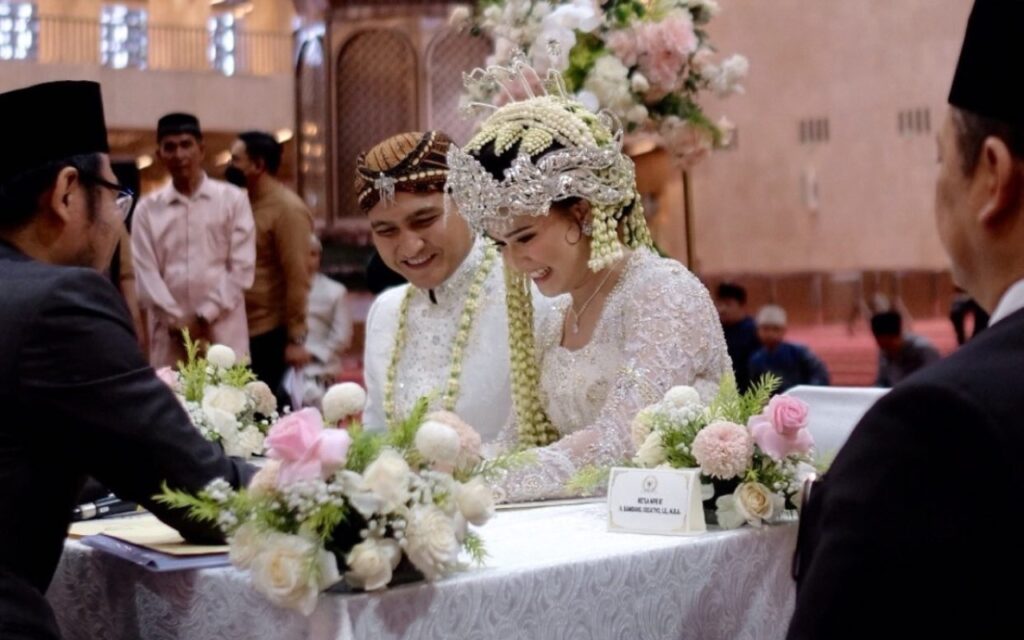
Accompanied by his future in-laws, the groom is guided into the room and seated in the prepared chairs. The master of ceremonies then invites the parents of both the bride and groom, the witnesses, officials from the Religious Affairs Office (Kantor Urusan Agama or KUA) and selected family members from both sides to take their places and begin the akad nikah (marriage ceremony).
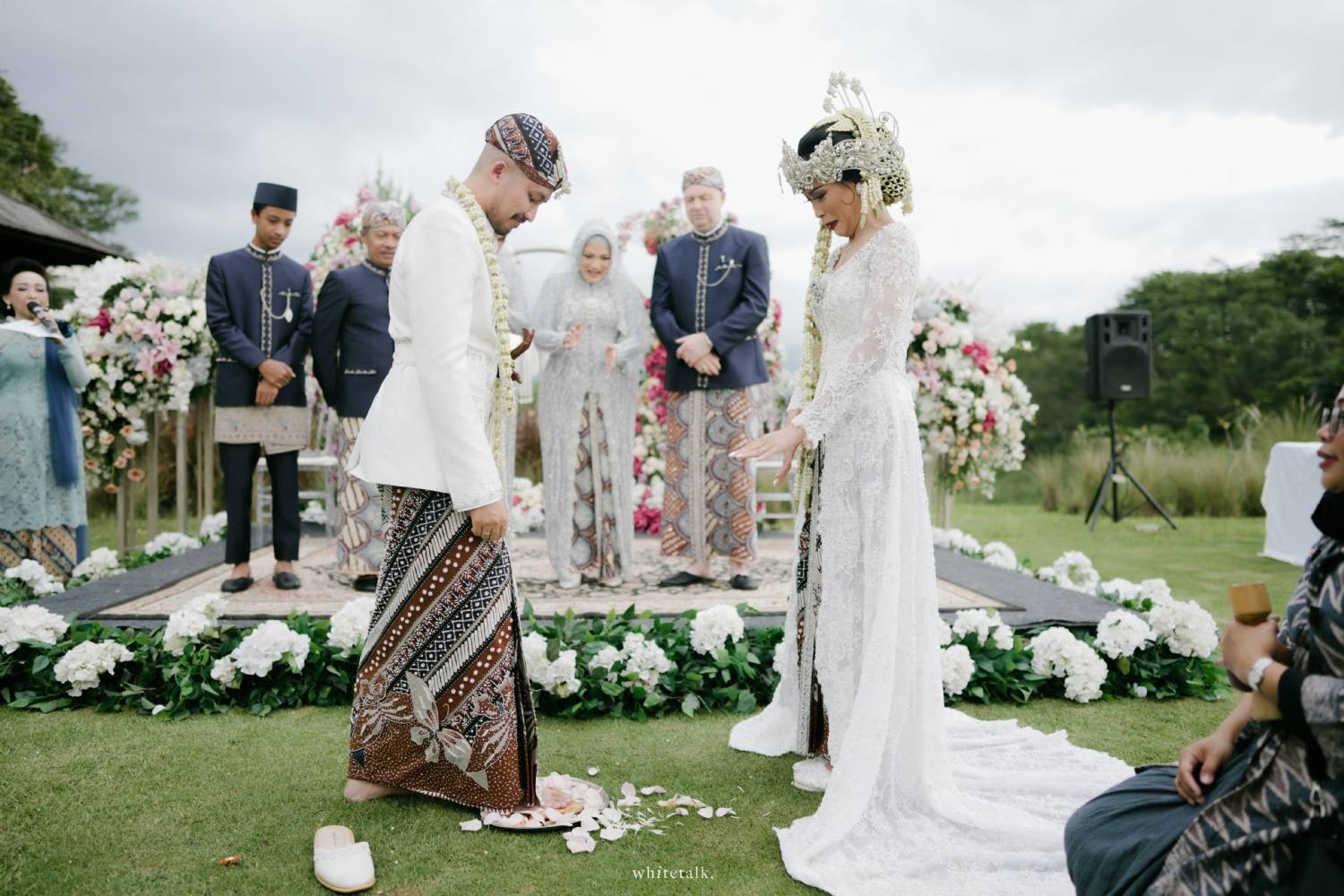
After the marriage ceremony, both sets of parents carry out the saweran ritual, as rice, money, turmeric, sweets and flowers are gently scattered over the bride and groom. While doing this, they recite verses about married life, wishing the couple blessings, prosperity, harmony and a long-lasting marriage. Next, the groom performs the nincak endog ritual by stepping on an egg, followed by the bride washing her husband’s feet with water from a prepared jug. This tradition symbolises a wife’s respect and devotion to her husband, which begins on their wedding day.
The final ritual is huap lingkung, during which the bride and groom are fed in turn by their respective parents. This symbolises that from this moment onwards, the parents will no longer care for or feed them like they used to, as the couple have finally begun their independent life together.
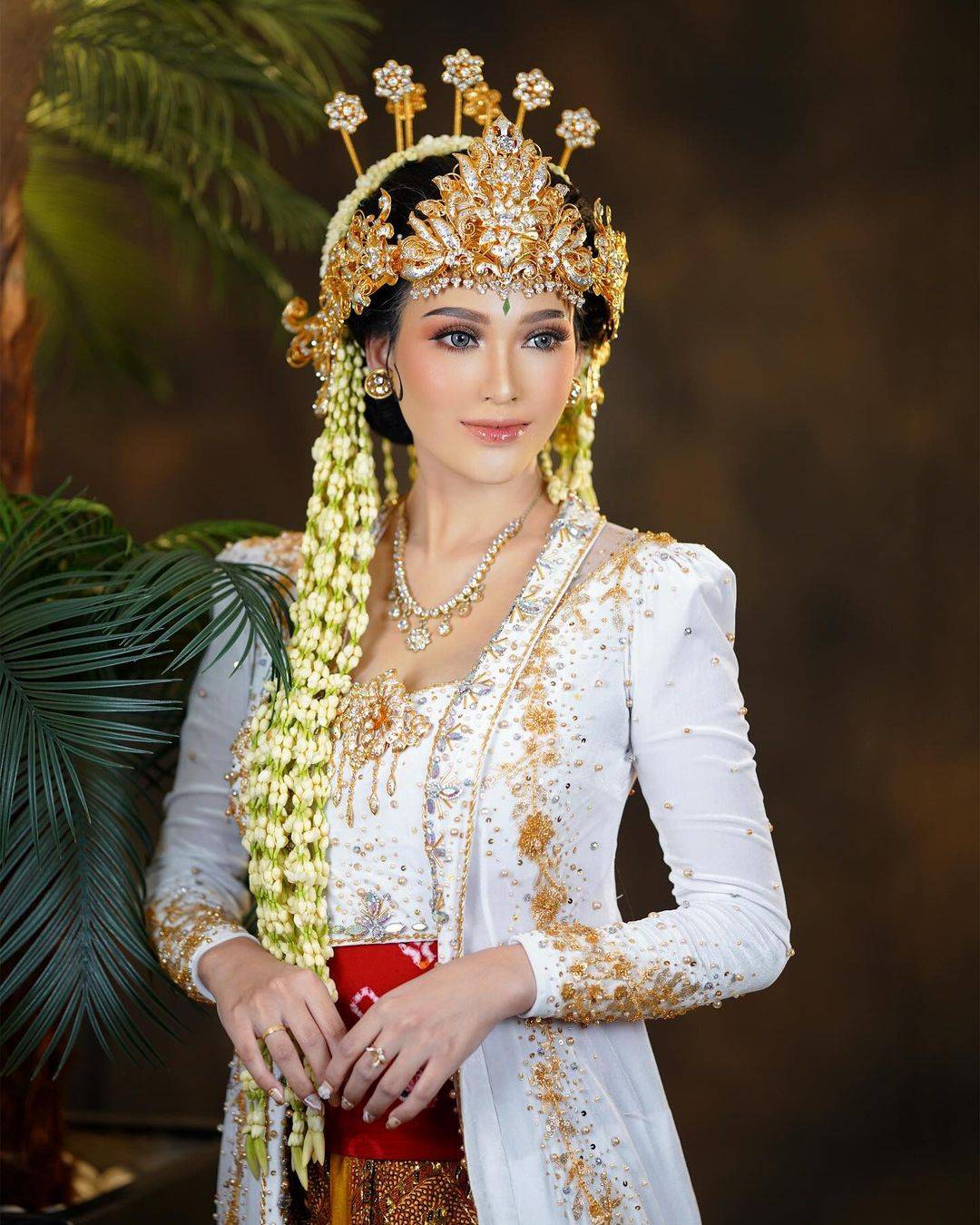
WEDDING ATTIRE
Sundanese traditional wedding clothing usually includes a modern or traditional kebaya for women and a beskap (an open traditional jacket) for men. These outfits are often white or bright in colour and are paired with batik cloth, such as lereng eneng or sidomukti.
For brides, there are four main types of Sundanese wedding attire. Sunda Putri features a Puspasari hairstyle that is neat, balanced and without a hair bun. The bride’s hair is rolled into a circular shape and decorated with jasmine garlands that fall to the chest. Sukapura uses a traditional Priangan and godek bun that curves inwards. Santana Inden Keraton is a style known for its purple or bungur colour, decorated with gold sequins. Lastly, Sunda Siger includes a traditional Sundanese crown worn on the bride’s head, adding to her graceful and radiant appearance.