



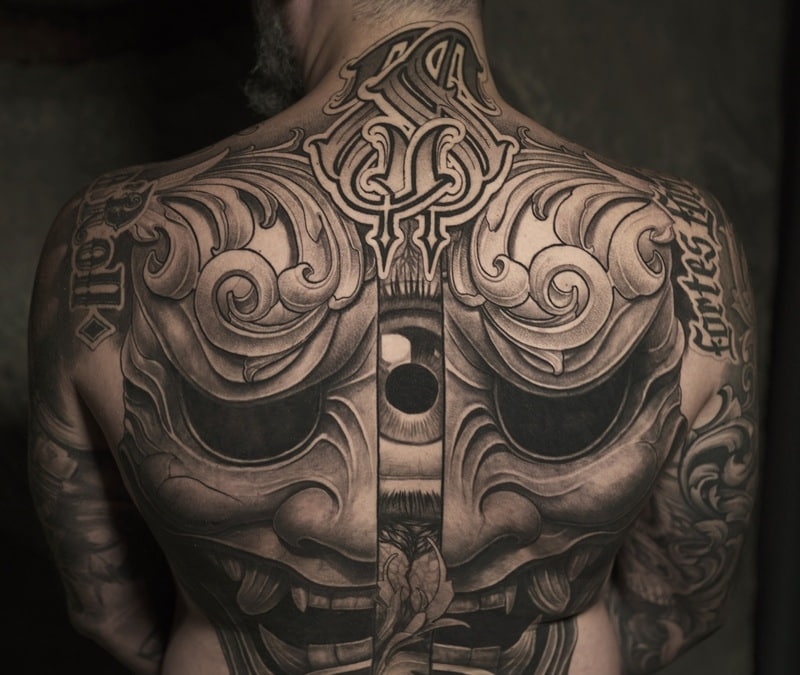
Almost everyone who gets tattooed in Bali has been tattooed somewhere else first—in Europe, Australia, North America, or Russia.
They arrive with aftercare instructions that worked perfectly well at home, follow them carefully, and are then surprised when the tattoo takes twice as long to settle or comes out patchy in places.
The instructions were not wrong. They were written for a different climate.
Bali is hot and humid nearly all year, and a fresh tattoo is an open wound. Heat makes you sweat, humidity feeds bacteria, and tropical sun pulls the colour out of new ink faster than most people expect. Healing here comes down to one principle that temperate-climate aftercare rarely emphasises: keep the tattoo clean, dry, and cool.
Here are the mistakes we see most often in our studio in Uluwatu—and what to do instead:
-
Wrapping it in cling film ‘to keep it safe’
This is the most common one and does the most damage. Kitchen cling film is still standard advice in many European studios, and in a cool climate, it is survivable. In the tropics, it turns a healing tattoo into a sealed, warm, wet chamber: the skin overheats, sweat has nowhere to go, and the wound stews in its own fluid—exactly the environment bacteria want.
If you need film at all, use it for an hour at most: the ride home from the studio, and no longer. Then take it off and let the skin breathe.
-
Treating ‘Second Skin’ as universal
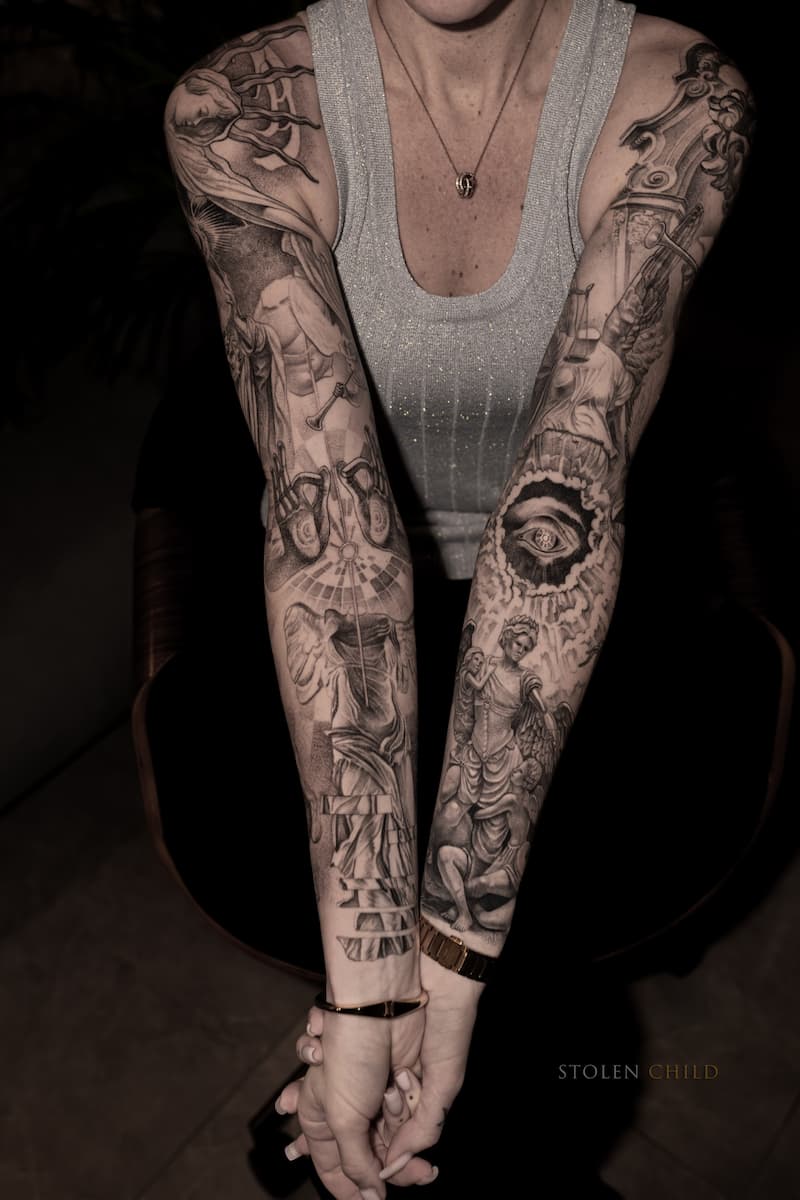
Breathable adhesive healing films are genuinely excellent—for the right tattoo. Small pieces, fine line work, lighter graphic tattoos all heal beautifully under them, even here.
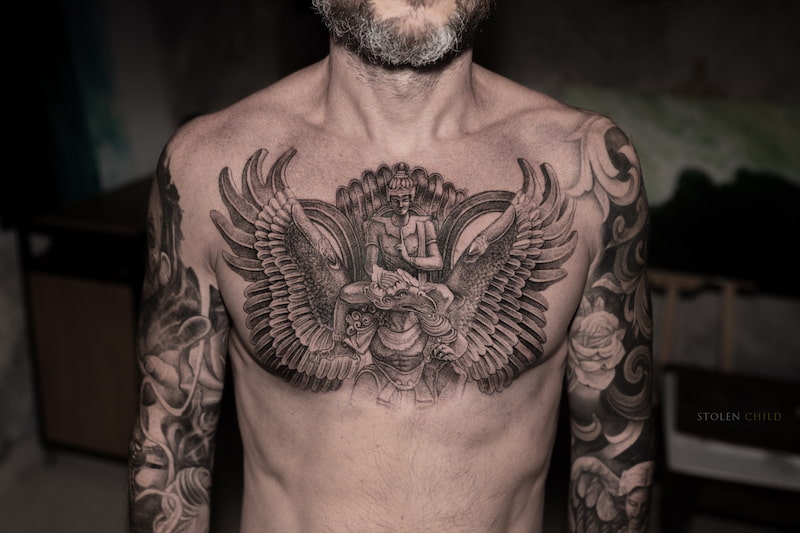
Dense, heavily shaded, or colour work is a different matter. Big saturated pieces release far more fluid than the film can cope with in this humidity, and the result is a pocket of plasma sitting against a raw tattoo for hours. We use these films selectively, never by default, and we do not put them on large solid or colour work.
-
Assuming the first 72 hours are the same anywhere
They are not, and this is where the climate really shows. In the first three days, your skin wants dry, cool air. In practice, that means staying in air conditioning as much as you realistically can, keeping larger pieces uncovered so they can dry and close, and staying out of direct sun.
For a small ankle piece, this hardly matters. For a sleeve or a back piece—where a large area of skin is traumatised and weeping—those three days largely determine how clean the healing will be. Guests who plan a tattoo for the middle of a packed itinerary of beach days and scooter rides are, in effect, choosing a slower heal.
-
Leaving the compress on all day
If you do have to go out into the heat, the correct move is a thin layer of a healing ointment—Bepanthen or any tattoo-specific aftercare cream—and a clean, soft cotton pad over the top. That part most people get right.
What they get wrong is the duration. Three hours is the maximum. Under a compress in tropical heat, the tattoo starts to sweat and the skin macerates—softens and breaks down in the trapped moisture. Cover it to get through the sun or the ride home, then take it off and let it breathe again.
-
Applying ointment like sunscreen
Thick is not better. A heavy layer suffocates the skin and traps heat; the tattoo needs to breathe through whatever you put on it. A thin film, reapplied roughly every three hours in the first days, after gently washing with lukewarm water and patting—never rubbing—dry, is what actually works.
The interval surprises people: at home, twice a day is normal advice. In this heat, a thin layer every few hours keeps the skin from drying and cracking without ever sealing it.
-
The ocean
We say this to every single client, and it is still the rule most often broken, usually around day four, usually with the phrase “just a quick swim.”
Open water on broken skin is a straightforward infection risk, and Bali’s warm ocean is not sterile. Pools carry their own problem: chlorine on a fresh tattoo is an irritant. Give it at least a week—longer for large work—before the sea, pool, sauna, steam room, or hot bath. Direct sun belongs on the same list: UV irritates healing skin and permanently fades fresh ink.
The honest summary
Size and density decide everything. A small fine-line piece is forgiving almost anywhere. A large, dense, or colour tattoo in a tropical climate needs genuine care for the first week, and the people who struggle are almost always the ones who applied cool-climate instructions to a body that is sweating 14 hours a day.
The short version we give our own clients:
- First three days: dry, cool, air-conditioned, kept open, out of the sun;
- Going out: thin ointment plus a soft compress, three hours maximum;
- No cling-film healing: breathable film only for fine line and lighter work;
- Wash and reapply a thin layer roughly every three hours;
- No sun, sea, pool, or sauna for at least a week.
If you are healing a tattoo here and are not sure your routine suits the climate—whether you got it with us or anywhere else on the island—ask the studio that did it. Most of us would far rather answer a message on day two than see a preventable problem on day ten.
By Samadhi Tattoo & Art Gallery, Uluwatu, Bali. All images are courtesy of Samadhi Tattoo & Art Gallery, Uluwatu, Bali.
Samadhi Tattoo & Art Gallery is a 200 sqm tattoo studio and working art gallery on the Bukit Peninsula in Uluwatu, Bali, specialising in black-and-grey realism and large-scale work. Feel free to visit our website: https://samadhi.ink