




By empowering local fishermen with new skills, income streams, and education programmes, Project Hiu is reshaping both lives and marine conservation in Indonesia.
Within its vast oceans, Indonesia has an abundance of marine biota, from coral reefs and seagrass to dolphins, manta rays, and over 100 species of sharks. Yet, despite this incredible biodiversity, many of these species, particularly sharks, face growing threats from overfishing and habitat loss.
Seeing this issue, an Australian conservationist and shark enthusiast, Madison “Pip” Stewart, came to Lombok with her innovative breakthrough to aid local fishermen in finding a sustainable income without damaging sharks’ viability. With Indonesia Expat, Madison shares a brief overview of her current project, including the initiatives and programmes she and her team are running, an interesting fact about sharks, and many more insights.
Hi, Madison! Could you share a brief introduction about your background? When did you first become interested in shark conservation?
I was born and raised in Australia, specifically on the Great Barrier Reef. Growing up in the ocean and around sharks, my life has been centred around the natural world. As I grew older and noticed a shift in the health of our oceans, sharks were disappearing from certain parts of the Great Barrier Reef where I grew up diving. Therefore, I wanted to do something about it.
I began to dedicate my time to conservation, so I decided to drop out of school, pursue filmmaking, and focus on sharks. This eventually led to my first documentary at the age of 19, titled Shark Girl. Since then, I have worked on Shark Week, documentary films and conservation efforts around the world. If I had to say there is one thing I am known for now, it’s the documentation of shark fisheries and the wildlife trade. This has taken me all over the globe, using tactics to film illegal trades and expose devastating fishing practices.
What initially motivated you to establish Project Hiu?
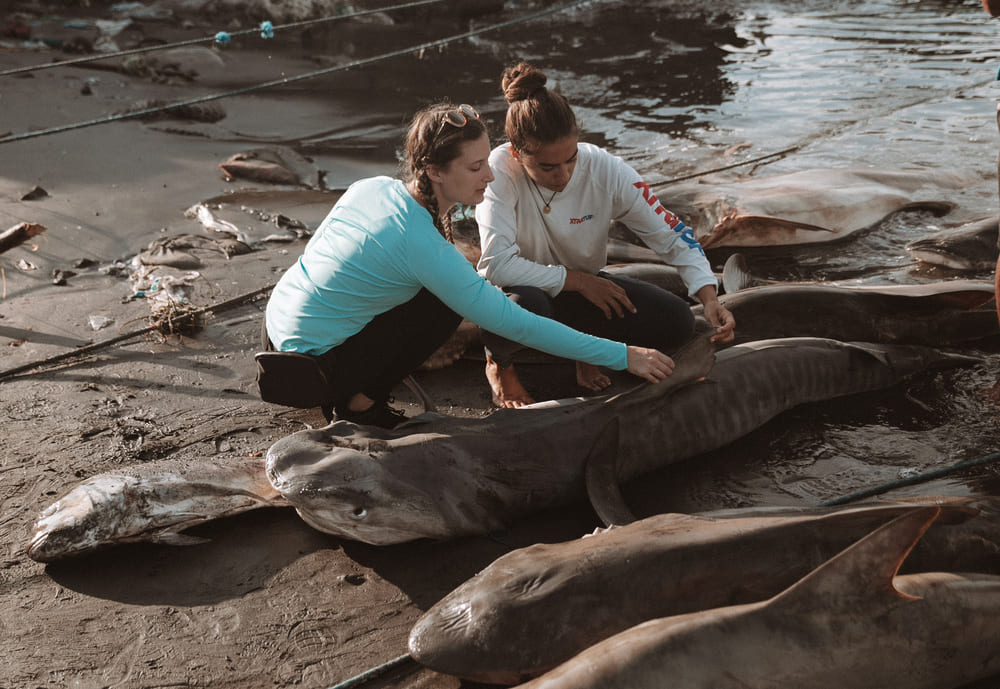
My initial motivation to start Project Hiu (a.k.a. Project Shark) was the kindness of the shark fishermen in Lombok. I travelled to Indonesia, specifically to Lombok, in 2017 as part of a film crew making a documentary called Blue. It was my first time seeing such a massive shark catch. I will never forget how comfortable I felt in the market documenting the dead sharks the fishermen had caught. Usually, you are faced with hostility at a moment like this, but they weren’t mad at us; they were actually willing to sit down and talk to us.
In the year that followed, I went back to visit them again. I wanted to be more involved, and as a hardcore conservationist and shark lover, I started to see the fishermen in a different light and thought that a solution to the fishing issue could actually come from within. That’s when I got the idea to introduce them to another form of income, give them a choice, instead of condemning them as they have been by conservationists in the past.
Where does most of Project Hiu’s work take place?
Project Hiu operates in East Lombok, not only because it’s home to a large shark fishery, but also because it’s where I was first introduced to the shark trade in Indonesia. As I started to become more involved in the lives of the fishermen in Lombok, it felt more and more like home to me. The community we work with holds incredible amounts of generational knowledge and fishing skills. I learnt early on that if I was going to make a change, this would be a good place to start.

What are some of the flagship initiatives or programmes that Project Hiu has launched so far?
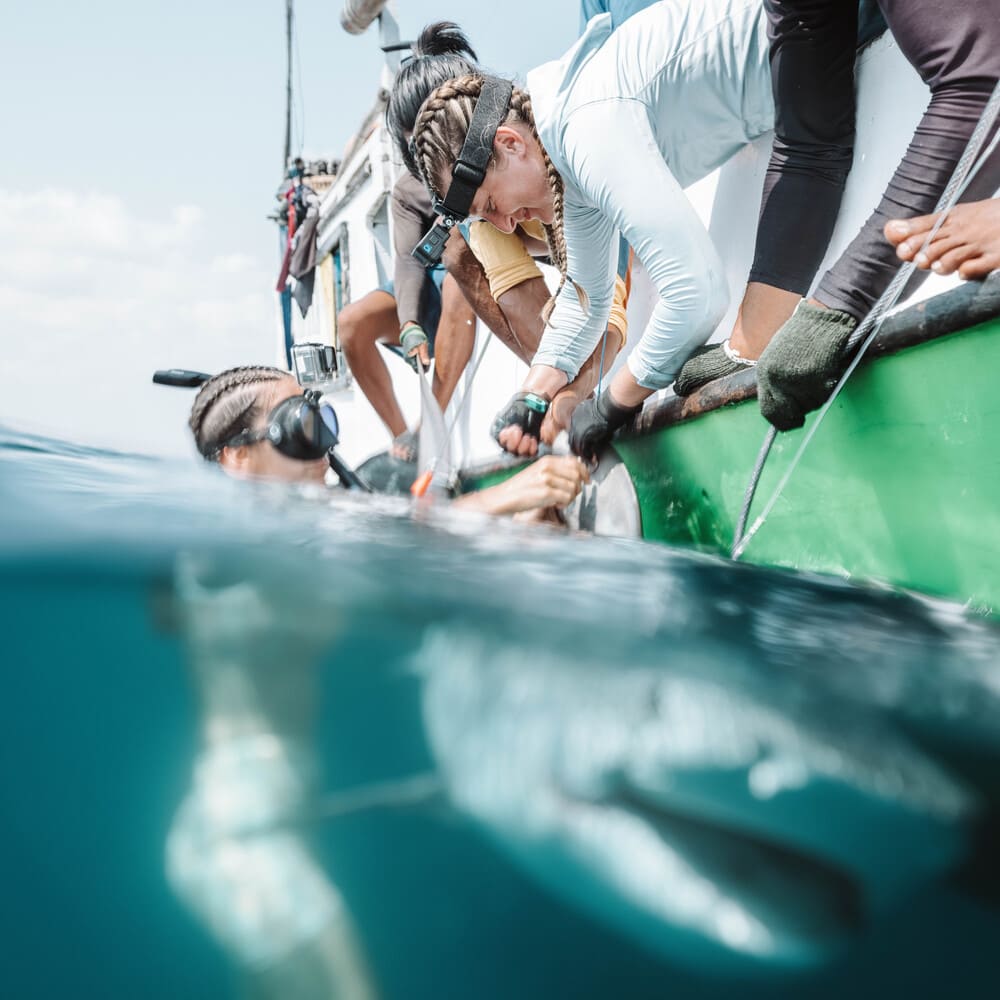
We’ve created some incredible movements within the project that each, in their own small way, contribute to the oceans. We built a water tank to collect and filter rainwater to supply the kids at the school within the fishing community with clean and free drinking water, something they never had before. This led to increased attendance at the school. We launched a research programme to catch and tag the first tiger sharks in Indonesian waters, giving us an insight into their movements, helping us to protect them better. We also have a scholarship programme called the Bethany Smith Scholarship, in which we take some of the younger children of shark fishing captains and pay for their education, starting from school to university levels.
What impact have these programmes had on local communities and on shark conservation efforts to date?
As of this month, we have saved more than 6,000 sharks by preventing fishing trips through hiring vessels for tourism. We also gathered the first telemetry data on the movements of tiger sharks in Indonesian waters, and, my personal favourite, we recently aided in a groundbreaking discovery relating to great white sharks, proving the longest one-way migration on record, from South Africa to Indonesia.
I think the community would be the best people to tell you how they feel about the work we’ve done and what it means to them, but it has been wonderful to create initiatives hand in hand with them that benefit the humans behind shark fishing. They treat us like family, and that is a bond none of us ever expected, especially as we were brought together over sharks, a topic on which we initially had very different views.
How has the local shark-fishing community responded to Project Hiu’s initiatives?
It’s not been without its struggles. Having a young foreigner come into your community and challenge what you do for a living is not an easy thing to tolerate, so from some of the fishermen we have yet to work with, we get some hesitation. This is another reason we aim to help the school on the island, so that everyone can benefit from our presence. However, with the majority of the community, I have felt so incredibly welcomed. I was recently invited by them to attend the school graduation, and through every bump in the road, it’s never just us fighting for the project. The fishermen we work with see it as their project, and they are proud of it.
In your experience, what do people most often get wrong about sharks?
We have been taught to fear sharks, and this is something enforced by the media. The truth is, they are not deadly, mindless killers, and they don’t see us as their food. In fact, we actually need them. Studies have shown the importance of sharks in our oceans, but most people don’t understand how deep that goes. In some parts of Australia, for example, the existence of sharks affects the growth of the seagrass through their predation on grass-grazing creatures. That’s why sharks are actually important for our lives.
What are your hopes or long-term goals for Project Hiu in the next few years?
One of my major goals for the project is to create a self-sustaining ecosystem run by the fishermen, one that can continue to function even in my absence. We’ve already seen success with the introduction of our storefront in Kuta Lombok, where we now book passing tourists onto snorkelling trips from our boats. I would love to see our tourism efforts grow so we can hire more boats and, one day, not only protect a large area of Indonesia’s ocean from shark fishing, but also support the shark-fishing community and help them transition to a new form of income.
Last but not least, how can our readers reach you to support Project Hiu’s mission?
Please follow us on Instagram (@projecthiu) to learn more about how to get involved or to help us raise awareness about shark fishing in Indonesia. You can also visit us in Lombok and join a trip on our repurposed shark-fishing vessels, meet our amazing crew, and do whatever you can to protect sharks.