




Although it is not anchored by a solid enough foundation—including an execution that still comes across as too careful—Keisya Levronka’s second studio album confidently showcases her sense of adventure and her spirit for self-transformation.
Growing up in the late 1990s and early 2000s, one of my favourite weekend watches as a child was Power Rangers in Space. For what was supposed to be a space opera for kids, the show imparted more nuanced wisdom than one might assume. For instance, back then, I used to wonder why these adults, even after they transformed into Power Rangers, still got occasionally knocked out by their enemies whose powers were not as flashy or as impressive. Only years later did I realise that having snazzy superpowers never guaranteed a victory on the battlefield in the first place. That was also the reason why there were scenes in which these Power Rangers still had to hit the gym and train how to fight with their bare hands. Everything, even in Power Rangers in Space, always comes down to the basics. The foundation.
As soon as I was done listening to Keisya Levronka’s latest album, rombak, that childhood memory of Power Rangers in Space immediately came back to me. In her second era, the 23-year-old Indonesian artist is louder, fiercer, and more courageous than ever before. But when it comes to it, rombak comes across as less than the sum of its parts. The album is not a victory lap, and our heroine may still need to live and fight another day.
To be fair, what tethers the eight songs in rombak is Keisya Levronka’s well-earned confidence. There is zero note of cockiness or falsified swagger, either when she takes things hot and high (“Aku Bukan Dia”) or when she takes things cool and slow (“Sembunyi Lebih Lama”). No longer an industry newbie, she sounds more comfortable getting up close and personal with her audience as well (“Tawamu”). It is also commendable to see her taking on the writing of three songs for the album. If rombak is meant as a way for Keisya Levronka to break free from being boxed in by the Indonesian music audiences after her biggest hit to date—the pop elegance that is “Tak Ingin Usai” —then rombak very much succeeds in its mission.
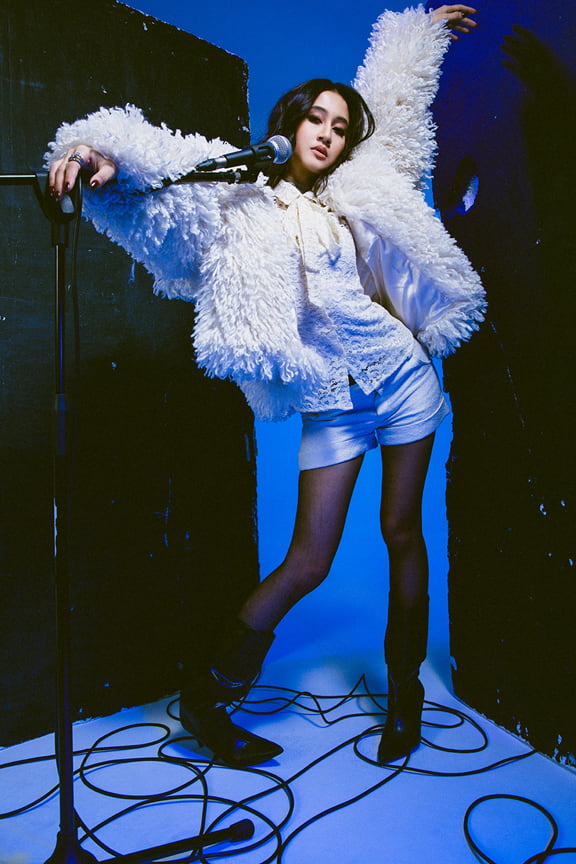
And then, there is the pop-rock music production. Is it refreshing in comparison to Keisya Levronka’s discography thus far? Certainly. But is it a breath of fresh air for the Indonesian music industry at large? Honestly, not so much. As a result, rombak sounds nostalgic—harking back to, in particular, Demi Lovato’s Don’t Forget (2008) era and Sherina Munaf’s Primadona (2007) era—instead of completely singular. The foot-stomping “Lukis Hari Ini”, one of the album’s standout tracks, kicks off rombak in such an exhilarating, electric fashion that it would surely charm music audiences to listen more. By the time rombak enters its fifth track (“Pelarian”), however, the album is already caught up by a soupy sense of deja vu. When it comes to a music album, antiquity without enough modernity can somewhat feel ordinary.
Still and all, in terms of production quality itself, rombak marks a leap forward for Keisya Levronka—and she, indeed, chose the right producers for her vision: S/EEK, Lafa Pratomo, Petra Sihombing, and Rendy Pandugo. For instance, thanks to Lafa Pratomo’s clever production, as well as his keen ears on the pop-rock subgenre, “Tak Pantas Terluka (Lagi)” brings more oomph and the much-needed tornado to “Tak Pantas Terluka”—which was originally released in 2023. As cognizant as “Pelarian” may sound to the ears, the well-produced ballad might move audiences my age to better cherish that magical moment in the past when we first discovered the fiery pop-rock goddesses who once ruled our Sony Walkmans and Panasonic boomboxes.
Historically speaking, the pop-rock subgenre gained mainstream popularity in the first place because young artists, especially the female ones, wished to rebel against the glossy and overly polished artistry that pop music used to be known for—aiming instead for a raw and authentic style that better mirrors real life’s chaos and messiness. Unfortunately, rombak seems to have overlooked this key point. Despite Keisya Levronka delivering powerful vocals worthy of standing ovations—especially in the songs “Aku Bukan Dia” and “Tak Pantas Terluka (Lagi)”—her vocal delivery still comes across as overly regulated and unnecessarily exact. Moreover, in terms of the songs’ narrative themes and lyrical style, Keisya Levronka and her songwriters are still pretty much rooted in carefulness. Lyrics-wise, even in her most emotional song, Keisya Levronka is too cautious not to be too raw.
Ironically, even though rombak steps up in terms of style, Keisya Levronka’s debut album, Levronka (2023), prevails by a mile in terms of foundation and substance. Putting the production factor aside, the lyrical and melodic features of the songs in rombak lack the bones of the songs in Levronka. For instance, as the album’s closer, the songcrafting of “Rayakanlah” lacks the lyrical poetry, vividness, and wisdom that makes “Lagu Untuk Hari Ini” such a memorable epilogue. Melodically, “Lagi Lagi Hanya Kamu” is bereft of the same addictive, living-rent-free-in-your-brain quality as “Jadi Kekasihku Saja”. The most discerning music audiences and fans would agree with me that there are actually more golden treasures in Levronka than just “Tak Ingin Usai”.
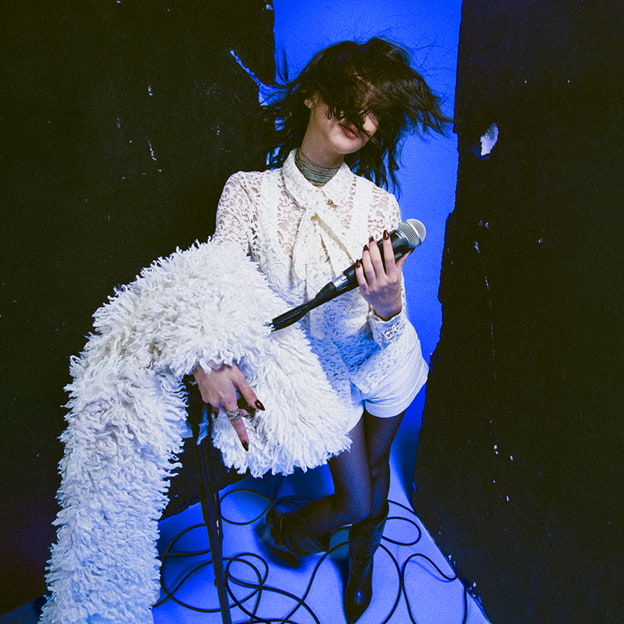
There is nothing wrong with revamping one’s sound. Having said that, in pushing their creativity, an artist should never forgo the importance of refining the basics and the foundations. A flashy sound will sound half-baked if the songs that become its foundation are wanting. An engaging, well-developed vocal will sound “tanggung” if the singer is still being too cautious. Emotional narrative will generate less impact if the emotion is filtered down too much. Just like my childhood heroes, the Power Rangers—having futuristic laser weapons and a super-cool Mega V1 Robo Zord mean nothing if my heroes haven’t mastered how to throw a proper punch.
But hey, despite the album’s flaws and improvements, it is such a delight to see pop artists like Keisya Levronka still retaining her sense of fun, as well as her sense of adventure. As a music journalist, I never expect younger artists like Keisya Levronka to make a golden, perfect record. The 20-something era is supposed to be the time for all artists to take risks, try things out, flip the script, make beautiful mistakes, and gain some wisdom. Even though the Power Rangers didn’t always win their battles, their youthful energy always kept them going in their adventure. For the young, it is never about eternal victory or the destination; it is about the journey.
All images are courtesy of Universal Music Indonesia.