




National Children’s Day falls on the 23rd of July. It is a commemoration deeply entrenched in history as well as significance.
The Indonesians commemorate the 23rd of July as National Children’s Day. Even though almost all countries around the world commemorate their respective version of Children’s Day, Indonesia’s very own National Children’s Day is relatively different due to how Indonesian children, in terms of their cultural background, education, psychological environment, as well as legal rights, can be considered unique and fascinating to study. In fact, at one point in the past, a survey made by Varkey Foundation found that Indonesian children were among the happiest in the world. Here, Indonesia Expat breaks down what expatriates need to know about National Children’s Day in Indonesia and, perhaps more importantly, the remarkable future generation who inspired it in the first place.
The following fun facts are listed in no particular order.
The date of National Children’s Day was changed multiple times
Before being officially celebrated on the 23rd of July, the date of National Children’s Day had undergone several changes. Initially, National Children’s Day was known as Pekan Kanak-Kanak (Children’s Week) and was celebrated on the 18th of May, based on an agreement reached by the Indonesian Women’s Congress in 1951. However, at the Indonesian Women’s Congress from the 24th to the 28th of June, 1964, the commemoration date was changed to the 6th of June, which also happened to be President Soekarno’s birthday. The date of National Children’s Day was changed again in 1967 — this time on the 18th of August, coinciding with the ratification of the 1945 Constitution, but many were later dissatisfied because the date was deemed too close to Independence Day. After a long process and several changes to the date, finally, Prof. Dr. Nugroho Notosusanto, serving as the Indonesian Minister of Education and Culture in 1984, agreed to change the date to the 23rd of July.
National Children’s Day was made official by President Soeharto
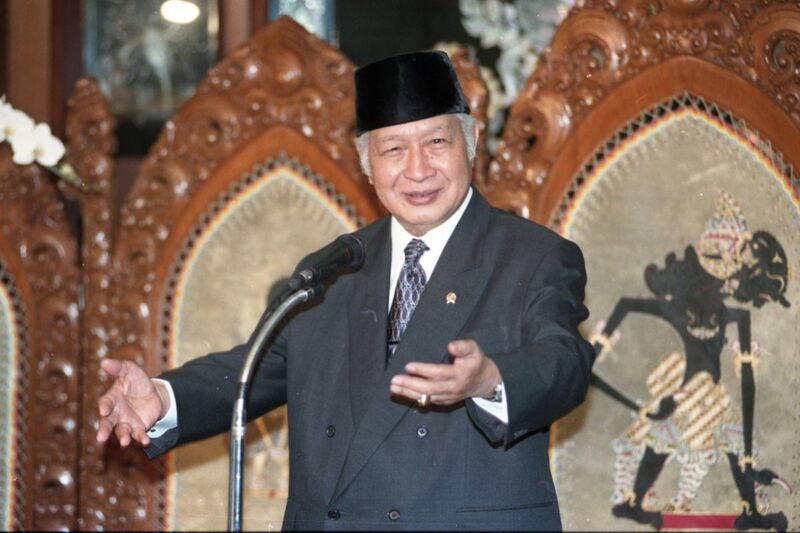
Even though the conception of National Children’s Day took place during Soekarno’s presidential era, it was his successor, President Soeharto, who made it official. After Prof. Dr. Nugroho Notosusanto, serving as the Indonesian Minister of Education and Culture in 1984, agreed to change the date to the 23rd of July, Soeharto issued Presidential Decree Number 44 of 1984 concerning National Children’s Day, which was later signed on the 19th of July, 1984. This Presidential Decree, ultimately, became the basis for the commemoration of National Children’s Day to this day.
National Children’s Day is different from World Children’s Day
Even though the two commemorations might seem similar, National Children’s Day is actually different from World Children’s Day. On the 14th of December, 1954, a joint resolution by India and Uruguay was passed in the UN General Assembly to encourage all countries to institute what was initially billed as “Universal Children’s Day” in order to promote mutual exchange and understanding among children, as well as the ideals of the UN Charter. Currently, “Universal Children’s Day” is better known as “World Children’s Day” and is celebrated every year on the 20th of November, coinciding with the adoption of the United Nations General Assembly’s Declaration of the Rights of the Child, which took place on the 20th of November, 1959.
National Children’s Day has a different theme every year
An interesting fact about National Children’s Day is that the theme is different every year. In 2018, the theme was “Agile, Empathetic, Brave, Superior, Healthy”. In 2019, the theme was “We, Indonesian Children, We Are Happy”. In 2020, the theme was “Protected Children, Advanced Indonesia”. However, in 2020, the National Children’s Day celebration was held online due to the pandemic. For 2025, the Indonesian government adopted the theme “Great Children, Strong Indonesia Towards Golden Indonesia 2045”. This theme has several ongoing sub-themes, namely: (i) “Golden Generation Free from Stunting: Investing in Nutrition from an Early Age”; (ii) “Digitally Smart Children: Safe and Positive in Cyberspace”; (iii) “Inclusive Education for All: No Child Left Behind”; (iv) “Stop Child Marriage: Realising the Dreams of Indonesian Children”, and; (v) “Protected Children Towards Golden Indonesia 2045: Stop Violence Now!”
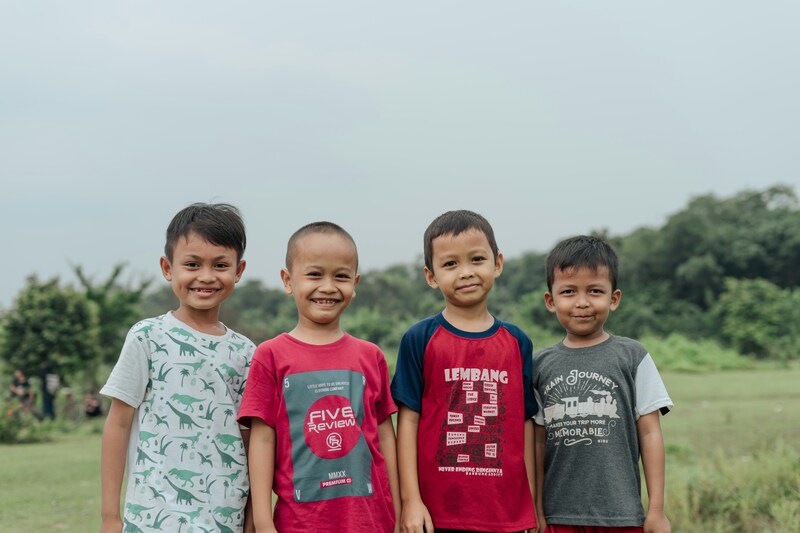
National Children’s Day harbours a significant meaning
Both the Indonesian government and the public see the commemoration of National Children’s Day as an important opportunity to raise awareness and participation in ensuring children’s rights. These rights include the right to live, grow, develop, and participate in life, in accordance with human dignity, and to receive protection from violence and discrimination. The National Commission on Human Rights also emphasises that children deserve serious attention from both the government and their parents. The commemoration of National Children’s Day is an opportune time for parents to provide guidance and direction to their children without controlling or imposing their will on their future.
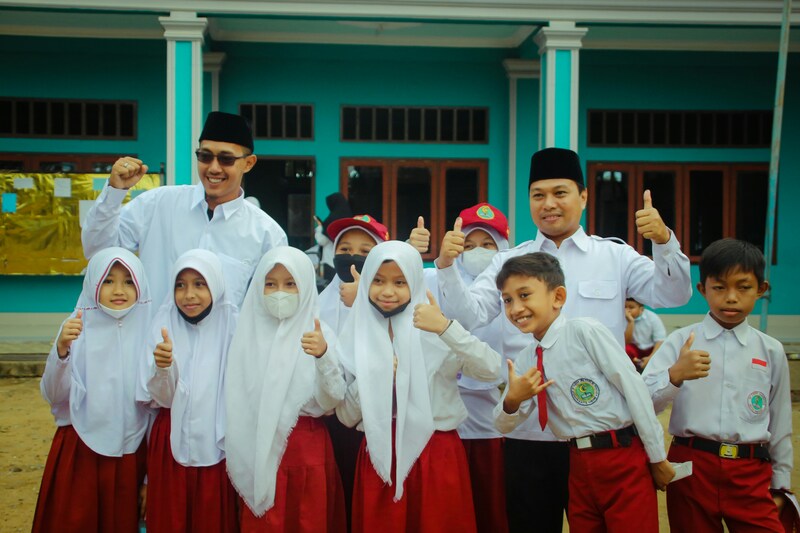
The Indonesian government acknowledges children’s rights
Several legal articles address Indonesian children’s rights, including:
- Law No. 39 of 1999 concerning Human Rights, which states, “Every child has the right to receive protection from parents, family, society, and the state. Children’s rights are recognised and protected by law”;
- Law No. 23 of 2004 concerning the Elimination of Domestic Violence, which discusses the prohibition of domestic violence, both physical and psychological. This article also discusses forms of child protection, particularly regarding physical and sexual violence;
- Law No. 35 of 2014 concerning Child Protection, which states that while children are in the care of their parents, guardians, or other responsible parties, they must receive protection from various forms of violence, political involvement, and torture.

Indonesian children are more accustomed to waking up early
Turns out, most children in Indonesia are accustomed to waking up early, which is around 5.30 to 6 AM. This is due to how Indonesian families tend to have many activities in the morning — for instance, Muslim children are required to perform the morning prayer. According to the data obtained by the Benesse Educational Research and Development (BERD) Institute from four countries (Indonesia, Japan, China, and Finland), on a typical day, 11.1% of Indonesian children wake up before 5.30 AM, whereas 31.9% of them wake up at 6 AM.
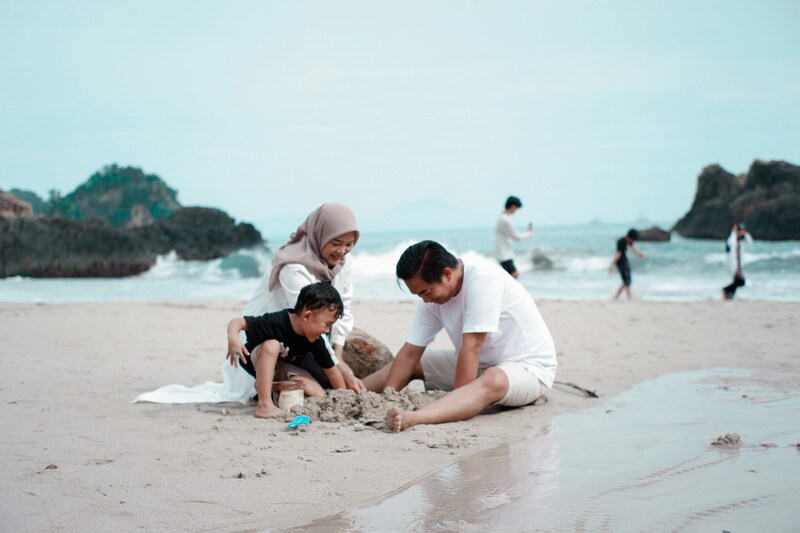
Indonesian children are generally raised to be family-oriented
According to the data obtained by the Benesse Educational Research and Development (BERD), 75.8% of mothers in Indonesia expect their children to be people who are devoted to their families. Indonesian mothers tend to perceive their children as figures who will inherit the family lineage for the future, the ones who will take care of their parents in the future, and those who can fulfil their parents’ dreams as well. Furthermore, according to the Chairperson of the Early Childhood Education Teachers Association, Dr. Sofia Hartati, M.Si, Indonesian parents tend to find the presence of children comforting as the latter may provide a sense of security, especially once the parents enter old age.
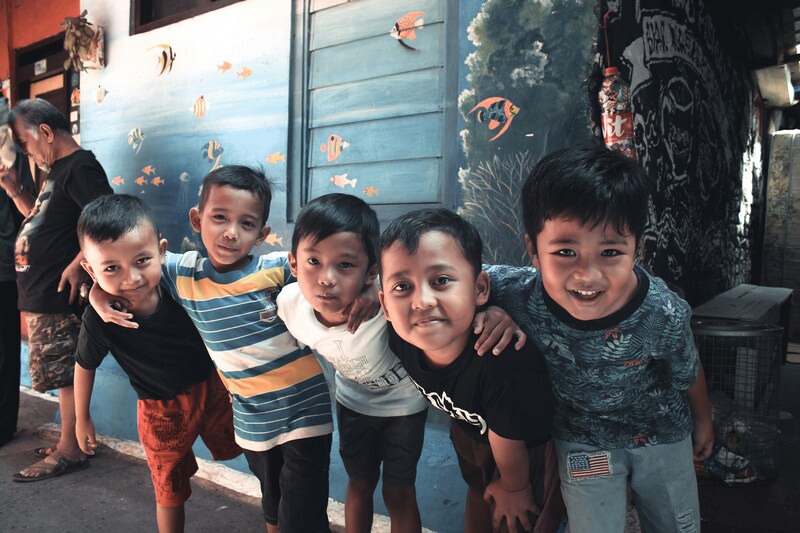
The number of Indonesian children has started declining
Indonesia is facing significant changes in its demographic structure, with the number of children aged 0-9 years as a proportion of the total population declining. According to the National Population and Family Planning Board’s data, the year 2024 showed a decline in the number of young children in Indonesian households. In 2024, *only* 12,926,644 families had children under 5 years of age, with 3,784,725 families having children aged 0-23 months and 9,141,919 families having children aged 24-59 months. This trend is expected to continue until 2050, possibly bringing significant consequences for population planning and human resource development in the future.

Entering the current decade, Indonesian children are experiencing the ‘fatherless’ phenomenon
As Indonesia entered the 2020s, more Indonesian children have been discovered to have grown up without a paternal figure in their household. According to 2021 data from the United Nations Children’s Fund, approximately 20.9% of children in Indonesia grow up without a father. Furthermore, according to the 2021 National Socio-Economic Survey, the number of young children in Indonesia reached 30.83 million. Of this number, 2.67%, or approximately 826,875, do not live with their biological father or mother. Furthermore, 7.04%, or approximately 2,170,702, live with only their biological mother. Several factors have come into consideration, such as divorce between the father and the mother, the death of the father, and the patriarchal culture that dictates the father not to get involved in childcare. The Indonesian government has started addressing the ‘fatherless’ phenomenon. On National Children’s Day in 2024, Commission VIII of the Indonesian House of Representatives ratified Law No. 4 of 2024 concerning the Welfare of Mothers and Children in the First Thousand Days of Life. This law not only improves the welfare of mothers and children but also provides fathers with paid leave to accompany their wives in caring for their newborns.