



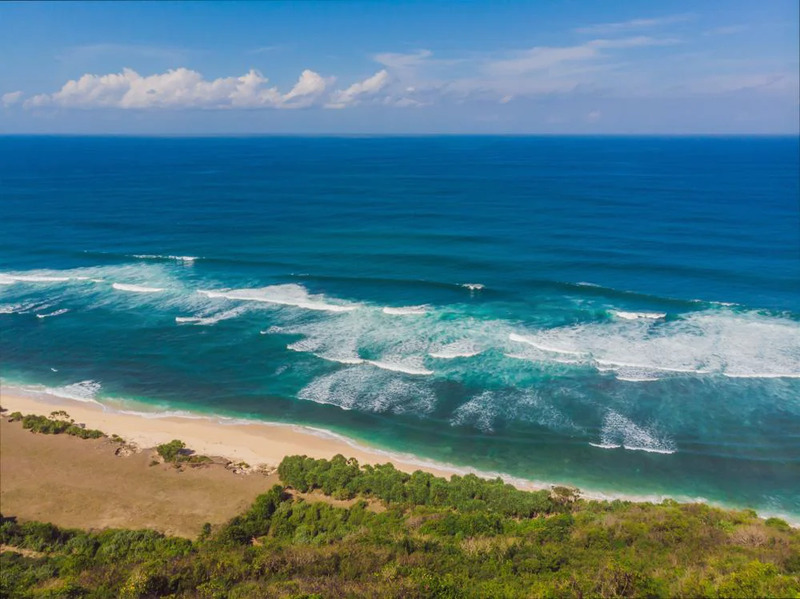
From surf breaks to multi-billion-dollar resorts, West Lombok is set to become Indonesia’s next premier travel hotspot, offering sustainable luxury and local opportunities.
The West Lombok Regency Government in West Nusa Tenggara plans to develop the surfing area of Bangko Bangko, Sekotong District, into a premier tourist destination.
On Sunday, the 2nd of November, West Lombok Regent Lalu Ahmad Zaini stated, “At present, there are parties interested in establishing it as a national surfing destination.”
Bangko Bangko lies 73 kilometres from Mataram, the capital of West Nusa Tenggara. Its main draw is the large, consistent waves, particularly during the peak holiday season in July and August. Its reputation has been recognised by the World Surfing Association, which once ranked Bangko Bangko sixth among the ten beaches with the most formidable waves worldwide.
In addition to its impressive surf, Bangko Bangko boasts a one-kilometre-long, desert-like beach known as Desert Point. This unique feature attracts not only international surfers but also tourists from nearby Nusa Penida, Bali, due to its relatively close distance.
To support this development, the West Lombok Regency Government has planned infrastructure upgrades, including the paving of a 15-kilometre dirt road from Selegong Hamlet to the Bangko Bangko intersection. This initiative not only aims to improve access to Desert Point but also realises the vision of making Bangko Bangko Bay an alternative gateway to Lombok for tourists arriving from Bali, alongside Senggigi.
Meanwhile, in the Buwun Mas area, developers are transforming 149 hectares of agricultural and coastal land into Marina Bay City, a multi-billion-dollar resort often referred to as the ‘Miami of Indonesia.’ Led by Australian investors, the project is set to feature a marina, luxury villas, and hotels—a large-scale tourism development believed to have the potential to transform one of Lombok’s poorest districts.
Moreover, Adrian Campbell, the project’s chief executive, explained that sustainability features include a waste-to-energy system, solar-powered transport, electric vehicle charging stations, and community agriculture. He also pledged living-wage employment for local residents, scholarships for teachers, and a commitment to hiring workers from the village.
“We made the decisions in consultation with the Buwun Mas community. They understand that we are bringing prosperity and creating long-term jobs. This isn’t merely temporary construction work—it’s a source of sustainable employment for the future,” Campbell said.