



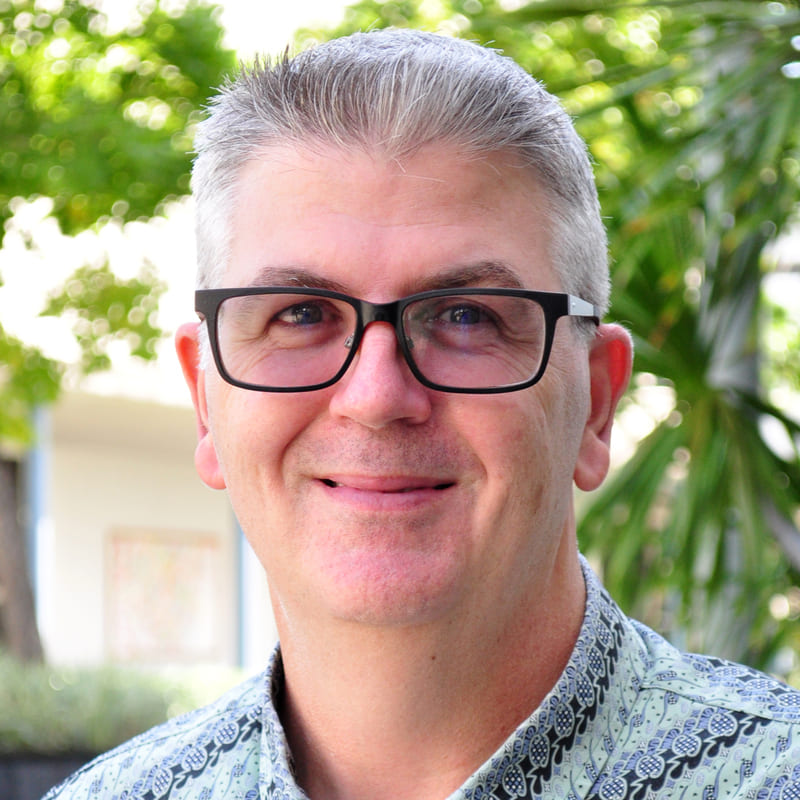
For over three decades, John Milliss (otherwise known fondly as Pak John) has been a steady guiding force in Bali’s international education scene.
An Australian educator with a Master’s specialising in Special Educational Needs, John arrived in Bali in 1993 and found both a new home and a lifelong mission: to shape a school where every child feels seen and supported.
Since joining the Australian Independent School (AIS) Bali in 1999 and stepping into the Principal role in 2007, he has led the campus through periods of growth, innovation, and change, all while keeping its community-driven spirit at heart.
His journey from teaching in Sydney’s inner-city schools to leading one of Bali’s most respected international schools reflects both a deep dedication to inclusive education and a remarkable legacy of stability and leadership.
In the joint interview with AIS Jakarta, you emphasised the IB Diploma’s role in fostering adaptability and critical thinking. Have you seen new examples of how this is playing out among your current students or recent graduates?
Demonstrating adaptability and critical thinking is crucial for students in today’s ever-changing world. These are not just “soft skills”; they are essential for academic success and future career readiness. We saw this clearly when our students showed adaptability during the COVID-19 pandemic, when our students had to adjust quickly to new learning formats. Adaptability also comes from embracing new challenges and learning from failures. Our students also demonstrate their critical thinking by continually analysing and evaluating information, and by exploring multiple solutions to complex problems.
AIS Bali follows the Australian Curriculum up to Year 10 and the IB Diploma in senior years. How do you support students in making the transition from the Australian Curriculum to the IB system in Years 11 and 12?
The transition from the Australian to the IB curriculum is a smooth one, as both curricula place focus on inquiry-based learning. The Australian Curriculum is designed to equip students with the skills and mindset needed to succeed in any senior programme, including the IB. By the time they enter Years 11 and 12, students are well-prepared to take on the challenges of the IB with confidence.
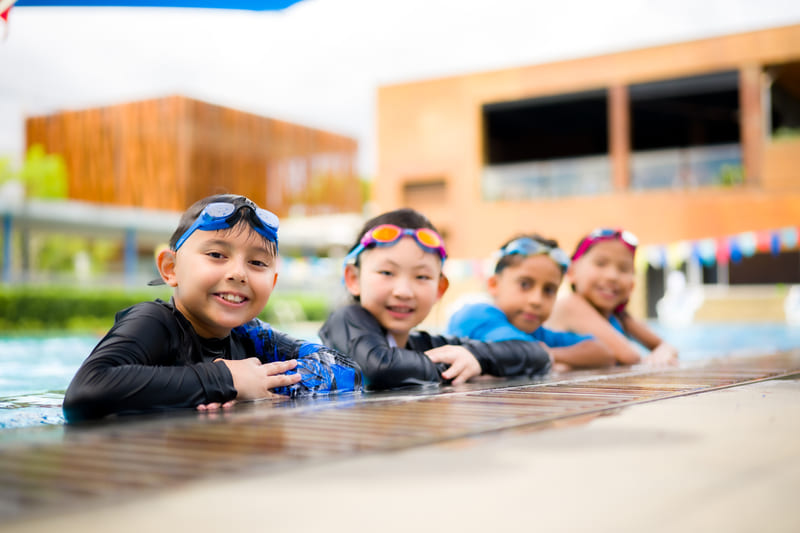
How have the campus facilities enhanced not just academics, but also extracurricular activities and wellbeing?
We are fortunate at AIS Bali, as we moved into our purpose-built campus in 2018. The facilities available to our community are among the best on the island. They are modern and support not only our academic programmes but also our co-curricular activities and student wellbeing.
We have just completed our final phase of development, opening our new High School buildings that include an Innovation Hub that all students can utilise as part of their STEAM programmes, a commercial cooking facility, two additional science labs, which brings the total to four, a dance/drama space, and an office for our new counsellor.
These facilities allow our students to access and engage with the curriculum in a comprehensive manner and allow us to offer a wide range of co-curricular activities such as Robotics and coding, dance, drama, and science club. Our new counselling facility also offers support for student wellness in a relaxed, comfortable setting.
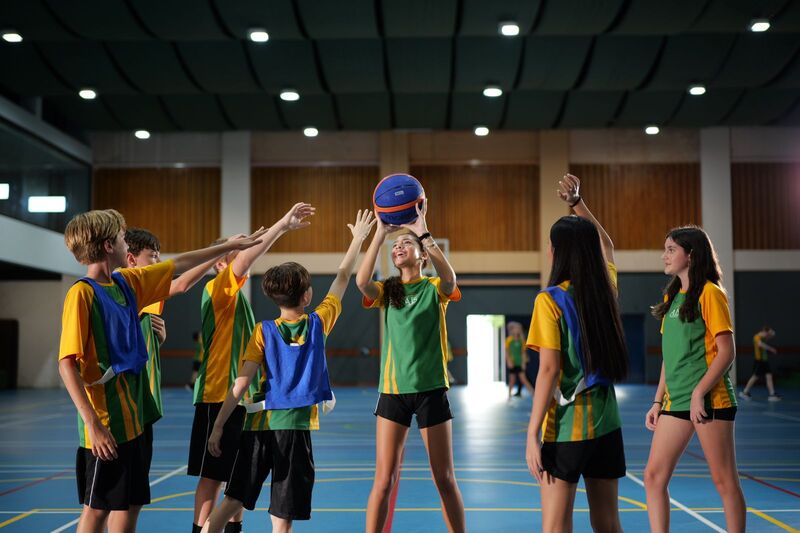
AIS has always welcomed students from a wide range of cultural and learning backgrounds. How does the school ensure inclusivity as an everyday reality?
We ensure inclusivity as an everyday reality through a variety of practices that are mandated by our Inclusion Policies, our Guiding Principles and school programmes. Staff are required to demonstrate an inclusive, kind, and caring manner when engaging with students.
Our special events celebrate and highlight our diverse community, while our curriculum requires explicit teaching about diversity and values. We develop individual programmes for students where needed, and we support diverse learners in a mainstream classroom setting. Our focus is always on the holistic development of all students as well as ensuring their academic success.
How do you maintain relationships with alumni, and how do they give back to the current school community?
We stay connected with our alumni through our dedicated Alumni Facebook page. Many of them return to campus to meet with our students and share their current endeavours and achievements after graduation.
What has been the key to maintaining stability and a sense of direction in a school that serves such a diverse community?
At AIS Bali, we are fortunate to have had long-term stability in our leadership, with senior leaders who have been part of the school for many years. Our strategic direction is clear and is enhanced by our engagement with the Council of International Schools (CIS). Our CIS accreditation requires us to very clearly document our goals and ensure that we are genuinely ‘living’ our guiding principles (Vision, Mission, Purpose).
We are proud to serve a diverse community where communication and cultural understanding, and respect are the centre point. We also have a very forward-thinking board that believes in and supports the school’s growth. This is evident in the recent completion of our recent buildings, building upgrades and the launch of our new STEAM programme.
AIS Bali graduates attend global universities. Have there been standout alumni stories that you’d love to share?
We are very proud of all our graduating students, many of whom gain acceptance into the universities of their choice. Some of our Alumni have even rejoined our community as parents. In general, all our Alumni have found success in their own right; with several continuing their learning and are completing higher-level University studies at Master’s and Doctoral levels. Notable examples include a graduate who is now a commercial pilot and another who has become a highly successful entrepreneur in Bali’s beverage industry.
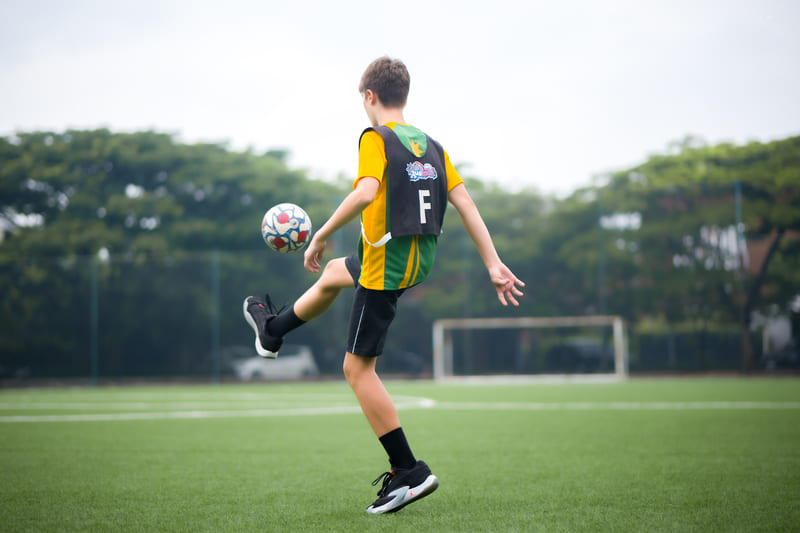
What’s next for AIS Bali in the coming years?
Our aim is to be the leading educational institution in Bali. We are exploring further development of our Vocational Education Training programme and considering the establishment of a ‘night school’ to offer programmes to the wider Bali community. Additionally, we are developing partnerships with Australian universities to provide a Foundation Year here in Bali.
On the curriculum side, we remain committed to delivering high-quality programmes that prepare students for the rapidly evolving technological world. Robotics, coding, AI and VR initiatives are currently being resourced and developed.
How can our readers get in touch?
Contact us at bali@ais-indonesia.com or call (+62 361) 845 2000. For information on upcoming Open Days and events, please get in touch or visit our website to see the latest schedule.
AUSTRALIAN INDEPENDENT SCHOOL (AIS) BALI
- Address: Jl. Imam Bonjol no. 458A, Bali 80119
- Contact: +62 361 845 2000
- Instagram: @ais.school.bali
- Email: bali@ais-indonesia.com
- Website: www.ais-indonesia.com