



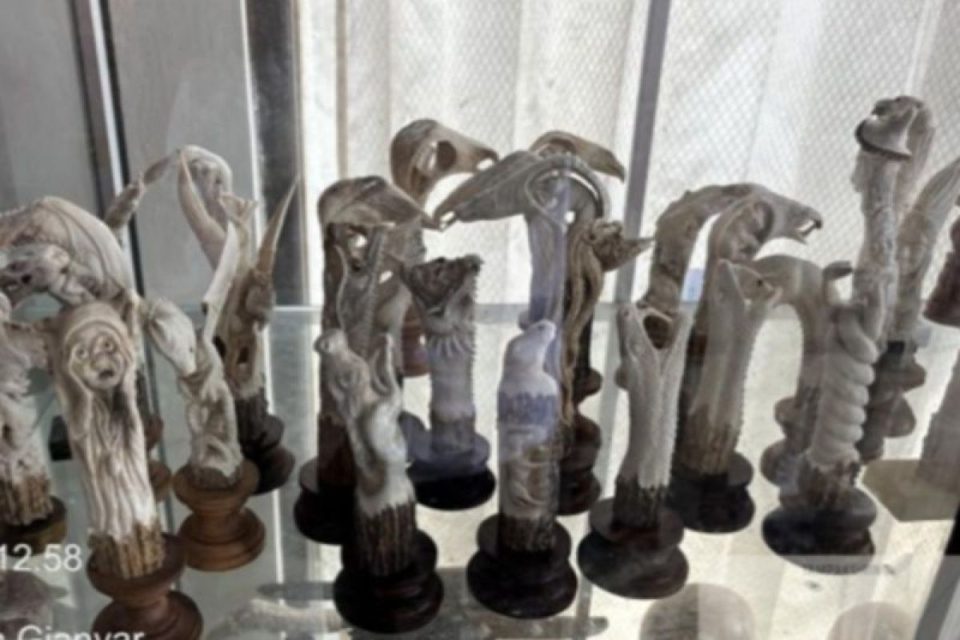
The Indonesian Ministry of Forestry, through the Directorate General of Forestry Law Enforcement, has completed the filing of a case involving alleged elephant ivory trafficking in Tampaksiring, Gianyar Regency, Bali.
The Director General of Forestry Law Enforcement, Dwi Januanto Nugroho, stated that the case was handled by the Java–Bali–Nusa Tenggara Regional Law Enforcement Agency, and that the case file has been declared complete (P-21) by the public prosecutor. This case forms part of efforts to strengthen conservation law enforcement against the trade in protected animal parts, including elephant ivory.
“The trade in elephant ivory and protected animal parts is a serious threat to Indonesia’s biological wealth. As long as these items are still viewed as collectables, ornaments, or items of economic value, illegal poaching and trade will continue to have a market,” he said on Tuesday, the 2nd of June.
The case was uncovered during a cyber patrol conducted by the Cyber Patrol Team of the Law Enforcement Agency for the Java–Bali–Nusa Tenggara Region, following a Facebook post offering items suspected to be parts of protected wildlife. Following the investigation, the team travelled to Tampaksiring, Gianyar Regency, on the 14th of April to conduct an inspection at an art shop.
The operation continued the following day (the 15th of April), in coordination with the Bali Regional Police’s Coordinator of Civil Servant Investigator Supervision. From two locations in the Gianyar Regency area, the team secured several pieces of evidence, including handicrafts, carvings, and items suspected to have been made from elephant ivory.
“Enforcing conservation law not only involves processing cases, but also shutting down trading venues and raising public awareness that protected wildlife is not a commodity,” Nugroho continued.
Based on the results of the examination and subsequent investigation, investigators have named IKS as a suspect. They have also requested approval from the Denpasar District Court for the confiscation of evidence. In this case, IKS is charged under the criminal provisions of Law Number 32 of 2024 concerning Amendments to Law Number 5 of 1990 on the Conservation of Biological Natural Resources and Their Ecosystems. These provisions prohibit the storage, possession, transportation, trade, or commercial distribution of specimens, parts, or products made from protected animal parts.
The Indonesian Ministry of Forestry urges the public not to buy, keep, order, collect, or trade body parts of protected animals in any form, including elephant ivory that has been turned into crafts, carvings, or display objects. The public is also encouraged to report any offers involving protected animals or their parts, whether made directly or through social media, to the relevant authorities.
“Indonesia’s biological riches must be protected as the nation’s living heritage, not traded as inanimate objects,” Nugroho added.