


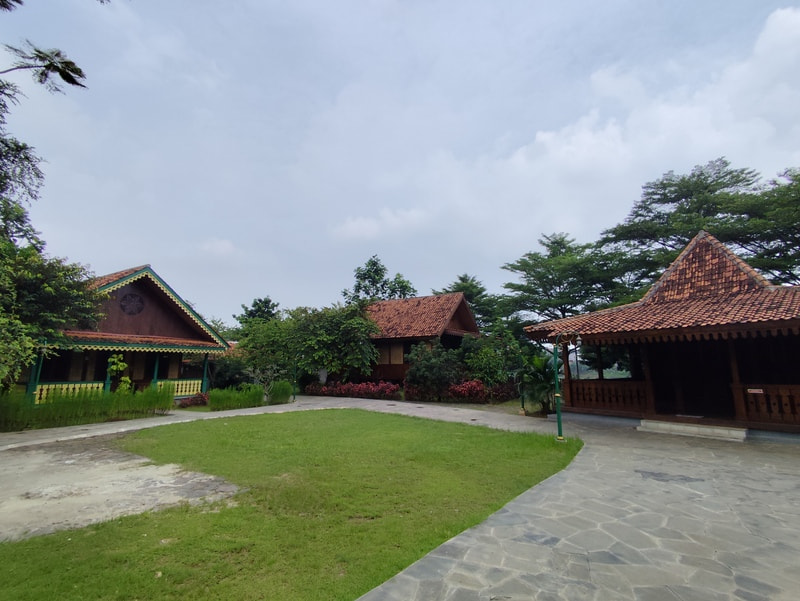
Get to know Kampung Ismail Marzuki, a hidden cultural enclave in Setu Babakan where visitors can explore the traditional homes and way of life of Jakarta’s indigenous Betawi community.
When you hear the name of Jakarta, which tribe will come to your mind? You may think of Javanese people, as they dominate the city with 36.17% of the total population according to the Central Statistics Agency (Badan Pusat Statistik or BPS) back in 2010. That said, do you know what comes after the Javanese? No, it’s not Sundanese; it’s Betawi.
Betawi are, in fact, the indigenous people of Jakarta; a community that has settled in the region since the 18th century, which was during the Dutch colonial era. The name “Betawi” is derived from the old name of Jakarta, Batavia, where various communities—including Javanese, Sundanese, Malay, Chinese, Arabs, and even Europeans—gathered and formed a distinct cultural identity.
Today, as Jakarta has been evolving massively and rapidly, the existence of the Betawi people is increasingly marginalised. Despite being the city’s original inhabitants, the Betawi people, according to BPS, now make up only around 28.29% of Jakarta’s residents. Nowadays, many of them have settled in the suburbs on the outskirts of Jakarta—such as Bekasi, Depok, and Tangerang—while those who decide to remain in the city have no choice but to live in densely populated areas.
Nevertheless, the Betawi people continue to preserve their cultural heritage, with hopes that future generations will inherit their legacy. Some of the popular Betawi traditions that can still be found today include ondel-ondel, palang pintu, gambang kromong, lenong, and keroncong.
On top of that, we can also find a replica of the traditional Betawi villages in Setu Babakan in Jagakarsa, South Jakarta.
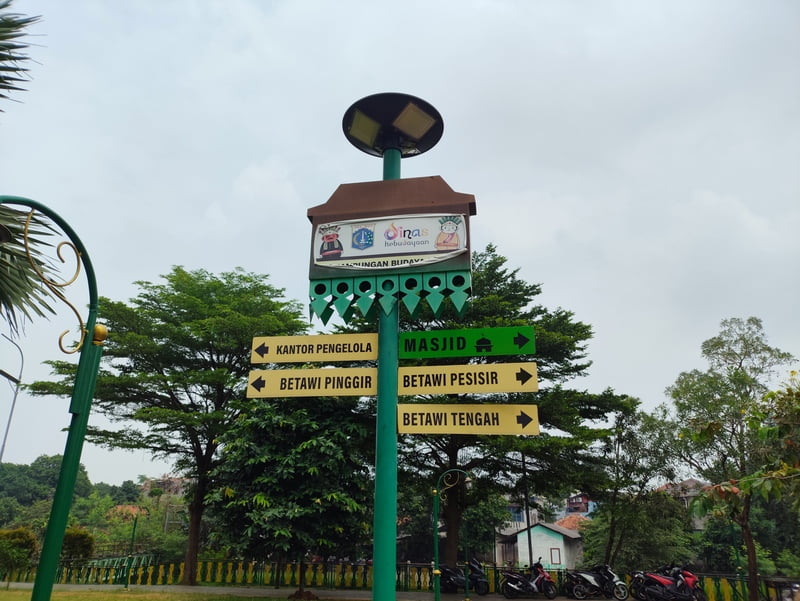
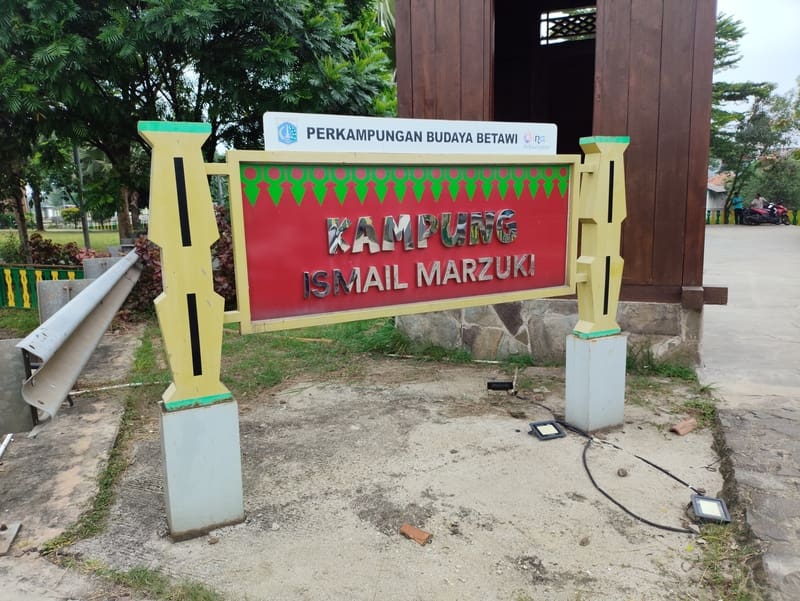
If you would like to learn more about what Betawi residences looked like in the past, you can visit Zone C of Setu Babakan, specifically in an area called Kampung Ismail Marzuki. The site can be accessed via Jl. Srengseng Sawah, located behind Jami’ Baitul Ma’mur Mosque—with a sign directing visitors to the main gate. This cultural village is open daily to the public, starting from 7 AM to 5 PM, and is also easily accessible by public transport. You can take the KRL Commuterline and stop at the Universitas Pancasila station, then continue by online motorcycle taxi (ojek online), which will only cost you approximately Rp8,000 to Rp15,000 per trip.
Once you arrive at Zone C of Setu Babakan, the security will ask you to scan a QR code at the main gate. Don’t worry—no entrance fee or even vehicle parking fee is required.
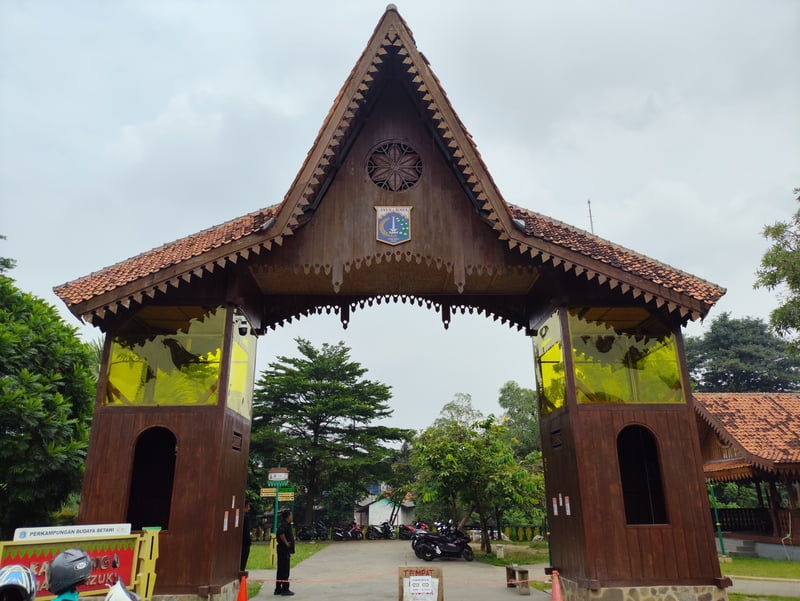
The main entrance of Kampung Ismail Marzuki features a huge wooden gate with a traditional pyramid-style roof. Inside, the area is divided into three sections: Betawi Pinggir (Suburban Betawi), Betawi Tengah (Central Betawi), and Betawi Pesisir (Coastal Betawi); each of which showcases different residential styles.
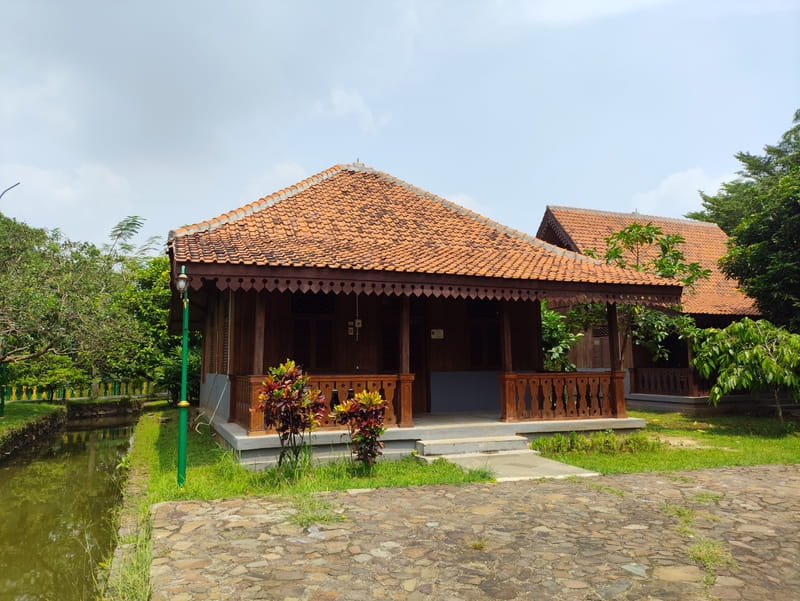
Betawi Pinggir (also regarded as Betawi Ora or Betawi Udik) refers to the Betawi community who used to reside in the coastal areas of Jakarta, then moved to the central areas until they finally reached the suburbs like Condet in East Jakarta, Jagakarsa in South Jakarta, as well as the outskirts such as Depok and Bekasi. In this particular spot, you can see rumah bapang, which is a traditional Betawi house characterised by its saddle-shaped roof. Its basic structure is built on a wooden frame, adorned with decorative gigi balang carvings on the facade. Not too far from rumah bapang, you can also find the traditional warung (snack shop), saung (gazebo), empang (fish pond), sumur (well), and langgar (small mosque). Further ahead lies a dock area overlooking the expansive Setu Babakan Lake.
Next up is Betawi Tengah (also known as Betawi Kota), which refers to the Betawi community that once settled in the central area of Jakarta, including Menteng, Senen, and Tanah Abang. In this area, you can find rumah kebaya, which features a spacious front terrace for hosting guests that also mirrors the openness and sociable nature of the Betawi culture. Other things that distinguish this house from rumah bapang are the length of the house and the roof design. In addition, in Betawi Tengah, there is a balai warga (community hall), a traditional mosque, and a livestock pen as well.
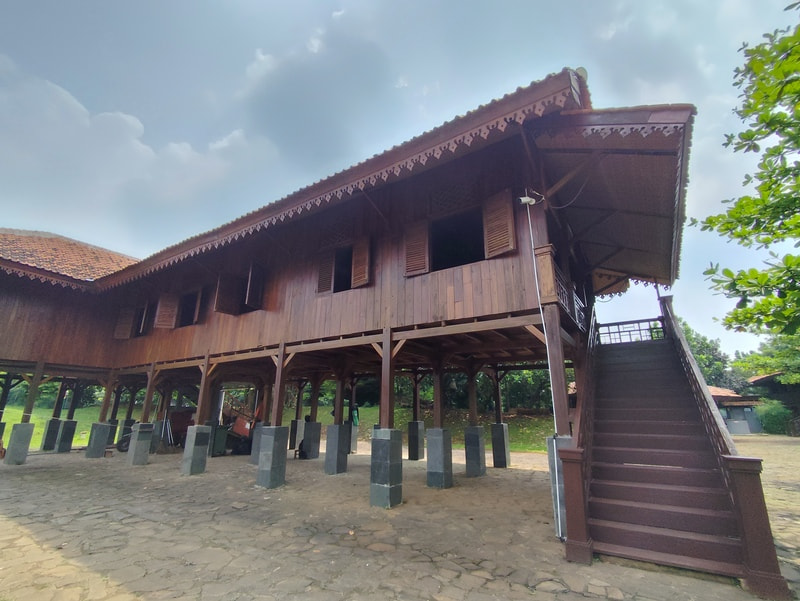
Finally, Betawi Pesisir, which is arguably the most popular area among visitors. Betawi Pesisir encompasses the Betawi community who used to populate the coastal areas of Jakarta, including Muara Angke, Marunda, and Cilincing in North Jakarta. Here, visitors can find rumah pulo and rumah pesisir. Due to the coastal environment, both houses are built with moisture-resistant materials and are elevated on structures resembling stilts in order to protect against flooding and tidal waves. Rumah pulo typically has an L-shaped design, while rumah pesisir follows a linear form. Meanwhile, a larger empang in Betawi Pesisir reflects the community’s coastal lifestyle.
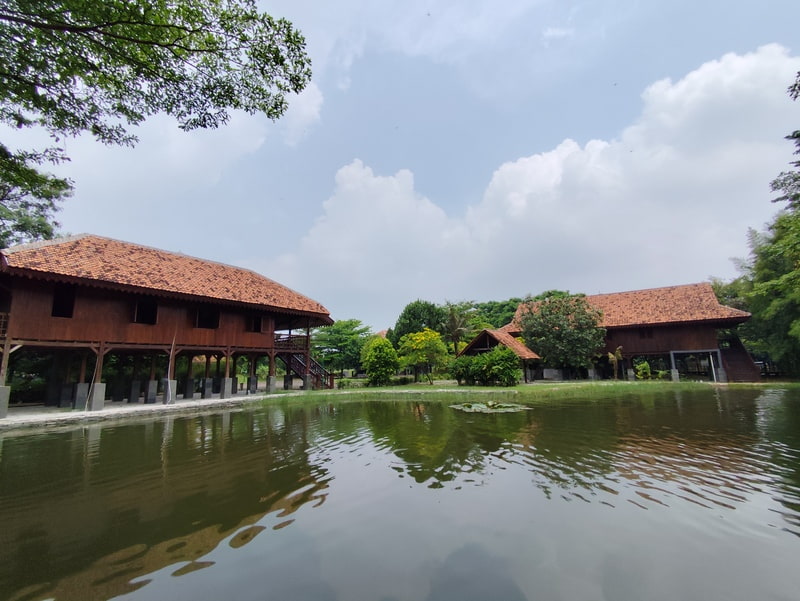
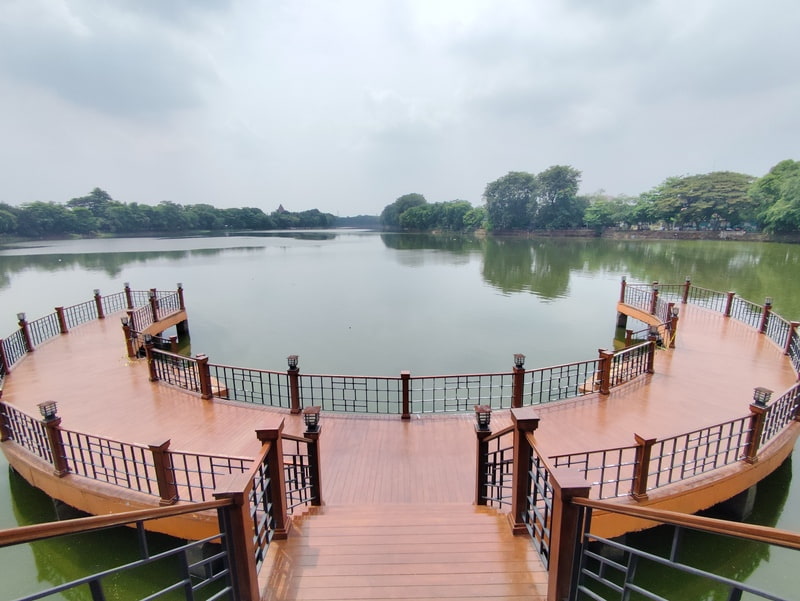
With its gentle breeze, lush greenery, and tranquil lakeside views, Kampung Ismail Marzuki offers a refreshing escape from Jakarta’s fast-paced urban life. More than just a recreational spot, Kampung Ismail Marzuki serves as a living reminder of the city’s ancient cultural roots. Whether visited alone or with loved ones, this cultural village provides both relaxation and insight into the enduring Betawi heritage. A piece of advice: for the best experience possible, you should plan your visit in the morning—between 7 AM and 10 AM—or in the late afternoon—from 3 to 5 PM—when the atmosphere is at its most pleasant.
A visit to a Betawi cultural village is incomplete without trying traditional Betawi cuisine. Near Kampung Ismail Marzuki, you’ll find Sop & Soto Betawi Pak Kumis, a food stall offering authentic soto Betawi with a rich, mildly sweet broth and tender beef slices. It’s an ideal spot to end your visit after exploring the area, especially for those interested in experiencing the cultural roots of Indonesia’s busiest metropolis.