




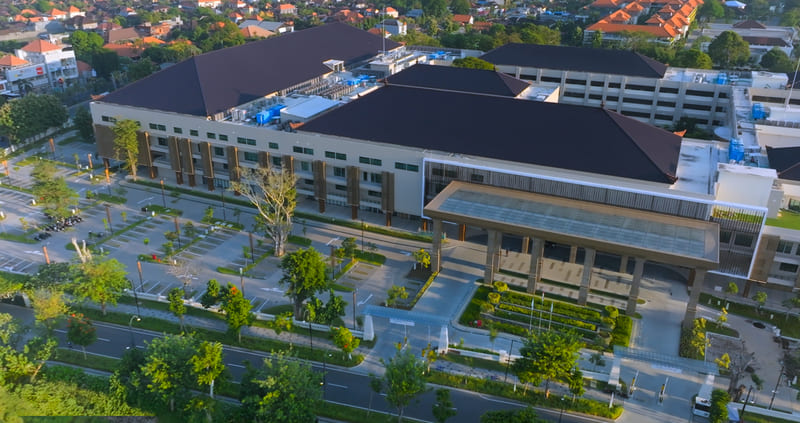
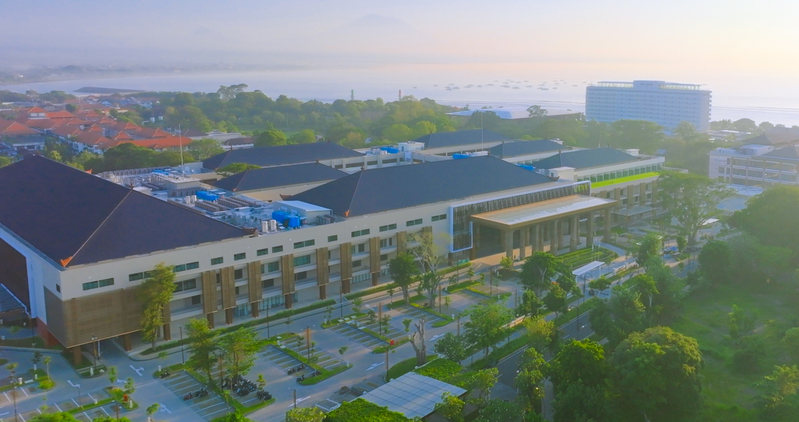
Bali International Hospital (BIH) is a newly opened world-class hospital in the Sanur Special Economic Zone (SEZ), built for both local and international patients, with advanced technology and global partners.
Its flagship cancer programme, in particular, is delivered by Icon Cancer Center, providing integrated care that includes PET-CT, medical oncology, and radiation therapy. For heart care, BIH partners with Sapporo Cardiovascular Clinic (HK Asia Medical Group) to develop a leading cardiovascular centre in Bali.
For more about BIH, Dr. Noel Yeo, the hospital’s Chief Commercial & Operations Officer, has recently shared with Indonesia Expat his background, his role at BIH, his perspective on the future of healthcare in Indonesia, and much more.
Dr. Yeo, you’ve had a distinguished career, including previous roles as Chief Executive Officer at Mount Elizabeth Hospital in Singapore, Senior Vice President at Parkway Hospitals Singapore, and, now, as Chief Commercial & Operations Officer at BIH. Could you share the key milestones and motivation that shaped your journey in the healthcare sector?
I started my career as a medical doctor with an aspiration to be a surgery specialist. In 2008, a former senior approached me to join him in private practice. I left the public healthcare system and became a general practitioner. Within a few years, I learned to manage primary care services and clinics. In 2013, I joined Mount Elizabeth Hospital, intending to acquire knowledge in hospital management. After seven years in the hospital, during the COVID-19 pandemic, I was given an opportunity to manage a network of four hospitals and over 50 clinics in Singapore.
After the pandemic ended, I left my comfort zone and went overseas to gain international experience in healthcare—first in Vietnam and now in Indonesia. I guess the key motivation throughout my career is a strong desire to seek personal growth and new adventures.
What inspired your move to take on this pivotal role at BIH?
In early 2023, I heard about BIH from news articles that wrote about the Indonesian government’s plan to build a new international hospital in Bali while also allowing foreign medical professionals to practice there. It piqued my interest, but I was too occupied with my work in Vietnam to find out more at the time.
Unexpectedly, at the end of 2023, the senior leadership of IHC approached me with an invitation to take up a role at BIH. I saw it as a rare and challenging opportunity to contribute to the impending healthcare transformation of the largest economy in Southeast Asia—and the world’s fourth most populated country.
Moreover, the Indonesian government also extended a 10-year Golden Visa for me as a global talent. I am very honoured to receive this privilege, and I will do my very best for BIH and this country.
As the Chief Commercial & Operations Officer, what are your primary objectives for BIH? How do you plan to position the hospital as a leading healthcare provider in the region and among global reputable medical institutions?
Our vision at BIH is to revolutionise healthcare in Indonesia, setting new standards of medical excellence and patient care that serve our community, support national progress, and attract health seekers from around the world. We will anchor our services based on the following four pillars: delivering medical excellence, being a trusted partner, creating an unforgettable patient experience, and always providing comfort to our patients.
We know that there are several reputable medical institutions in Southeast Asia which have been treating outbound medical travellers from Indonesia. They have done so much to help these patients during times of need. Therefore, rather than seeing these medical institutions as competitors, we, instead, regard them as benchmarks for Bali International Hospital to aspire towards—and, eventually, do better than—them.
During your tenure at Mount Elizabeth Hospital, you implemented an AI-driven solution for bill estimation and an electronic meal ordering system to enhance patient experience. How do you envision integrating similar technological innovations at BIH? How about the state-of-the-art medical equipment in BIH?
AI-driven solutions need sufficient and high-quality data to function. It would take time for BIH to accumulate the necessary data before we can roll out AI-driven solutions. The good news is that from the first day of operations, BIH will implement information systems—such as enterprise resource planning, electronic medical records, and computerised physician order entry—to facilitate data collection. The electronic meal ordering system will also be available at our inpatient wards.
Advanced medical technology is deployed extensively here at BIH, especially for diagnostics and therapy. For example, we have the Siemens Magnetom Lumina 3T MRI scanner, Varian TrueBeam radiotherapy system, Siemens Biograph Vision 450 PET-CT scanner, and Siemens Artis Q biplane angiography system.
Having worked extensively in Singapore, how are you approaching the cultural nuances and healthcare expectations unique to Indonesia, particularly in Bali?
While I was based in Singapore during the earlier half of my career, I believe I am no stranger to Indonesia, nevertheless, because of my frequent business travels to many Indonesian cities during my seven-year tenure at Mount Elizabeth Hospital. As we already know, Mount Elizabeth Hospital is one of those reputable medical institutions visited by outbound medical travellers from Indonesia. I learned a lot about Indonesian culture during my interactions with Indonesian colleagues as well as Indonesian patients at Mount Elizabeth Hospital. It got me so interested that I even took Bahasa Indonesia classes for about three years.
Also, having lived in Vietnam for about seven months before moving to Bali, I have taught myself to approach the land culture with respect, an open mind, and a learning attitude. Indonesia has so much to offer in terms of history, culture, and experiences. I am grateful to my colleagues at BIH, who have been welcoming and patient with me as well.
You’ve emphasised the importance of eco-friendly initiatives in healthcare settings. What sustainability practices are you planning to introduce at BIH?
BIH has the potential to contribute and become a leader in sustainability. More than half of the hospital compound is naturally ventilated—an energy-saving initiative that is a key aspect of its facility design. There are plenty of natural green spaces within the hospital premises as well. Nature-lovers would absolutely love the hospital gardens, which are open to all patients and visitors.
On a personal level, once our hospital is ready, I hope to propose a zero plastic waste initiative in non-clinical areas. It takes a collective effort from management, employees, vendors, patients, and visitors to achieve this goal. Stay tuned for related announcements from BIH soon!
In previous roles, you focused on fostering empathy among healthcare staff. What strategies are you implementing now to ensure that compassionate care remains central to patient interactions at BIH?
There are many ways to drive compassionate care in hospitals. I am fortunate to have first-hand experiences when I worked in Singapore and Vietnam. My take-home message is that compassion always comes from the hearts of medical professionals who have experienced compassion themselves. The most important—and, perhaps, the most fundamental—thing to do is to create a compassionate environment and instil a culture of care, where medical professionals and patients treat one another with respect and dignity.
With your extensive experience in Southeast Asia, how do you foresee the evolution of Indonesia’s healthcare landscape in the next decade? What role will BIH play in this transformation?
I believe that Indonesian healthcare has reached an inflexion point and is poised for a positive change. On the supply side, there is a growing mass of talent, especially among the younger generation of medical professionals who are hungry for learning and transformation. On the demand side, the Indonesian people are longing for the government to improve the accessibility and capacity of high-quality healthcare.
BIH is the first-of-its-kind in Indonesia to aggregate both local and global talents, as well as provide world-class care with the Balinese heart. I sincerely hope that the people of Indonesia support this national project and cheer our team on.
What are the primary challenges you’ve encountered in the Indonesian healthcare system thus far? How are you addressing them to improve patient outcomes and operational efficiency?
Indonesia, being a vast archipelago, has a shortage of medical professionals, an uneven distribution of healthcare facilities, an underdeveloped healthcare infrastructure in remote areas, and a historically underfunded healthcare system. Recent improvement initiatives undertaken by the government include establishing a national health insurance programme, leveraging digital health, and setting up special economic zones for healthcare.
The key benefit of BIH being in the Sanur SEZ is how the hospital possesses the capability of engaging diaspora and foreign medical professionals to augment its local medical expertise. This mix of medical talent encourages professional enhancement and makes it possible for the hospital to offer a wider range of treatment options and improve clinical outcomes.
BIH is built for the future. It is a single-room-only hospital consisting of a 20-room emergency department, a health screening centre, and state-of-the-art medical technology, as mentioned earlier. This year, the hospital will open its doors with two Centers of Excellence in Oncology and Cardiology. In time, there will be a total of five Centers of Excellence, which include Neurology, Gastroenterology, and Orthopaedics.
The Oncology Center of Excellence will be operated by Icon Group, which is a global cancer speciality group with more than 50 cancer centres worldwide. Meanwhile, the Cardiology Center of Excellence will be operated by Sapporo Cardiovascular Center, which is a top private cardiac hospital in Japan. In addition, the in-house laboratory will be operated by Innoquest Diagnostics, which is a Southeast Asian laboratory group.
Last but not least, throughout your career, what has been your driving passion in healthcare? How does this passion ultimately influence your leadership and vision for BIH?
My passion in life—and not just healthcare—stems from my personal belief that one should keep trying to make life better so that everyone lives better. My dream is to see BIH become a place where medical professionals are empowered to innovate, challenge the status quo, and improve themselves little by little, day by day. This way, BIH will eventually be a world-class institution and remain world-class for a very long time.
One last note — Further to the many questions we have received regarding insurance, Bali International Hospital collaborates with both national and international insurance providers. For complete details, you may visit: bih.id/insurance
