



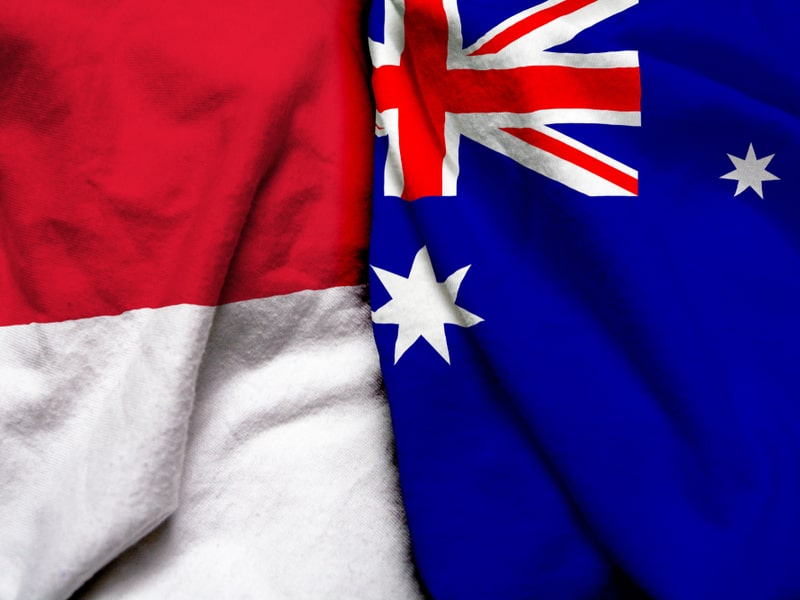
Despite Indonesia’s economic potential, Australian companies remain cautious due to regulatory uncertainty, high operational risks, and a preference for familiar markets like the United States and China.
Rob Law, a member of the Australia–Indonesia Institute Board, believes that the Indonesia–Australia economic relationship has great potential, but it has not been fully utilised. One reason is that Australian businesses are still more focused on traditional markets such as the United States and China, which are considered familiar and offer a large market scale, making them safer for expansion.
According to Law, the low interest in the Indonesian market is not due to a lack of opportunities, but rather a lack of awareness. Many Australian companies, particularly large ones, tend to concentrate on the domestic market and are reluctant to look abroad. As the largest economy in Southeast Asia, with a population of over 270 million, Indonesia should be on the radar of Australian businesses.
“They [Australian businesspeople] see China as a huge opportunity, and of course, the United States feels more familiar because we share the same language, and the culture is similar [as well]. Although there are differences, they are quite similar,” Law said on Monday, the 17th of November.
Furthermore, Law stated that the main challenge arises from regulations in Indonesia, which are considered “grey,” not standardised, or changing rapidly. For Australian businesses accustomed to clear and systematic procedures, this situation creates uncertainty that feels high-risk.
“They face many challenges when entering Indonesia. Regulation is also a challenge, but it’s of a different nature because Indonesia has a more ‘grey’ regulatory environment, and navigating such regulations is very challenging for Australian businesses,” he added.
Law believes that despite the challenges, the issue of business awareness is relatively easy to overcome through education, mentoring, and the provision of the right information. The role of the government, research institutions, and business associations is also crucial in changing this mindset. If these mindset barriers can be overcome, Indonesia offers many collaboration opportunities for Australian businesses, ranging from education, the digital economy, and renewable energy, to the creative industries.
Law emphasised that the education sector is a concrete example, with three Australian universities opening branches in Indonesia: Monash University, Western Sydney University, and Deakin University.
“So, there are three [Australian] branch campuses [now in Indonesia]. No other country has an international campus in Indonesia. So, we [Australia] have a pioneering advantage, and this is something we can develop going forward,” he concluded.